
If you spot a bee buzzing around after dark, it can really throw you off. Bees usually settle down when the sun disappears.
Most bees won’t fly at night because they need sunlight to find their way and locate flowers. So when you see one out in the dark, something odd is probably going on.
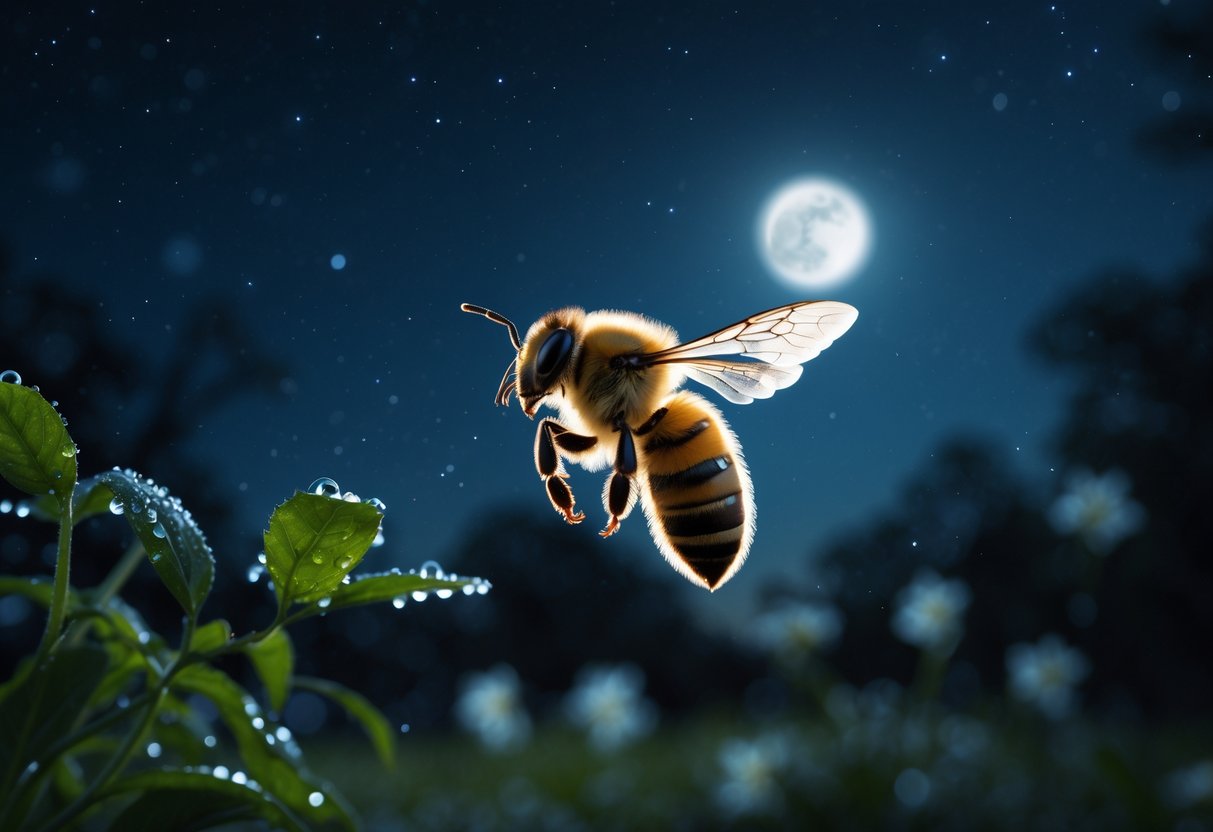
Sometimes, bees end up flying at night because of emergencies or sudden changes in their surroundings. A few rare bees, like the Indian Carpenter Bee, can actually handle dim light.
Figuring out why bees are out after dark helps you get a better sense of their habits and what might be affecting their health.
Why Bees Fly at Night: Causes and Unusual Behaviors
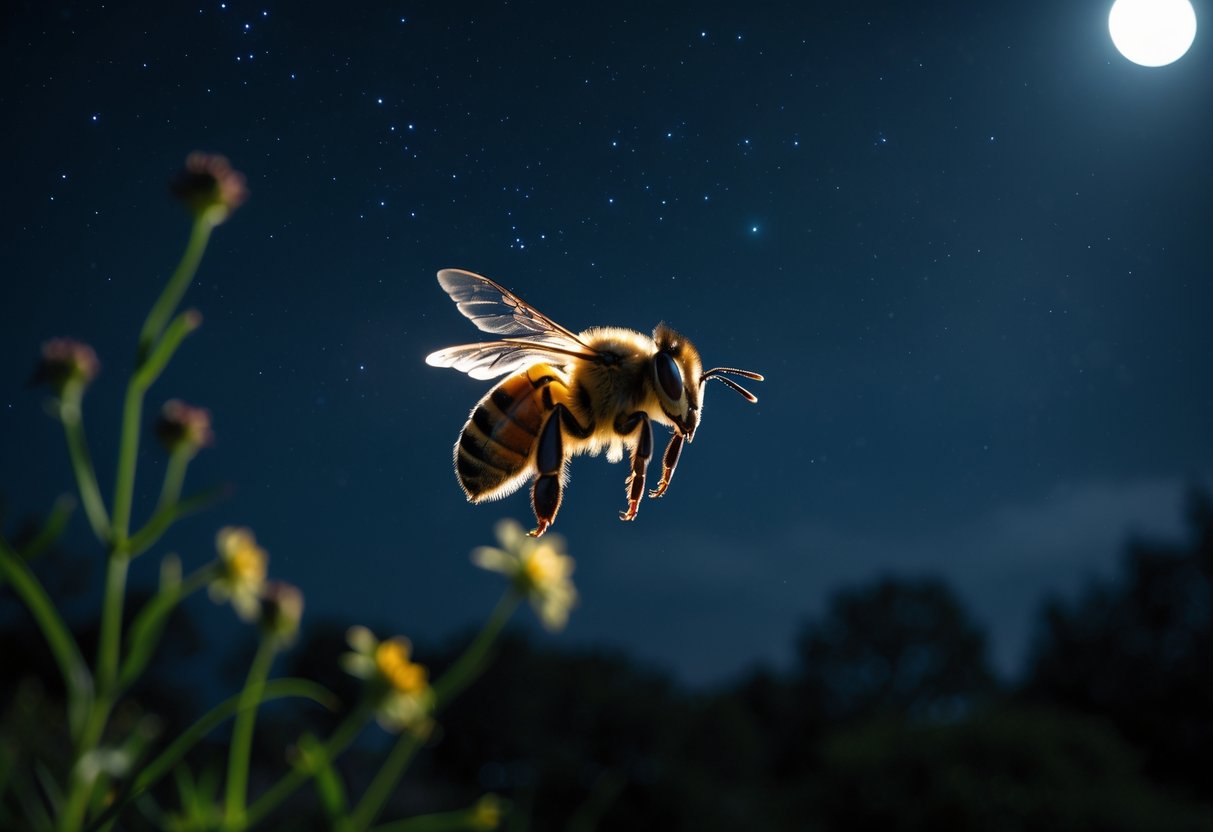
When you notice bees flying at night, it’s not just a random shift in their daily routine. Lots of things can drive this strange behavior, from their own instincts to outside factors.
Natural Bee Activity Cycles and Limitations
Most bees, like honey bees and bumblebees, work during the day. Honey bees need sunlight because their eyes just aren’t made for night vision.
At night, they hang out in their hive and rest. But a few bee species actually prefer the night.
Some nocturnal bees have special eyes that let them see in low light. For example, you’ll find certain bees in California visiting night-blooming flowers, grabbing nectar while most other pollinators are asleep.
Honey bees don’t usually venture out after dark unless there’s enough light. Without it, they risk getting lost or hurt since they can’t see well.
So, the amount of natural light really limits their nighttime activity.
Behavioral Changes Due to Parasites or Disease
Sometimes bees fly at night because something’s off. Parasites or diseases can throw off their normal routines.
If you see your honey bees buzzing around after dark, stress or illness might be the culprit. Night flights often happen when a bee’s internal clock gets messed up, making it act out of character.
This can gradually weaken the whole colony. Parasites like varroa mites can sap bees’ strength and make them behave strangely.
Sick bees often lose coordination, so you might spot them flying awkwardly at weird hours in your yard.
Parasitic Influences: The Case of Apocephalus borealis
Apocephalus borealis is a fly that uses honeybees as hosts for its larvae. These flies lay eggs inside bees, which really messes with the bees’ behavior.
You might see infected bees flying at night when they normally wouldn’t. The larvae mess with the bee’s nervous system, leading to confusion and odd activity.
Sometimes, these bees gather around lights at night, making them easier to spot. This parasite has become a problem in places like California, where it can hurt bee colonies.
If you notice honeybees flying at night near your place, this parasite could be the reason.
Environmental Factors and Light Attraction
Artificial lights can lure bees out after dark. Street lamps, porch lights, and even bright screens can draw them in, just like with moths.
Your honey bees might get confused by these lights. They don’t usually fly at night, but they’ll get close to light sources, trying to figure out where to go.
Night-blooming flowers also attract some bees. Certain bees fly at night to feed on these plants, taking advantage of food that others miss.
So, things like light pollution and the types of plants around your home can nudge bees into acting differently. If you want to dig deeper into why bees fly at night, check out this detailed article on bees flying at night.
Risks, Impacts, and Interactions When Encountering Bees After Dark

Spotting bees at night can make you wonder about the risks and what else might be lurking nearby. Night-flying bees act differently, and understanding how they interact with other insects and how things vary in different areas can help you stay safe.
Potential for Bee Stings and Safety Considerations
Bees flying at night can still sting if they feel threatened. Night bees often guard their nests and might act more defensive.
If you disturb their colony, you could get stung. A sting brings pain, swelling, or sometimes an allergic reaction.
Try to avoid sudden movements or loud noises near bees. In places like California, where certain bee species are more common, it’s smart to stay alert around nests after dark.
Not every bee will sting, though. Most only sting to protect their home.
If a bee is just flying solo at night, it’s usually less aggressive than one near its hive.
Interactions Between Bees, Ants, and Other Nocturnal Insects
At night, bees share the scene with ants and other insects, which can stir up competition. Ants sometimes sneak around bee nests to steal honey or larvae, which annoys the bees.
This can make bees act more defensively if ants bother their colony. Some nocturnal insects also go for the same flowers, but certain night bees play a special role in helping plants reproduce.
If you’re hanging out near a light at night, you might attract a mix of insects—bees, ants, you name it. Knowing this can help you avoid getting stung or bitten by accident.
Regional Differences and Notable Observations
Bees act differently at night depending on where you are. In California, I’ve noticed some native bees and certain species buzzing around after dark. The climate and which flowers are blooming seem to play a big role.
These bees sometimes use moonlight or even city lights to find their way. It’s kind of fascinating, honestly.
In cities, night bees tend to act a bit differently. Light pollution and fewer flowers can throw off their usual routines.
You might catch them behaving in unexpected ways or even bumping into people more often. That’s probably not too surprising if you think about how much humans have changed their environment.
If you pay attention to these local quirks, you’ll get a better sense of when a night-flying bee is just passing by or if it’s part of a colony you’d rather steer clear of.


