
Getting stung by a bee hurts, and it can catch you off guard. Knowing what to do right away really helps with the pain and swelling.
The first thing you should do is remove the stinger as quickly as you can, using something with a dull edge. If you leave the stinger in, more venom spreads, and that just makes things worse.
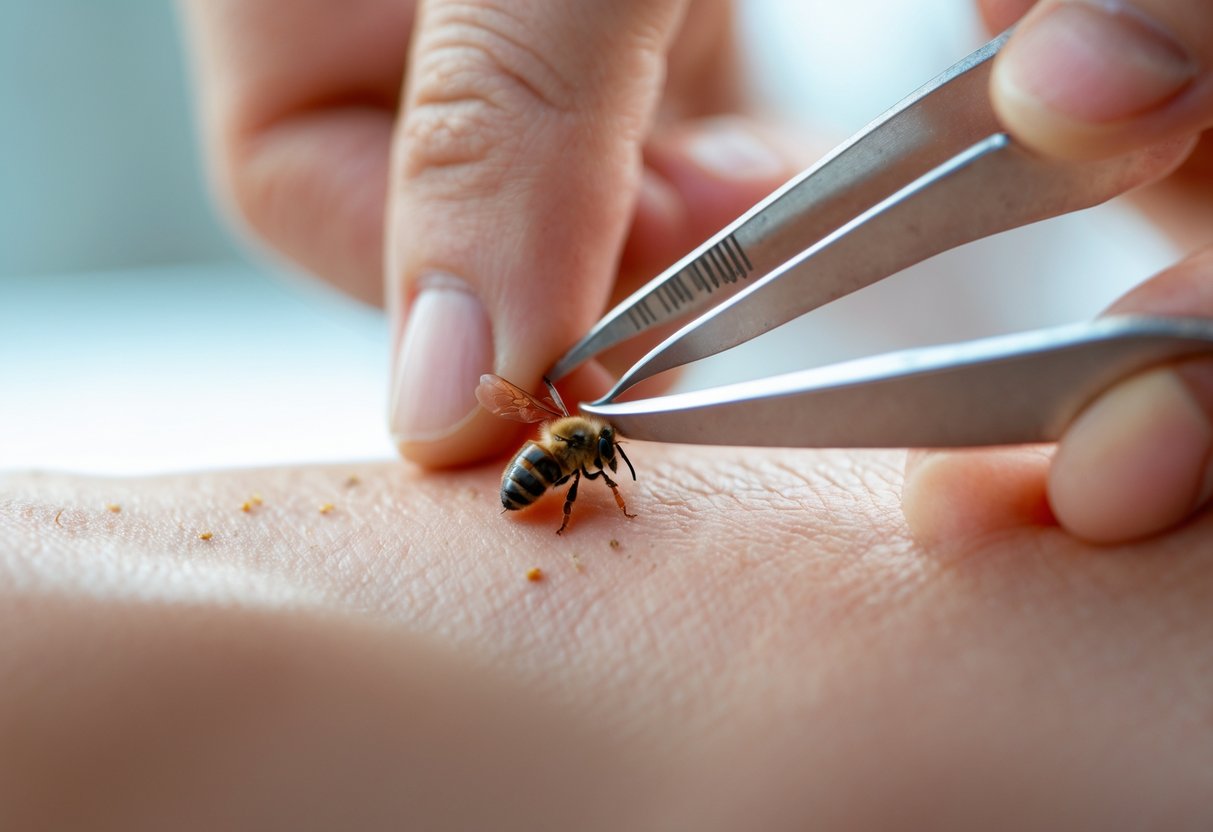
Once you get the stinger out, go ahead and clean the area. Grab something cold and press it on your skin to help with swelling.
Pay attention to how your body feels. If you start feeling dizzy or can’t breathe well, you need medical help right away.
Acting fast changes how you feel and might keep bigger problems away.
Ready to find out how to handle a bee sting safely? Let’s break down the steps anyone can follow.
Immediate Steps to Take After a Bee Sting

When a bee stings you, moving quickly helps with pain and swelling. You need to get the stinger out, clean up, and do something for the pain.
These steps can also help you avoid allergic reactions.
Remove the Stinger Promptly
After a honeybee stings, its stinger usually sticks in your skin because of tiny barbs. If you leave it in, more venom seeps out and things get more painful.
Scrape the stinger out gently with a flat object, like a credit card or even your fingernail. Try not to use tweezers—those can squeeze out more venom.
Getting the stinger out right away is best. If you spot the small black or white stinger, don’t wait.
The sooner you do it, the less severe the sting feels.
Clean the Sting Area
Once you’ve removed the stinger, wash the area right away. Use soap and water and be gentle.
This removes dirt and bacteria that might cause an infection.
If you have antiseptic or rubbing alcohol, dab it on. That adds another layer of protection against germs.
Don’t scratch the sting. Scratching can make it worse or cause a rash.
Try to keep the area clean and dry while it heals.
Apply a Cold Compress
For pain and swelling, grab a cold compress. Wrap ice or a cold pack in a cloth and place it on the sting for about 10 to 15 minutes.
Cold numbs the skin, cuts down on itching, and slows swelling by reducing blood flow.
You can do this every hour if you need to, especially on the first day.
No ice? A cool wet cloth works too. If you can, keep the sting raised to help with swelling.
Take Pain Relievers and Antihistamines
If you’re hurting or itching, over-the-counter pain relievers like ibuprofen or acetaminophen help a lot.
For itching or mild allergic symptoms, try an antihistamine like diphenhydramine (Benadryl). Always follow the instructions on the box.
If you suddenly have trouble breathing, swelling in places other than the sting, or feel dizzy, get medical help right away.
Those are signs of a serious reaction.
You can also try home remedies, like a paste of baking soda and water, for mild itching. But don’t count on home fixes if symptoms are bad.
For more tips, check out this guide on immediate steps to take after a bee sting.
Recognizing and Responding to Allergic Reactions

After a bee or wasp sting, keep an eye on your body. Sometimes the reaction is mild, but things can get serious fast.
Knowing what to look for keeps you safer.
Identifying Mild and Moderate Symptoms
Mild or moderate symptoms usually show up around the sting. Expect redness, swelling, and some itching or pain.
These often last a few hours and usually clear up with ice and pain meds.
You might see hives, a rash, or a bit of swelling away from the sting. Your body is reacting, but it’s usually not dangerous.
If these symptoms get worse or start spreading, keep watching closely. Sometimes things take a turn.
Signs of a Severe Allergic Reaction
A severe allergic reaction—anaphylaxis—can come on fast. Watch for trouble breathing, swelling in your throat or face, dizziness, or a racing heartbeat.
You could also feel sick to your stomach or even pass out.
If any of that happens, it’s a medical emergency. Swelling can block your airway, and blood pressure can drop suddenly.
Take these symptoms seriously, even if they fade for a bit.
When and How to Use an Epinephrine Auto-Injector
If you know you’re allergic to bee or wasp stings, always carry an epinephrine auto-injector. Use it right away if you notice swelling in your face or trouble breathing.
Press the injector firmly against your outer thigh until it clicks. Hold it there for about three seconds.
After using it, stay as calm as you can and get medical help immediately. Epinephrine helps, but you still need a doctor.
Seeking Emergency Medical Help
If you use an epinephrine auto-injector, call 911 right away or head straight to the emergency room. The medicine just buys you time—it doesn’t replace real medical care.
Let the responders know you got stung by a bee or wasp and already used an epinephrine auto-injector. Keep an eye out for symptoms that might pop up later, even hours after the sting.
Follow any instructions they give you. Honestly, it’s always safer to be extra cautious with stings and allergies.
For more on treating bee sting allergic reactions, check out this guide on what to do after a bee sting allergic reaction.


