
When night rolls in, owls wake up and get to work. They hunt in the darkness, using their sharp hearing and impressive night vision to find prey like mice and other small animals. Their big eyes let them see in low light, and their soft, silent wings help them swoop down without making a sound.
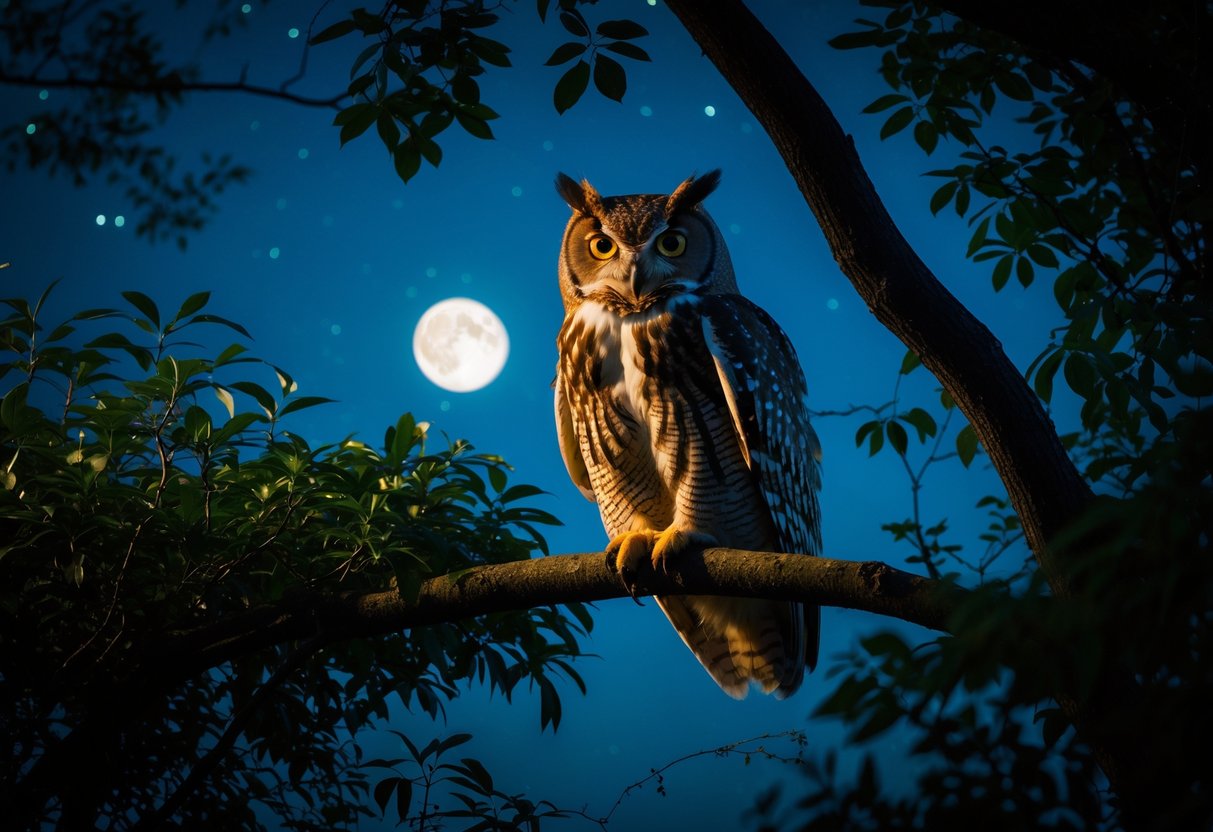
Most people think owls just sleep all day, but they’re actually pretty busy at night. They spend hours searching for food, gliding through trees or over fields.
Sometimes, if you’re lucky, you’ll notice an owl drifting silently overhead on the hunt.
Owls are built for nighttime living. Their bodies and senses all work together to help them survive in the dark.
Honestly, they’re just fascinating to watch. Want to know more about what these birds do after sunset? Let’s dive in.
What Owls Do at Night

At night, owls rely on their unique senses and skills to stay safe and find food. They hunt quietly, listen for the tiniest sounds, and move through their world in ways that fit their species.
Some owls stay busy all night, while others split their time between hunting and other activities.
Hunting Behaviors of Nocturnal Owls
Watch an owl hunt after dark, and you’ll notice how it uses its sharp eyes and ears. Great horned owls and barn owls, for example, track their prey by sight and sound.
Their big eyes are packed with rods, so they see well in the dark. You’ll often see them turning their heads to scan the area.
Thanks to special feathers, owls fly almost noiselessly. That makes it easier for them to sneak up on mice, rabbits, or frogs.
Burrowing owls, for instance, chase insects and small animals right on the ground.
Short-eared owls hunt over open fields, listening for movement in the grass. The snowy owl sometimes hunts during the day, but it’s most active at dawn, dusk, or nighttime.
Nocturnal Activities Beyond Hunting
Owls do more than just hunt at night. Many call out to claim territory or attract a mate.
Barred owls, for instance, use different hoots to talk to each other.
You’ll sometimes spot an owl preening, cleaning its feathers to stay warm and quiet. Some, like the eastern screech-owl, tuck into tree hollows or thick leaves, closing their eyes partly during the day to protect their vision.
Night is also when owls check on their nests, feed their chicks, or move between roosting spots.
These nighttime routines help them survive and keep their families safe.
Differences Among Owl Species at Night
Every owl species has its own habits that fit its home and diet. The Eurasian eagle owl, which is huge, hunts bigger animals like rabbits or even foxes.
Burrowing owls stick to open spaces and use ground burrows for shelter. You might hear them during the day, but they mostly hunt at night too.
Great horned owls are flexible hunters, going after everything from snakes to geese. Snowy owls prefer cold, open places and depend on their sharp eyesight to spot prey in the snow.
Each owl’s nighttime routine matches its surroundings and what it likes to eat.
You’ll see a lot of variety depending on which owl you’re watching.
If you’re curious, you can check out why owls stay up at night for more.
How Owls Thrive in the Dark

Owls make great hunters after dark because of their sharp senses and quiet moves.
Their eyes take in even faint light, and their ears catch the smallest sounds. They also communicate in soft ways, staying alert to danger or finding a mate.
Adaptations for Night Vision
Owls are basically nature’s night-vision experts. Their eyes are huge—almost filling up half their skull.
That size means they gather tons of light, so they see well even when it’s barely bright at all.
Inside those big eyes, you’ll find loads of rod cells. These cells are perfect for picking up low light, which gives barn owls and Eurasian eagle owls amazing night vision.
Owl eyes don’t move, but their necks sure do—they can turn their heads up to 270°. That way, they can spot prey all around them without shifting their bodies.
The shape of their eyes also focuses light right onto the retina. This lets them notice movement even in almost total darkness.
Exceptional Hearing and Silent Flight
For owls, hearing is just as important as sight. Many, like the barn owl, have ears set at different heights.
That odd placement helps them pinpoint exactly where sounds come from, even in pitch black.
Facial feathers work like funnels, guiding sound right to their ears. That makes it easier to catch the faintest rustle from a mouse or vole.
And then there’s their silent flight. Special wing feathers have soft edges that cut down on noise.
This lets them glide quietly and catch prey by surprise—pretty sneaky, right?
Owl Interactions and Communication at Night
Owls don’t just hunt or patrol at night—they also chat with each other to mark their territory or try to find a mate. Sometimes you’ll catch a hoot, a screech, or another odd call echoing through the cool darkness.
Every owl species seems to have its own signature sound. Take the great horned owl, for instance; you’ll usually hear those deep, booming hoots. Barn owls, on the other hand, let out these softer screeches that are a bit eerie if you’re not expecting them.
If you stick around long enough, you start to pick up on the local calls. It’s a handy way to steer clear of trouble or maybe meet another owl. Most owls stick to the same hunting grounds night after night, so they get to know the best places for a meal or a safe spot to rest.


