
Hitting a deer is a real shock, but try to stay calm and put safety first—for you and anyone with you.
If someone’s hurt or your car’s a mess, call emergency services right away. If it’s safe, pull over, switch on your hazard lights, and don’t go near an injured deer.
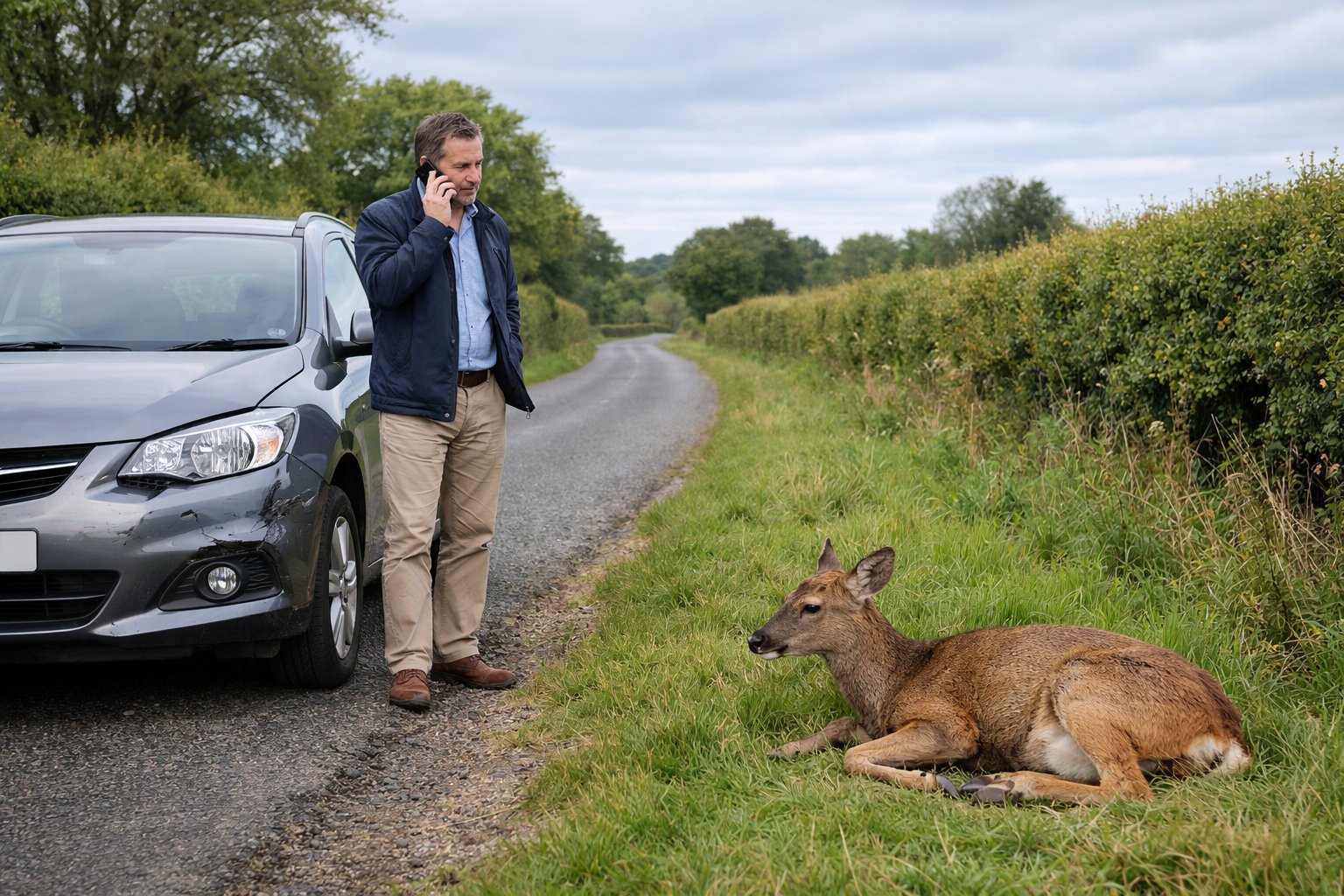
Check for injuries. If the deer blocks the road, let the police know. Snap a few photos for insurance.
Later, you’ll need to report the incident, maybe make a claim, and probably want to know how to avoid hitting a deer next time.
What To Do Immediately After Hitting a Deer

Stop somewhere safe. Protect everyone. Call for help if you need it.
If you can, move your car off the road. Switch on your hazards. Check for injuries. Report what happened to emergency services or wildlife responders as needed.
Ensure Safety and Stop Safely
Pull over as soon as you safely can. If possible, steer to the hard shoulder or a lay-by and leave space for other cars.
Turn off your engine and put the handbrake on. If you’ve got a high-vis jacket, put it on before getting out.
If you can’t move your car, keep everyone inside with seatbelts on. Don’t stand between vehicles.
Don’t try to move the deer. Even hurt, it can kick or injure you. Stay back, and keep your hazards flashing to warn others.
Use Hazard Lights and Assess the Situation
Switch on your hazard lights right away so other drivers see you. If it’s hard to see, use dipped headlights—don’t dazzle anyone.
Check for things like leaking fluids, smoke, broken lights, or flat tyres. If your car isn’t safe to drive, stay put and call for help.
Take photos of the scene and any damage for insurance. If the deer is alive but away from the road, don’t approach.
If it’s lying on the road, call the police. They’ll handle safe removal.
Check for Injuries and Call for Medical Help
Check yourself and passengers for injuries. Look for pain, bleeding, dizziness, or trouble breathing. Sometimes injuries show up later, so be cautious.
If someone’s hurt or you suspect internal injuries, call 999 and ask for an ambulance. Tell them you hit a deer and give your exact location—road name, mile marker, or GPS.
If nobody’s hurt but you’re shaken, stay at the scene until you’ve reported the crash to the police or your insurer. Keep warm and use basic first aid if you need to.
Who to Contact: Police, RSPCA, and Wildlife Rescue
If the deer’s on or near the road, call the police. They’ll log the incident and arrange for safe removal.
This also creates an official record for your insurance. Some police forces accept online or non-emergency reports—check your local guidance.
If the deer’s injured but not on the road, you can contact the RSPCA or a local wildlife rescue. Only do this after you’ve called the police if the animal isn’t a danger to traffic.
The British Deer Society has advice on deer behaviour and reporting collisions.
When you call, give clear details about your location, the animal’s condition, and any people hurt. Keep a note of names, times, and incident numbers for your insurer.
Legal, Reporting, and Prevention Guidance

Act quickly, stay safe, and make a clear record of what happened. Here’s what you need to know about reporting, injured deer, insurance, and avoiding future collisions.
Reporting Deer Collisions and Legal Requirements
If the deer’s on or near the road, ring the police on 101—or 999 if there’s danger or injury. The police will sort removal or contact wildlife officers.
You usually don’t have to report every deer collision by law, but local authorities often ask for reports to help track incidents.
Write down the exact location—road name, mile marker, or GPS. Note the time, which direction you were heading, and any deer signs.
If someone got hurt, you must stop and report it immediately.
For more info, check the AA’s advice on deer collisions.
Steps if the Deer is Alive or Injured
Don’t approach or touch an injured deer. Even a weak one can kick hard.
Put on your hazards, and if it’s safe, use warning triangles or your phone torch to make the scene visible. Keep everyone away from the road.
If the deer’s alive and blocking traffic, call the police so trained responders or a gamekeeper can help. Only move the animal if a qualified person tells you it’s safe—moving a wild deer can make things worse or even break the law.
If someone is hurt, call 999. If you need to leave to get help, leave a note with your name and contact details on your vehicle.
Insurance Notification and Evidence Collection
Let your insurer know as soon as you can. Whether you’re covered for deer depends on your policy—comprehensive usually does, third-party usually doesn’t. Double-check your documents.
Take clear photos of your car’s damage, the road, any skid marks, and the deer—if it’s safe. Snap shots of road signs and your GPS location.
Keep receipts for towing or repairs. Write down witness names and contact details. This evidence helps with claims and if your insurer asks questions later.
How to Avoid Future Deer Vehicle Collisions
Watch for deer or wild animal signs, and drive with extra care in those spots. I always slow down at dusk and dawn—honestly, those are the trickiest times.
Stay alert from sunset to midnight, especially in autumn and early summer. If you spot a deer, chances are more are nearby. Instead of swerving, ease off the gas and slow down.
At night, I flip on my full beams when it’s safe. But if a deer freezes in the headlights, I dip the lights—no one wants to blind them and make things worse.
Keep a good distance from the car in front. Sudden steering? Not a great idea; that can make things much more dangerous.
If you want, you can join local “Deer Aware” reporting groups. Those alerts about hotspots have saved me more than once.


