
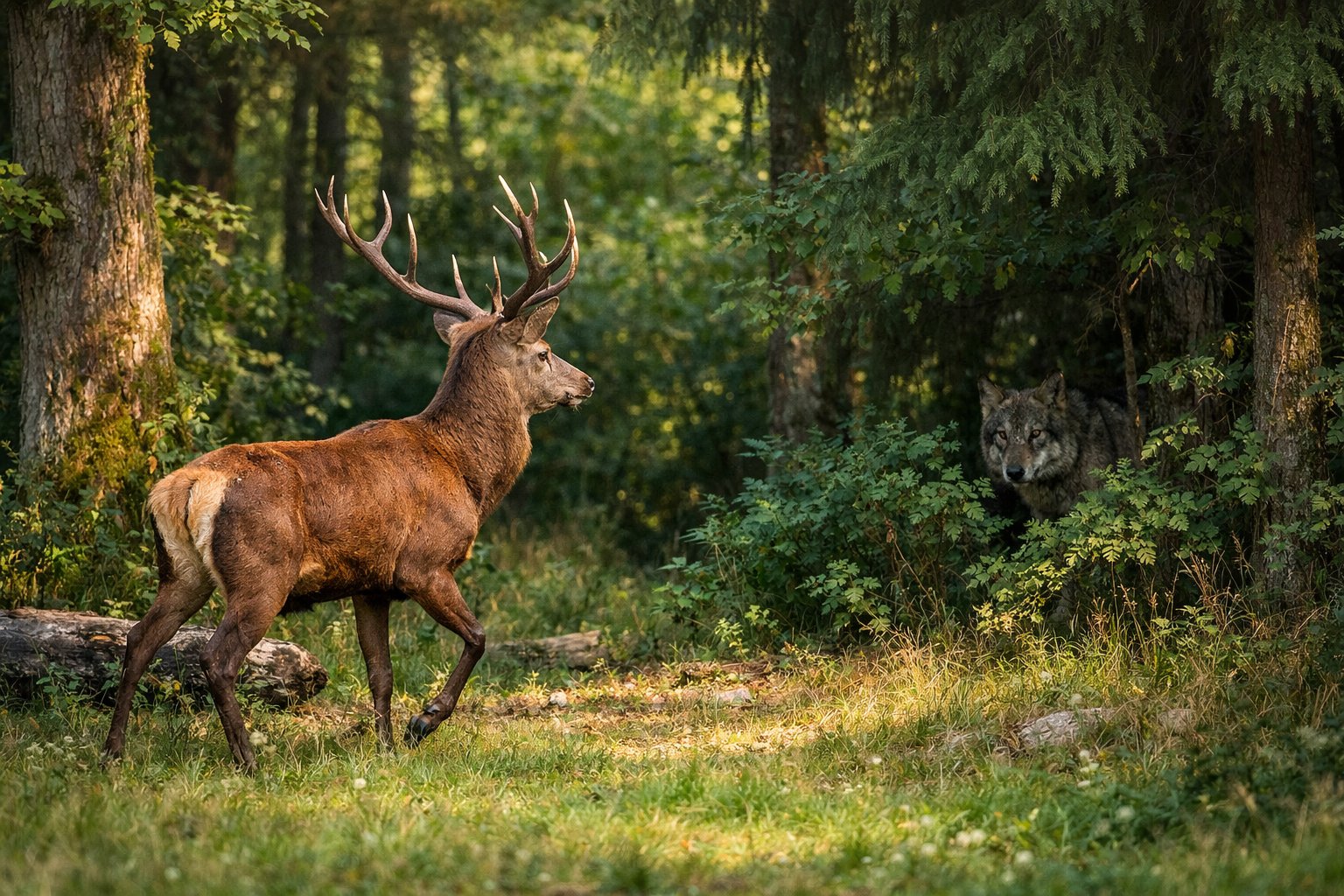
Plenty of big predators hunt red deer, but it really depends on the region—and whether the deer is a full-grown adult or just a fawn. Wolves and big cats like Eurasian lynx and mountain lions usually go after adults, while smaller predators and scavengers stick to fawns or weakened animals. Let’s dive into the main hunters, plus some of the scavengers and opportunists that eat red deer when they get the chance.
You’ll see where red deer face the most risk, how different habitats shape which predators show up, and why young or injured deer have it the roughest. I’ll give you some clear examples of the heavy-hitters—and the smaller, sneakier animals that fit into the red deer’s food web.
Main Predators of Red Deer

Let’s talk about which animals hunt red deer most often, how they do it, and which age groups are in the most trouble. Predators use all kinds of tactics—speed, teamwork, brute force, or just plain stealth. Local habitat and the time of year really decide which one’s on top.
Wolves and Hunting in Packs
Wolves hunt red deer by teaming up. A pack watches how the herd moves, then uses short chases and flanking to single out a weak or young deer.
You’ll notice wolves usually pick off fawns, older deer, or sick animals since they’re easier to catch. Bigger packs can take down adult stags more often than a lone wolf.
Wolves rely on endurance too—they just keep chasing until the deer gives up. When there aren’t many deer around, wolves switch to smaller prey or scavenge what they find.
Human activity and land use changes mess with wolf numbers, which then shifts the pressure on local red deer herds.
Bears: Strength and Ambush
Bears—especially grizzlies and brown bears where their ranges cross with deer—use brute force and the element of surprise. You’ll usually find bears going after fawns, injured deer, or leftovers, not so much healthy adults.
Bears wait in ambush near feeding spots, river crossings, or birthing areas to grab young deer. Black bears also take fawns and scavenge gut piles left by hunters.
When fawns are everywhere in spring and early summer, bear predation on young red deer spikes. Bears eat just about anything, so if berries or salmon runs fail, they’ll go after deer more often for protein.
Mountain Lions, Cougars, and Wild Cats
Mountain lions (puma concolor) and wild cats like lynx and bobcats rely on stealth and quick bursts of speed. You’ll see cougars hunting alone, usually at dawn or dusk, waiting near trails, and leaping in for a neck bite.
They can kill adult red deer, but usually go for yearlings and fawns. Lynx and bobcats rarely take on big adults—they stick to fawns or smaller animals if they can.
These cats need thick cover to sneak up on prey, so changes to forests or shrubs affect how successful they are. Since they hunt solo, each cat’s impact on deer numbers stays local, but it adds up over time.
Coyotes and Smaller Predators
Coyotes and other smaller predators mostly target the youngest and weakest deer. You’ll spot coyotes taking a lot of fawns, especially in open or broken-up landscapes where hiding isn’t easy.
They scavenge carcasses too, and fill in gaps left by bigger predators. In some places, more coyotes means way fewer fawns make it, which can slow down deer population growth.
Small predators almost never kill healthy adult red deer, but if they hunt together or find a sick animal, they can still make a dent in the herd. Human changes to the land often give these adaptable hunters an edge.
Other Predators and Scavengers of Red Deer

Red deer get hit from all sides—sky, swamp, and even people. Let’s look at which birds, scavengers, oddball predators, and humans affect red deer survival, and how each one gets their share of deer meat.
Birds of Prey: Eagles and Raptors
Big raptors like golden eagles and bald eagles sometimes take fawns or weak yearlings. In open hills or mountains, eagles use high perches and long glides to spot a lone fawn and then strike with those strong talons.
Adult red deer are just too big for eagles to handle, so you almost never see them try. Smaller raptors—buzzards, kestrels, and the like—don’t kill deer but might harass the sick or injured.
Raptors also scavenge, so if you see them hanging around, there’s probably a recent kill nearby. If you manage land, keeping things quiet during fawning season can help cut down on raptor predation.
Scavengers: Vultures and Crows
Vultures spot carrion from above and clean up soft tissue fast, leaving behind bones and antlers. Turkey vultures and similar birds can strip a deer carcass in hours or days, depending on weather and how easy it is to get to.
Crows and ravens join in too. They pull muscle from small holes, go for the eyes, and peck at exposed bone marrow. You’ll often see crows at fresh kills; they help spread the remains, which draws in even more scavengers.
Scavenger activity recycles nutrients, but it can make it tough to figure out exactly what killed the deer in the first place.
Feral Hogs, Alligators, and Unusual Predators
Feral hogs root around fawn bedding spots and scavenge carcasses. Sometimes, if there are lots of pigs, they’ll even attack young deer.
Hogs tear up tissue and scatter bones, which can make it hard to figure out how the deer died. If you hunt or do surveys where there are pigs, expect carcasses to disappear fast.
In wetlands and near rivers, American alligators can ambush deer coming to drink. They grab and drown deer right at the water’s edge.
These attacks don’t happen everywhere, but where alligators and red deer overlap, they matter. Sometimes, packs of feral dogs will take fawns or injured adults too.
Watch for clues like drag marks, lots of bite wounds, or heavy scavenger activity to spot these unusual cases.
Human Impact and Hunting
People are the main predator of red deer. We hunt them through regulated seasons, poaching, and, sometimes, cars on the road.
Hunters use different methods—stalking, hounding, or just waiting in a stand. Each approach goes after different ages and sexes of deer.
Most hunters want mature males for their antlers or for meat. These choices really change the way deer populations look.
Managers also cull deer, run feeding programs, or even reintroduce them to new places. All these actions shift the balance between predators and prey.
It’s important to stick to local laws and best practices. Reporting illegal kills and handling meat safely help cut down on disease.
Honestly, humans shape red deer survival more than any natural predator does in many places. Our decisions affect everything from predator pressure to scavenger access.


