
Once the female seahorse transfers her eggs into the male’s brood pouch, she doesn’t stick around. She heads right back to feeding and getting ready for her next shot at mating.
She quickly resumes foraging, focusing on regaining energy and finding good habitat, while the male takes on the job of carrying and incubating the eggs.
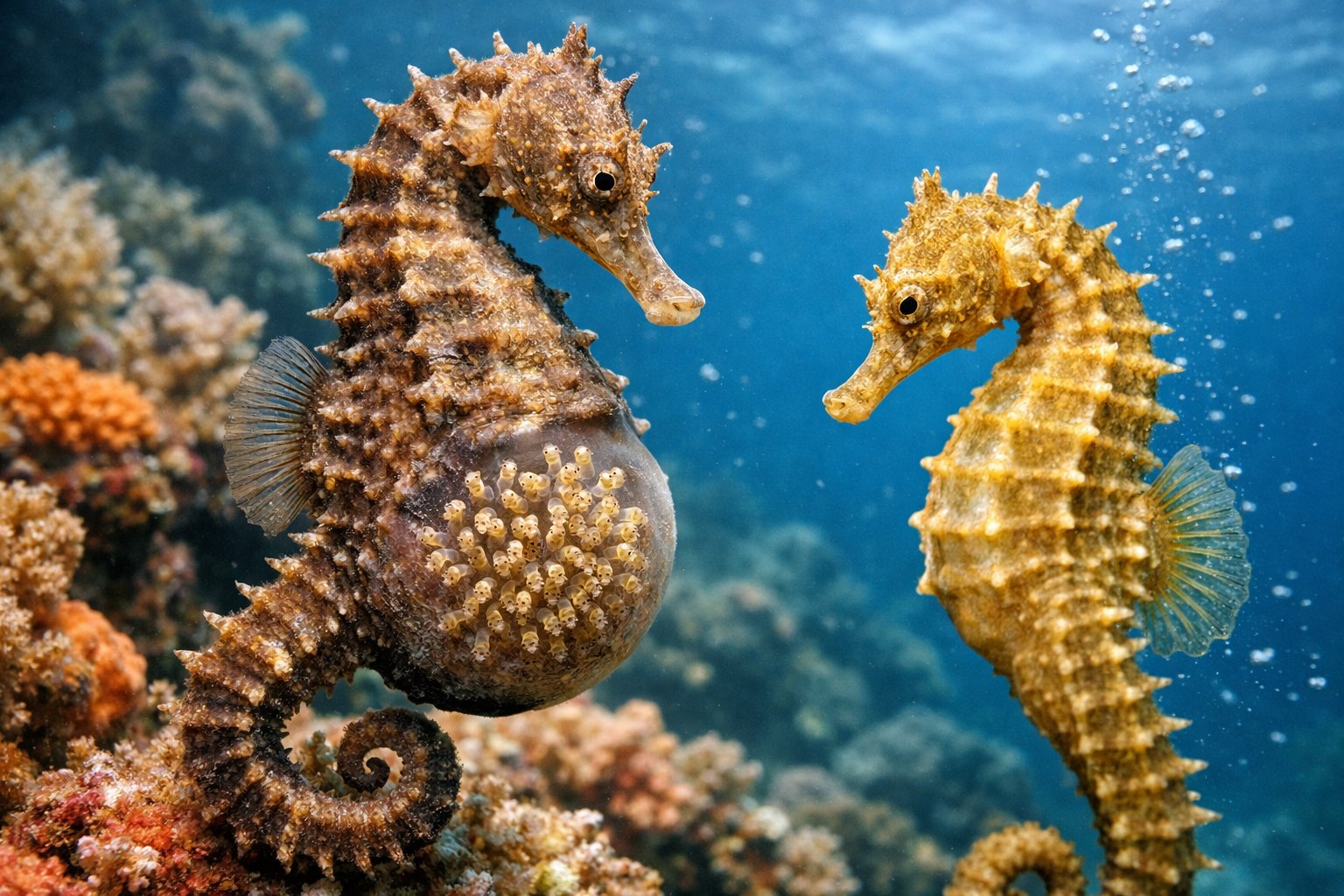
Let’s dig into how her daily life changes after mating, why food and habitat matter so much, and how this teamwork keeps seahorses going. You’ll get a pretty clear idea about feeding, pair behavior, and where females actually spend their time after the eggs are gone.
What Female Seahorses Do After Mating

After mating, the female hands off her eggs and then shifts her focus to feeding, hanging around habitat that supports future breeding, and getting her body ready for another round.
Egg Transfer and the Ovipositor
The egg transfer happens surprisingly fast, but it’s pretty precise. The female uses her ovipositor—a short, tube-like organ—to push eggs right into the male’s brood pouch.
She lines up with the male and gently pushes the eggs in while he fertilizes them and draws them into his pouch. The timing can be tight. Some species even do this after a long courtship dance that might last hours or days.
The ovipositor has just one job: placing eggs. It doesn’t stay attached after the transfer. Once the eggs are inside, the male’s pouch seals up and starts providing oxygen and nutrients. You’ll often see the pair separate at this point.
Immediate Post-Mating Activities
Right after the transfer, the female usually starts foraging again within minutes or maybe an hour. She goes after small crustaceans like copepods and mysid shrimp to rebuild the energy she spent producing eggs.
She often heads back to seagrass or coral edges where prey is easy to find and where she can anchor herself with her tail.
Females don’t help with incubation. The male carries the developing embryos for days or even weeks, depending on the species.
Sometimes, the female sticks around and does daily greeting dances to keep the pair bond strong, but she doesn’t go near the brood pouch or help with the birth.
Preparing for the Next Reproductive Cycle
If conditions are good, the female gets ready for another mating pretty quickly. She works on regaining her body condition—feeding, saving energy, and holding her spot near potential mates.
How fast she gets ready depends on things like food, water temperature, and the species. Some smaller Hippocampus species can breed several times in a season, so bouncing back fast is a big advantage.
You’ll spot behavioral cues like more courtship displays and syncing up with the male. Sometimes, she’ll change color or start up the daily dances again to show she’s ready for another egg transfer.
For habitat, females prefer healthy seagrass, coral, or mangrove areas where there’s plenty of food and shelter for repeated breeding.
Feeding, Habitat, and Daily Life Post-Mating
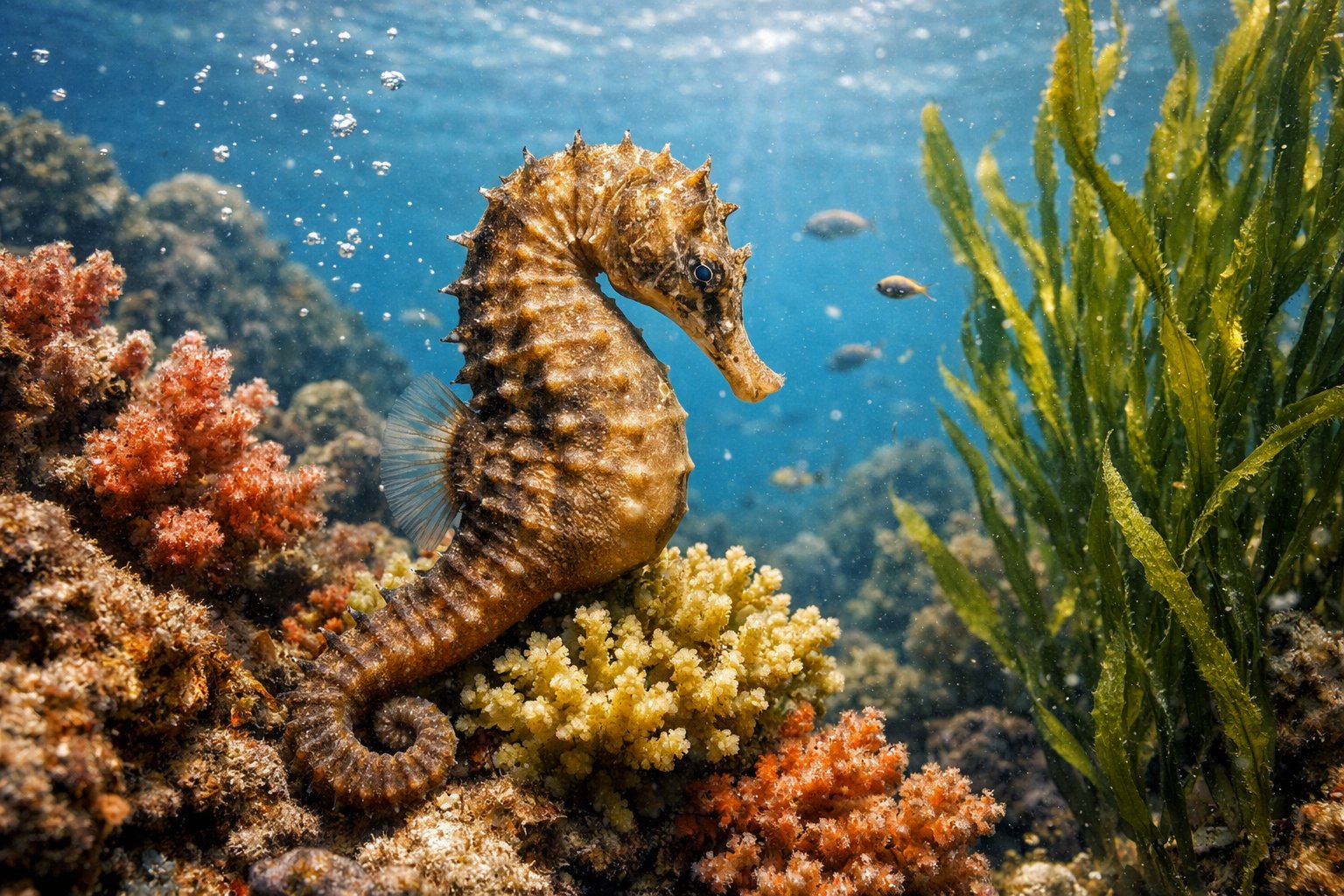
After mating, female seahorses get back to hunting, find shelter, and sometimes work on keeping their pair bonds. You’ll spot them snapping up small prey, using their tails to hang onto holdfasts, and reacting to whatever’s happening around them.
Foraging and Dietary Needs
Female seahorses eat small crustaceans and plankton-sized critters. You’ll often see them gobble up mysid shrimp, copepods, and tiny amphipods.
Their mouths are tiny, so they need to eat many times a day to make up for all the energy spent on eggs.
How much they eat depends on how much prey is around and the water temperature. In warmer, richer waters, they feed more and recover faster.
If you keep them in an aquarium, it’s best to offer lots of small feedings with live or frozen mysids to mimic what they’d get in the wild. A poor diet can lower egg quality and slow down how quickly she’s ready to mate again.
Habitat Importance for Recovery
Habitat really matters after mating. Seagrass beds, coral rubble, and mangrove roots give females places to hide and things to grab onto with their tails.
These holdfasts help them save energy while they wait for mates or build up egg reserves.
If habitat takes a hit from pollution, fishing, or collection for the pet trade, food and safe resting spots disappear. Project Seahorse and other groups have pointed out that losing habitat means fewer seahorses and fewer chances to mate.
Protecting or restoring local seagrass and keeping disturbances down helps keep females healthy.
Bond Maintenance and Pair Interactions
After egg transfer, lots of seahorse pairs keep up with daily rituals. You might catch pairs doing quick color displays or tail twines during morning greetings.
If you watch lined seahorses or big-bellied seahorses, you’ll probably see the female visit the male while he’s brooding, then swim off again.
Monogamous pairs use these rituals to time future matings and stay in sync. In species that aren’t strictly monogamous, females might look for new partners if their usual mate isn’t around.
If you keep them in an aquarium, putting compatible pairs together and minimizing stress helps keep those bonds strong and encourages regular mating.
Influence of Species and Environmental Factors
Different seahorse species act pretty differently after mating. For example, big-bellied seahorses usually hang out in cooler, temperate seagrass, and they take longer breaks between matings.
Lined seahorses, on the other hand, seem to form stronger pair bonds. Sometimes, they even greet each other every day. These quirks really affect how soon a female gets ready to brood again.
Temperature, salinity, and how much prey is around can all change how fast seahorses recover. If the water’s warmer, their metabolism and feeding pick up, but honestly, that can also mean more disease.
Human activities also play a part. The aquarium trade and traditional medicine have dropped wild seahorse numbers and messed with local mating systems. If you want to help, try choosing sustainably sourced or captive-bred seahorses, and support efforts to protect their habitats.


