
You might be surprised to hear that seahorses are actually carnivores. They eat tiny animals like shrimp, plankton, and small crustaceans—not plants. That little fact explains a lot about how they hunt, where they live, and honestly, why they seem to eat all the time.
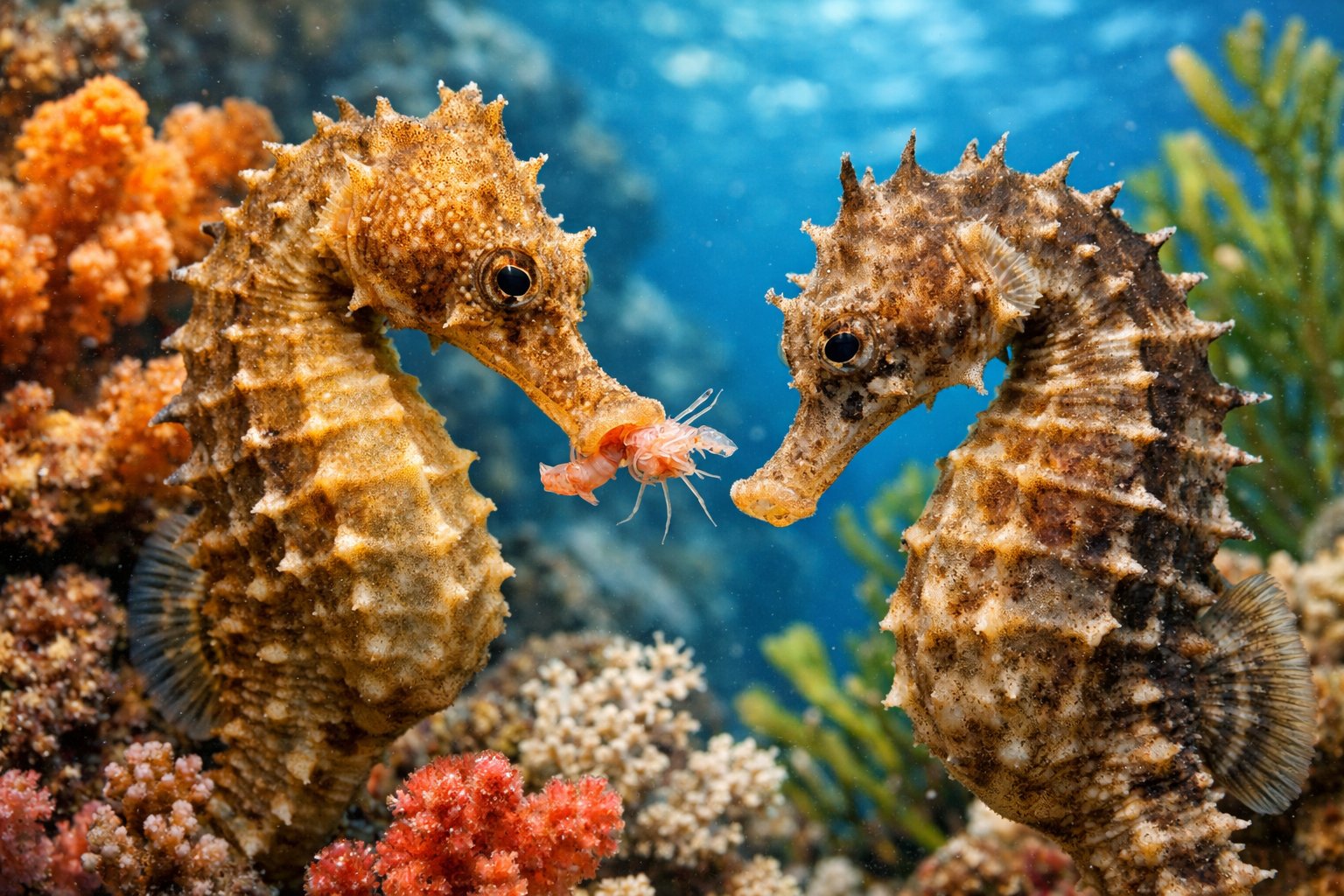
As you read on, you’ll see how their tube-like snouts work kind of like mini vacuum cleaners. Their diet makes them fascinating, but also pretty fragile. It’s interesting how this eating habit connects to questions about people eating seahorses and the conservation problems that come with that.
Do Seahorses Eat Meat?
Seahorses eat meat. They go after tiny animals, mostly small crustaceans and plankton. Since they don’t have a stomach and can’t store much food, they need to eat often.
Carnivorous Nature of Seahorses
Seahorses are definitely carnivores. You won’t catch them munching on plants as their main food.
Instead, they eat live animals that fit into their snouts. Most seahorses use suction to pull prey into those long snouts.
That lets them eat copepods, amphipods, and tiny shrimp. These are all animal tissue—so, yes, it’s meat.
They don’t have teeth or a stomach, so they digest food pretty fast. That means they need to eat many times a day.
In captivity, adults might eat dozens of times daily just to keep up their energy.
Typical Seahorse Diet in the Wild
Wild seahorses eat copepods, mysid shrimp, krill, and fish larvae. They really like live, moving prey because the movement triggers their strike.
Seahorse species in the Hippocampus genus come in different sizes, which changes their diet. Small species eat mostly copepods and tiny plankton.
Bigger species can handle larger crustaceans and more fish larvae. Their habitat also matters.
Seahorses in seagrass beds or mangroves eat the small crustaceans found there. If food gets scarce, they’ll move or cling to new spots near better feeding grounds.
How Seahorses Hunt and Feed
Seahorses don’t chase their prey. They use ambush tactics.
They anchor themselves with their tails and wait, usually blending in with seagrass or coral. When prey drifts close, a seahorse snaps its snout open and creates suction.
That vacuum pulls the prey in whole. The strike happens in milliseconds, so timing is everything.
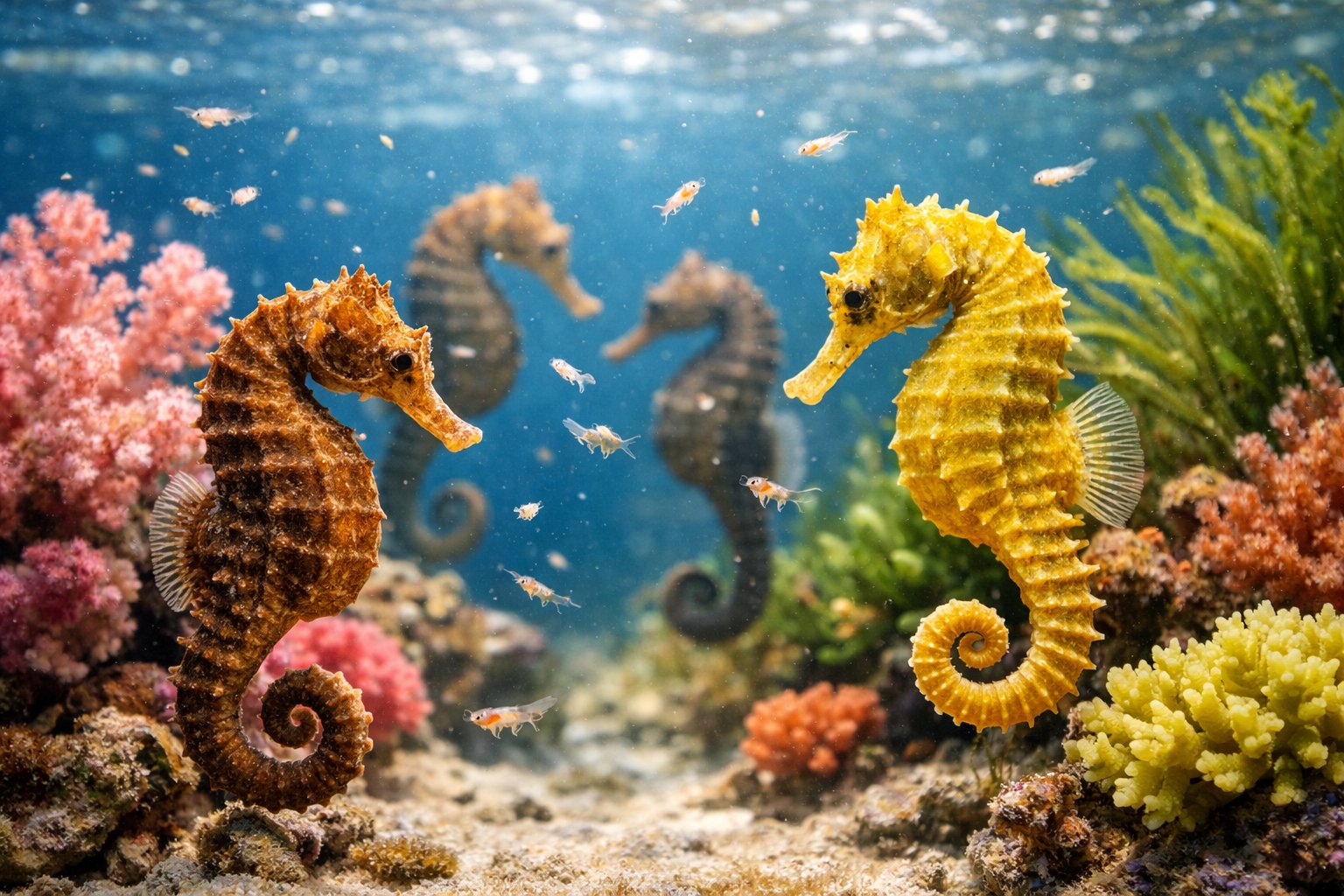
Seahorses need to eat small meals constantly because they can’t store food. Fry—baby seahorses—feed even more often and have to catch thousands of tiny prey every day to grow.
Seahorse Species and Diet Differences
You’ll notice diet changes between seahorse species and as they grow. Dwarf species eat mostly copepods, while larger ones like the big-belly seahorse go for bigger mysids and small shrimp.
Males and females eat the same types of things. The differences come down to size, habitat, and what’s available.
For example, Hippocampus erectus in cooler waters eats different crustaceans than a tropical Hippocampus bargibanti. In aquariums, you need to offer live or frozen meaty foods—like mysis shrimp or copepods—matched to the seahorse’s size and species to mimic what they’d eat in the wild.
Seahorses as Food: Edibility, Safety, and Cultural Perspectives
People do eat seahorses, use them in traditional medicine, and harvest them for trade, which puts a lot of pressure on wild populations. You’ll mostly find them dried, fried, or ground into powders in parts of Asia. Honestly, they don’t offer much in the way of nutrition.
Are Seahorses Edible and Safe to Eat?
Seahorses aren’t poisonous, and folks have eaten them for centuries in China and Southeast Asia. You can eat them whole after cooking since they don’t have venom or toxic organs.
Cooking helps reduce the risk from bacteria or parasites, especially in wild seahorses. People rarely eat them raw, and it’s not a great idea anyway—the bony exterior and low flesh make it unpleasant, and it could mess up your teeth or digestion.
If you’re thinking about trying them, check local laws and food safety rules. Some dried seahorses sold for medicine might not meet food standards.
Seahorse Meat: Taste, Texture, and Nutritional Value
There’s not much meat on a seahorse. Most of their body is made up of bony plates and thin skin, so you don’t get much flesh compared to regular fish.
People who’ve tasted seahorse say it’s salty and has a rubbery, chewy texture—kind of like small squid or dried seafood. Deep-frying makes the whole thing crispy, which is how many vendors serve them.
Nutritionally, seahorses don’t stack up well against seafood like salmon. They offer very little protein and almost no omega-3 fats. If you’re looking for nutrients or calories, you’re better off with just about any other fish.
How Are Seahorses Prepared and Consumed?
People usually dry, deep-fry, or simmer seahorses in medicinal soups. Street vendors often skewer and fry them whole until they’re crispy.
Dried seahorses get ground into powder for traditional remedies or steeped in alcohol for tonics. You almost never see raw seahorse on a menu.
Soups and broths are more about extracting compounds from dried seahorse than serving a meaty meal. Occasionally, modern recipes toss seahorse into novelty dishes like seahorse pasta or crispy appetizers at specialty restaurants.
If you handle seahorses for food, clean and cook them well. For frying: dry, season, and fry at medium-high heat for 3–5 minutes until golden. For soups, steep dried pieces with herbs for several hours.
Seahorse Trade, Conservation, and Population Impact
Most seahorses in trade come straight from the wild. Every year, people harvest millions, mainly because of demand in traditional Chinese medicine and for curios.
This massive trade has pushed several species toward vulnerable or even endangered status. International rules under CITES try to regulate seahorse exports and imports, but honestly, enforcement depends a lot on the country.
You can help reduce the impact. Avoid buying seahorse products, pick sustainable seafood, and support marine conservation groups that protect where seahorses live.
If you care about these species surviving, skip powdered seahorse, curios, or dishes made from wild-caught seahorses. Always check for info on trade permits or certified sustainable options before you even think about buying or eating anything made from seahorses.


