
Most people picture lions as the kings of strength among big cats. But honestly, quite a few animals outmatch them in raw power or unique skills. Elephants, saltwater crocodiles, grizzly bears, gorillas, and rhinos all top lions in at least one way—whether it’s weight, bite force, lifting power, or just sheer bulk.

Dig into this, and you’ll see how lion strength stacks up against these rivals. What does “strong” really mean in the wild, anyway? Different animals win out in different contests, so the lion’s reputation owes as much to its hunting smarts and teamwork as to its muscles.
Animals Stronger Than a Lion
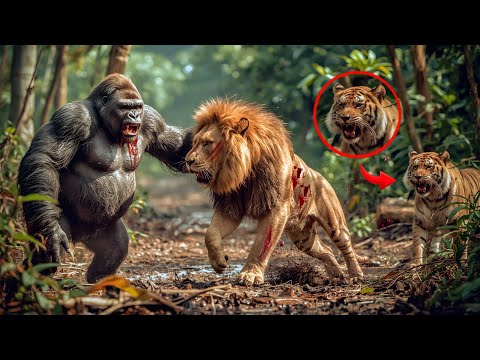
Plenty of land and water animals can outdo a lion in size, force, or defense. Some creatures use their weight, horns, bite, or armor to overpower or just plain avoid lions when it counts.
Elephants: Largest and Strongest Land Animals
African elephants are the biggest land mammals around. They simply outweigh lions by a huge margin.
Adult males usually weigh between 4,000 and 7,000 kg. They push or drag heavy objects, break trees, and can crush threats with their trunks or tusks.
You’ll never see a lion take down a healthy adult elephant alone. Lions mostly go after calves or the sick and weak.
Elephants use both their size and group defense. Herds will surround their young, and adults form a protective circle.
Their trunks give them precise lifting and throwing strength. Tusks and powerful legs can deliver fatal blows.
Rhinoceroses: Defensive Powerhouses
Rhinos—especially white rhinos—are massive, with thick skin that shields them from most predators. A white rhino can weigh 2,000 to 3,600 kg and charge up to 50 km/h.
Their horns can gore anything that gets too close.
Lions usually steer clear of healthy adult rhinos. A rhino’s size and horn make it a risky target even for a pride.
Rhinos rely on their size, tough hides, and aggressive charges to protect calves and territory.
Tigers: Fierce Solo Predators
Tigers are actually the largest big cats, and pound for pound, they often outmuscle lions.
A big male Siberian or Bengal tiger can outweigh many lions. Tigers have stronger forelimbs and a more powerful bite.
Tigers hunt alone and use stealth plus a strong neck grip to suffocate prey. You’ll see a tiger dragging heavy kills by itself—something lions rarely do.
In one-on-one fights, tigers usually have the edge in agility and brute strength. Tigers and lions don’t meet in the wild, but their builds and hunting styles give tigers an advantage.
Hippos and Crocodiles: Aquatic Titans
Hippos combine huge size, a bone-crushing bite, and serious aggression. Adults weigh between 1,500 and 3,200 kg.
Their wide mouths and big canines let them bite boats, predators, or anything else that gets too close. Hippos can and do kill lions at the water’s edge, especially when defending territory or their young.
Saltwater crocodiles ambush prey with the strongest bite force among reptiles. A big saltwater croc can weigh over 1,000 kg and easily crush skulls or drag animals into deep water.
Lions hunting near rivers risk sudden attacks from crocodiles or run-ins with territorial hippos.
Comparing Lion Strength With Rivals

Lions rely on their size, teamwork, and weaponry to hunt big prey and defend their turf. Their bodies, jaws, social habits, and main rivals all play a part in how they fare in real-life encounters and those “what if” battles people like to imagine.
Physical Power and Adaptations
Male lions weigh about 120 to 250 kg, while females come in at 100 to 180 kg. They’ve got strong shoulders and hind legs, perfect for short bursts of speed.
You see that power when a pride chases zebra or buffalo. Lionesses sprint fast and use their forequarters to knock down heavy prey.
Their coats and manes help protect their necks during fights. Asiatic lions have sparser manes than African males, so there’s a bit less protection there.
Now, compare that to a silverback gorilla. Gorillas have crazy upper-body strength from all that climbing and knuckle-walking.
A gorilla can land bone-crushing blows. Elephants, rhinos, and hippos outclass lions in sheer mass and can kill them with charges or stomps.
Crocodiles use ambush power in water, which lions just can’t match. Size and habitat matter more than just muscle.
Bite Force, Claws, and Defense Mechanisms
A lion’s bite force hits around 650 PSI. That’s enough to break large bones and hold onto struggling animals.
Their retractable claws stay sharp and lock into flesh during hunts. You’ll see a lion swipe with a forepaw to unbalance prey, then go for the throat or muzzle with its jaws.
Hyenas have even stronger jaws for crushing bone. They scavenge kills and can bite through ribs, often winning by sheer numbers and persistence.
Crocodiles use a bite-and-hold method, not slashing, making water especially risky for lions. Humans, with tools or weapons, easily outmatch lions physically, though not naturally.
These defenses all have trade-offs. Thick hides, herd protection, or aquatic tactics can stop a lion, even with its deadly teeth and claws.
Territorial Disputes and Social Behavior
You can see lion prides working together to control territory and defend their cubs. The males patrol the borders and roar, warning off any rivals nearby.
Females usually hunt as a team and stick close to protect their young. This pride structure really gives lions an advantage, both against lone challengers and most predators on land.
Spotted hyena clans fight back with big numbers and strict social ranks. Sometimes, a hyena clan will drive lions away from a kill or overwhelm a lone lion.
Scavengers like jackals and vultures don’t really threaten adult lions, but they’ll swoop in to grab whatever’s left after a hunt. When different species end up clashing—say, hyenas versus lions, crocodiles at the water’s edge, or even gorillas in theory—the outcome depends a lot on group size, the terrain, and whether it’s a single animal or a coordinated group.


