
Most people assume only females can get pregnant, but seahorses flip that idea upside down. Yep — in seahorses and their close cousins, males actually carry the eggs and give birth. Nature really loves a plot twist, doesn’t it?

Let’s dig into how this works and why it matters. We’ll look at the male’s brood pouch, how the eggs get there, and a few things scientists still scratch their heads about.
You might be surprised by some of the details.
Do Only Male Seahorses Give Birth?
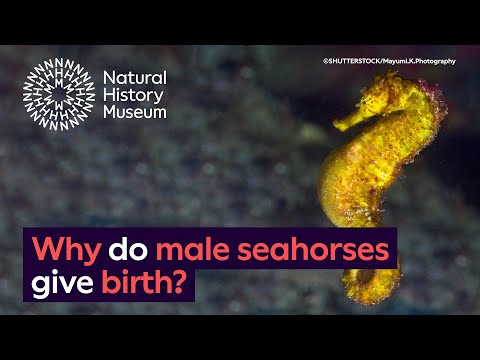
Male seahorses take on the job of carrying eggs in a pouch on their tail. They fertilize the eggs inside and later push out fully formed young.
Let’s look at how their pregnancy works and which relatives share this wild trait.
What Makes Male Seahorse Pregnancy Unique
Male seahorses have a brood pouch right at the base of their tail. During mating, females deposit eggs straight into that pouch.
Once the eggs are in, the male releases sperm inside to fertilize them. The pouch acts as a sort of nursery, supplying oxygen and nutrients while keeping salt levels in check.
Researchers have found that the pouch tissue acts a bit like a placenta. It’s not just a simple egg sac.
Pregnancy time can change depending on the species and the water temperature. Some males carry hundreds or even over a thousand embryos at once.
After giving birth, males often mate again pretty quickly. That means several broods in a single season.
How Male Seahorses Give Birth
When the embryos are ready, the male starts having contractions. Unlike mammals, seahorse males use skeletal muscles connected to the pouch opening and anal fin to push the babies out.
These muscles contract in waves until the young are released. Birth might take just a few minutes or stretch into hours, depending on how many babies are inside.
Each newborn looks like a miniature adult and swims off almost immediately. Males usually recover fast and can accept new eggs within days.
Before birth, males show some clear behaviors. They might eat less and do little courtship dances with their partner.
You’ll see this in aquariums or even in the wild if you’re lucky.
Animal Kingdom Rarity and Syngnathidae Relatives
Only members of the Syngnathidae family show this kind of male pregnancy. That group includes seahorses, seadragons, and pipefish.
Males in these families all incubate embryos, but their pouches aren’t always the same. Pipefish and seadragons have their own versions, and some pipefish just attach eggs along their belly instead of sealing them in a pouch.
Male pregnancy is super rare in the animal world. In Syngnathidae, you’ll always find males carrying and giving birth, while females just provide the eggs.
This role reversal makes these animals fascinating for anyone interested in how parenting and reproduction evolved.
How Seahorse Reproduction Works

Seahorse dads carry eggs in a special pouch and control the environment while the embryos grow. Their courtship is kind of precise and rhythmic, and the babies leave the pouch as tiny, fully formed seahorses.
Brood Pouch Structure and Function
The brood pouch sits on the male’s belly. Its size and shape change depending on the species.
Inside, a thin lining supplies oxygen, removes waste, and keeps salt levels balanced for the growing embryos. Think of the pouch as a cozy, protective chamber.
It seals shut when the eggs go in and opens back up during birth. The male tightens the pouch with skeletal muscles to push the young out.
The pouch even acts a bit like a placenta. It delivers nutrients and immune molecules, and the pouch fluid slowly changes to match seawater as the embryos get ready to hatch.
That way, the newborns can handle life in the ocean right away.
Courtship and Mating Rituals
Seahorse courtship can last for days. It often includes color changes, synchronized swimming, and tail linking.
Partners usually perform a daily greeting dance. That strengthens their bond and helps time their mating.
During these dances, the pair circles each other, rises upright, and flicks their fins. This ritual lets the female check if the male’s pouch is ready.
When it’s time, the female uses her ovipositor to place eggs directly into the male’s pouch. Some species repeat this over a few days if they have big clutches.
Fertilization and Gestation
After the eggs enter, the male fertilizes them inside the pouch and seals it up. Early development happens right there, with the male controlling oxygen and salt levels.
Gestation lasts anywhere from about 10 days to six weeks. Species, water temperature, and clutch size all play a part—warmer water usually speeds things up.
The male tweaks the pouch fluid and provides nutrients and immune support. People often say the males “get pregnant,” and honestly, it’s pretty close—they carry and nourish the embryos in a way that’s not too different from pregnancy in other animals.
Baby Seahorses and Early Survival
When birth begins, the male contracts his abdominal muscles and pushes the young out through his pouch opening. Depending on the species, a brood might have just a few dozen fry—or sometimes well over a thousand.
These newborns already look like tiny adults, complete with a little prehensile tail, snout, and those delicate fins. After they’re released, the parents don’t stick around. The babies have to start finding food and hiding from predators right away.
In the wild, survival rates aren’t great. Most fry get eaten fast, so seahorses rely on sheer numbers—hoping at least a few make it. In captivity, you can help their odds by adding lots of hiding spots and offering tiny live food, like freshly hatched brine shrimp.


