
Ever wondered if those fragile-looking seahorses can actually bite you? They can give a tiny nip, but since they don’t have teeth, they can’t hurt you or break your skin.
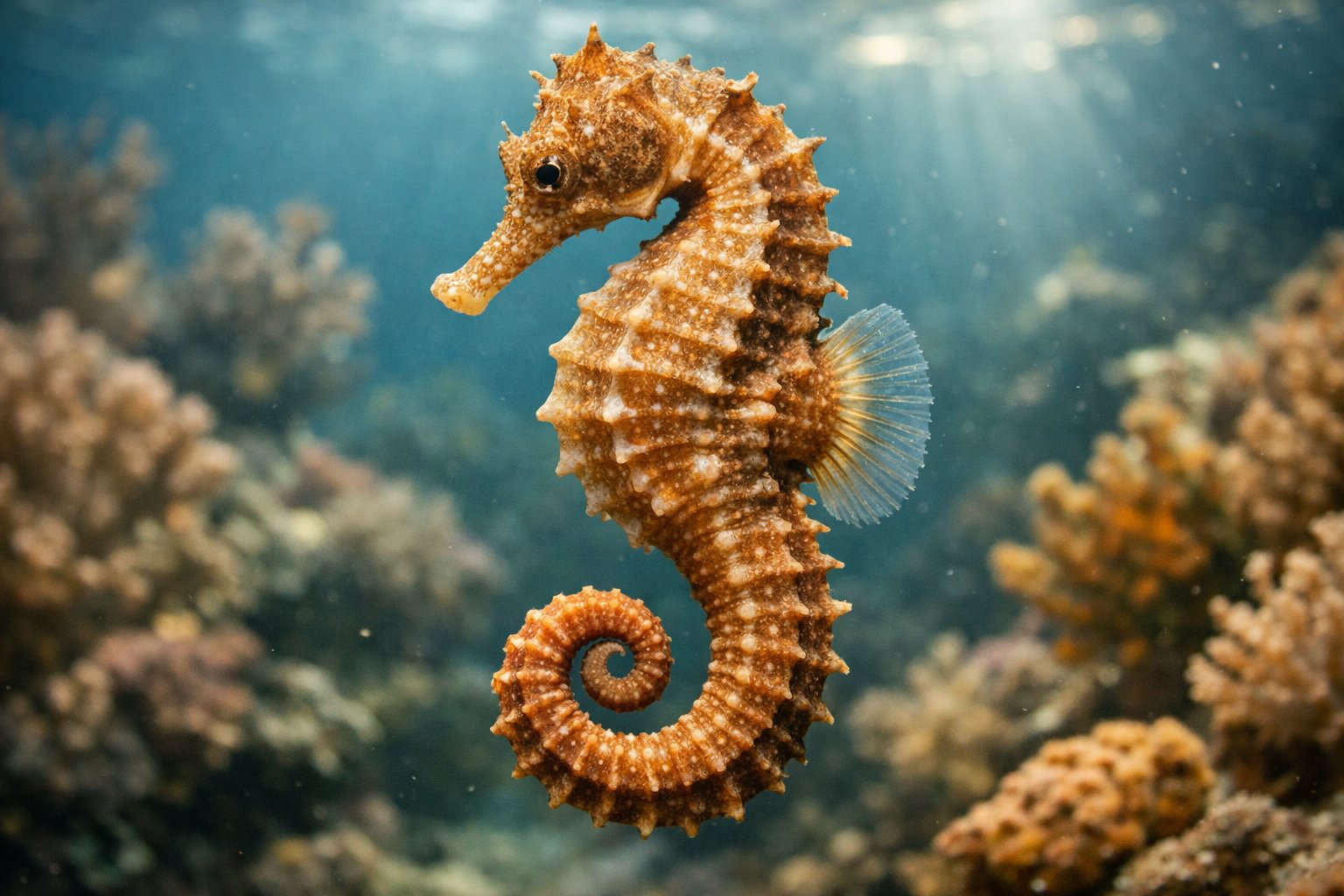
Let’s talk about why seahorses (yep, they’re part of the Syngnathidae family) use suction to eat their tiny prey. Their feeding style looks more like a quick sip than any real bite.
I’ll also touch on how their quirky behavior and bony armor help them dodge trouble, plus what happens when they cross paths with other sea creatures.
Curious if a seahorse can harm you, why they “nip” while feeding, or what to look out for when you’re up close? Stick around for some straightforward, no-nonsense answers.
Can a Seahorse Bite Humans or Other Animals?
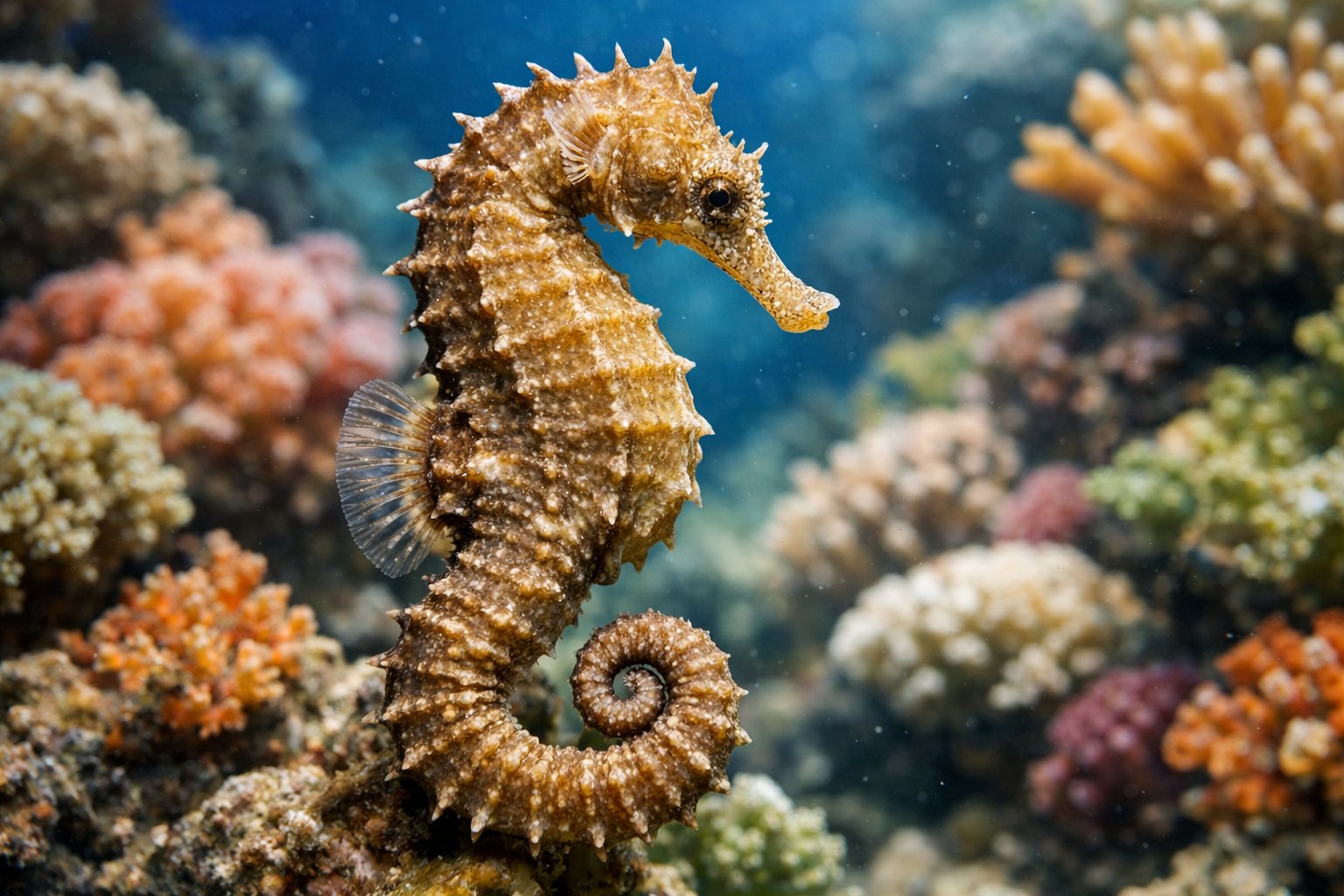
Seahorses really don’t threaten people. Their mouths and the way they eat limit what they can grab, and honestly, they mostly snack on tiny crustaceans or drifting plankton.
Do Seahorses Have Teeth?
Nope, seahorses don’t have real teeth like mammals or most fish. Instead, you’ll find bony plates or ridges inside their long, tube-shaped snouts. These help them crush or hold onto really small prey.
They can’t chew. They just suck prey into their snout and swallow it whole. That means they don’t use biting to tear food or defend themselves like other animals do.
Different seahorse species have slight anatomical variations, but none grow sharp, visible teeth. Their mouth parts are built for suction feeding, not for biting big prey or skin.
Are Seahorses Aggressive or Dangerous?
Seahorses don’t act aggressively toward humans. They’re slow, chill fish that use their tails to anchor themselves to seagrass or coral and just wait for food to drift close.
If you handle a seahorse roughly, it might grip your finger with its tail or try to hold on with its snout. That feels more like a gentle nudge than a bite.
Some species get territorial with other seahorses, especially during mating. You’ll see color changes or a bit of chasing, but not biting people or anything much bigger than themselves.
Seahorse Snout Structure and Function
The seahorse snout is basically a narrow, tube-like jaw extension. When they eat, they snap their head forward and create suction, pulling water and tiny prey right into the tube.
At the tip, the snout has a small opening. That’s where prey goes straight to the throat—there’s no strong jaw for biting. Inside, bony ridges help hold or break up tiny exoskeletons.
Their snout works perfectly for suction, so seahorses eat copepods, mysids, and plankton. This feeding style keeps their interactions with larger animals—and people—pretty limited.
Documented Biting Incidents
Almost nobody has credible stories about seahorses biting humans. Most of the time, people describe seahorses nibbling or clinging when they’re handled, not actually biting hard enough to break skin.
Aquarium staff sometimes mention a seahorse snapping at a finger during feeding. Really, it’s just a suction reflex and almost never causes harm. No one’s recorded seahorses as a real danger to divers or handlers.
If you’re handling seahorses, use a soft net and be gentle. That keeps them calm and avoids any gripping or nipping that could get mistaken for a bite.
You can check out more info on seahorse feeding and mouth structure in resources like the Institute for Environmental Research’s discussion on seahorse feeding mechanics (https://iere.org/do-sea-horses-bite/).
Seahorse Feeding, Behavior, and Defensive Adaptations

Seahorses eat by snapping up prey with quick suction. They hide by changing color and staying really still. Their strong tails let them latch onto plants or coral.
All these traits help them catch tiny creatures, dodge predators, and stay put in moving water.
How Seahorses Eat Using Suction Feeding
Think of their mouth as a long tube, not a biting jaw. Seahorses have tubular snouts and fused jaws, so they can’t chew or bite.
They line up their head with a small crustacean or copepod and snap their mouths open in a split second, creating a vacuum.
That suction pulls the prey right in. The whole process takes less than a tenth of a second for many species—speed and stealth matter way more than strength here.
They feed on tiny, moving animals like copepods, mysids, and planktonic invertebrates because bigger prey just doesn’t fit in their snout.
Since they don’t have teeth, they need to swallow lots of small prey, and you’ll often see them eating throughout the day. Young seahorses and smaller species eat even more often because they burn through calories fast.
The Role of Camouflage and Chromatophores
Seahorses hide by changing their body shape and color. Their skin has pigment cells called chromatophores that expand or contract to shift their shade.
You might see them blend right in with seagrass, coral, or algae to stay hidden from both predators and prey.
Some species grow little skin filaments or bumps that break up their outline even more. When you get close, a seahorse usually freezes instead of swimming away, hoping to blend in.
Chromatophore changes can happen fast for quick hiding, or more slowly to match seasonal changes in their habitat. Camouflage is their main defense—not something they use to attack.
Prehensile Tail Use and Anchoring
You’ll notice seahorses wrapping their prehensile tails around things like seagrass, coral branches, or even man-made objects. Their tail acts like an extra limb, gripping tight to resist currents and waves.
Anchoring keeps them in one spot, so they don’t waste energy and can wait for food to float by. It also lowers their chances of getting swept into open water, where they’d be more exposed.
Both males and females use their tails this way, and some species will cling to a single stem for hours while feeding or even courting.
Seahorses in Seagrass Beds and Habitats
Seagrass beds give seahorses a place to feed, hide, and breed. You’ll spot them hanging around in shallow coastal spots, especially where the water brings in tiny crustaceans and plankton.
Seagrass blades make perfect anchor points for a seahorse’s tail. They also blend in with the seahorse’s usual colors—pretty clever, right?
Males carry eggs in a brood pouch while they stay tucked near cover. This habitat really supports their whole mating routine.
When seagrass disappears or the water changes, seahorses struggle to feed and survive. If you care about seahorses, you might want to focus on keeping these beds healthy and protecting nearby areas.


