
You watch the male seahorse release hundreds of tiny fry into the water, and you can’t help but wonder what happens next. Most baby seahorses drift alone in the plankton, forced to find food, dodge predators, and settle into a safe spot all by themselves—only a tiny handful ever make it to adulthood.
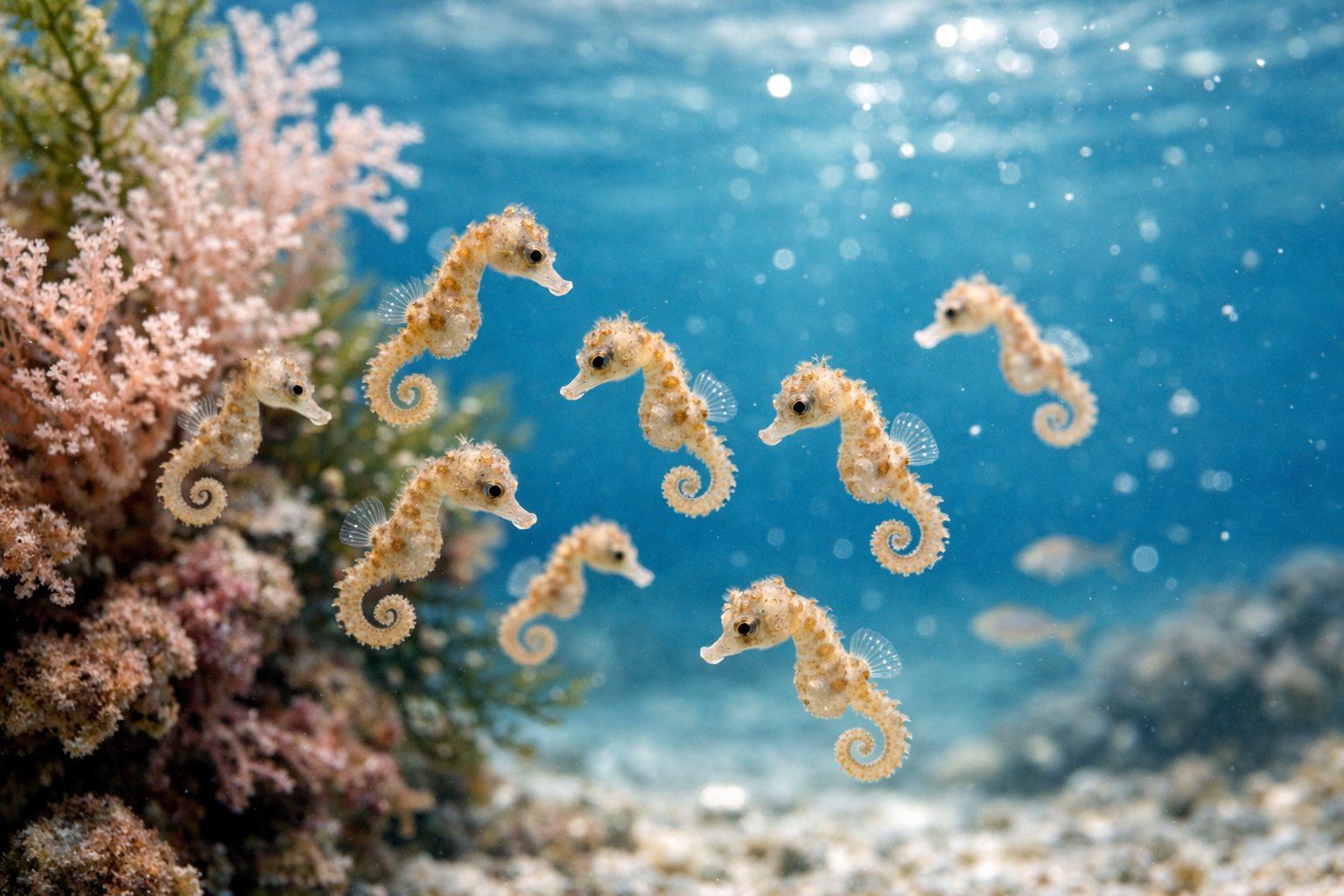
Let’s look at how their lives begin the moment they leave the pouch. The risks are immediate and pretty intense. Some fry manage to survive and reach seagrass beds or coral, but most don’t get that lucky.
This article’s going to walk you through those first wild hours, the planktonic drift, and the choices that decide which seahorses get to grow up.
Immediate Aftermath: Life Begins for Baby Seahorses

Tiny, fully formed seahorses hit the water and immediately have to fend for themselves. As soon as they leave the safety of their dad’s brood pouch, they start moving, feeding, drifting with the currents, and facing all kinds of dangers—sometimes for weeks.
Release From the Brood Pouch
When the male seahorse goes into labor, he contracts his pouch and pushes out dozens to thousands of fry in just minutes or hours. The brood pouch had given oxygen and fluids and helped the embryos finish developing organs and muscles.
At birth, each baby already has the classic seahorse shape and uses its dorsal fin to swim. You’ll notice the fry come in different sizes, depending on the species—some are barely a centimeter, some a bit bigger.
The release might happen all at once or in bursts, depending on the dad’s pouch and the species. After that, the father doesn’t stick around. The babies are on their own.
Self-Reliance and First Movements
Baby seahorses don’t get any help. They have to hunt down microscopic prey like copepods and larval shrimp within hours to keep up their crazy-fast growth.
Their snouts and feeding muscles are ready from the start, so they can snap up tiny food without anyone showing them how. Swimming isn’t their strong suit, but it’s instinctive—they flutter their dorsal fins to move and grab onto algae or seagrass with their tails if they find any.
These early moves and feeding habits come straight from their built-in muscles and simple nerve circuits.
Planktonic Phase and Drift
Most newborns drift along in the plankton for days or weeks, just floating wherever the currents take them. You’ll see them mixed in with other zooplankton, not yet settled on seagrass or reefs.
This drifting spreads them out, letting some find new habitats. As they get bigger, they start looking for “hitching posts” like seagrass blades, mangrove roots, or coral branches.
Once they hook on with their tails, they stop drifting and start living a more settled life, focusing on feeding and hiding.
Major Threats to Survival
Predators are the biggest danger. Small fish, shrimp, and other plankton-eaters gobble up huge numbers of fry.
With their tiny size, weak camouflage in open water, and not-so-great swimming, most fry don’t stand a chance. Environmental hazards don’t help either.
Strong currents can sweep them into bad places, and pollution or habitat loss makes it harder to find food or shelter. Different species face different risks depending on where they live, but honestly, survival rates are dismal for all of them.
Survival Strategies and Settling Down

Newborn seahorses deal with a lot, but they’ve got some clever tricks. They rely on camouflage, sharp feeding instincts, growing fast, and finding shelter to boost their odds.
Camouflage Advantages
Blending in is everything right after birth. Many baby seahorses match the color and texture of whatever seagrass, algae, or coral is nearby.
Predators like small fish, crabs, and octopus have a harder time spotting them when they’re well-camouflaged. They also use posture and stillness—hooking their tails onto plants and freezing to avoid drawing attention.
Some species even have tiny filaments or bumps on their skin that mimic their surroundings, a neat family trait you’ll see in pipefish and seadragons too. Camouflage works best near complex habitats, like branching coral or thick eelgrass.
Those places offer more places to hide and fewer predators lurking.
Instinctive Hunting Skills
Hunting starts right away. Baby seahorses eat tiny plankton, copepods, and nauplii.
Their snouts are made for quick suction, so they can grab food in a split second. Because they don’t have a stomach, they need to eat all the time—lots of short hunts instead of long chases.
Their ambush-and-suck feeding style works well in seagrass beds and along reefs, where prey drifts by. If they find food quickly, they grow faster and spend less time as vulnerable plankton.
That’s huge, since slow eaters rarely make it.
Growth and Development
When food and shelter are around, baby seahorses grow at a wild pace. Some species settle down in just a couple of weeks—pygmy seahorses are especially quick—while bigger species might take several weeks.
Growing fast lets them switch from drifting to a more anchored lifestyle. As they get bigger, their fins and tails strengthen, making it easier to grip onto things and resist currents.
Their colors might darken or change to better match where they end up living. How fast they grow also affects when they can start breeding.
Species that stay small or live in different habitats, like pipefish, mature at different rates and spread out differently too.
Settlement in Suitable Habitats
You pick settlement sites that have food, cover, and solid spots to hold onto. Seagrass beds, mangrove roots, branching corals, and sponges usually top the list. These places give you both prey and safe hiding spots from predators.
After you find a good spot, you tend to stick close by. Most seahorse species hang around small home ranges and don’t wander far. Choosing the right place really matters for your survival and, honestly, it shapes the whole local seahorse population.
When humans damage these habitats—like when seagrass disappears or coral reefs shrink—you lose out on good places to settle. If we protect these areas, more juveniles make it, and that helps not just seahorses but their relatives too, like seadragons and pipefish.


