
You can keep a seahorse, but honestly, it’s a lot more demanding than caring for a goldfish or betta. If you’re thinking about it, be ready for some specialized equipment, careful water management, and a bit of a learning curve before you dive in.
Let’s talk about whether seahorses actually fit your lifestyle, what rules and costs you need to weigh, and how to set up a tank that works. I’ve dropped some links to solid care guides, legal info, and cost breakdowns so you can double-check details for your area and whichever species you’re eyeing.
If you decide to go for it, you’ll get step-by-step advice on picking a healthy seahorse, building the right setup, and keeping them happy and well-fed at home.
Can You Get a Seahorse as a Pet? What to Know First
Seahorses need a saltwater tank, stable water quality, and regular meals of mysis shrimp. You’ll need to check local laws, pick a species that suits your tank and skill level, and (if you can) buy captive-bred animals.
Legal and Ethical Considerations
Rules about keeping seahorses change depending on where you live. Some places want permits or ban certain species outright.
If you’re thinking about importing, you might need CITES paperwork for protected types.
Check your local fish and wildlife agency’s website, or just call your aquarium society before buying. You’ll avoid fines and help protect wild seahorse populations that way.
Ethics matter here. Wild-caught seahorses can really hurt local stocks and reefs. Go for sellers who can prove their animals are captive-bred. Supporting captive-bred seahorses helps keep the trade humane and cuts down disease risk in your tank.
Choosing the Right Seahorse Species
Pick a species that matches your tank size and your own experience. Larger types like the common seahorse (Hippocampus erectus) need taller tanks and can live for years with good care.
Dwarf species need less space, but they’re picky—they want specialized microfauna diets and seriously stable tanks.
Think about their temperament and eating habits too. Some seahorses eat slowly and need frequent, small meals.
If you want a pair, make sure your tank’s big enough—a 30-gallon tank works for a pair of big seahorses, while dwarf pairs can fit in smaller setups.
Tank mates are tricky. Choose slow, peaceful fish like gobies or small blennies, so they won’t outcompete your seahorses for food. Skip fast or aggressive species and big schooling fish—they’ll just stress everyone out. Watch how everyone gets along and use feeding stations if you have to.
Where to Buy Captive-Bred Seahorses
Stick with reputable breeders, marine aquarium stores that track breeding, or hobbyists who actually know what they’re doing. Ask for proof—birth origin, species ID, quarantine history, feeding habits.
Go for sellers who raise their seahorses on frozen mysis or live copepods. Seahorses trained to eat from a dish settle into home tanks more easily.
Don’t buy on impulse from generic pet stores that don’t know seahorses. If a seller only has wild-caught ones or can’t show breeding records, just walk away. You’ll find solid options and community leads in aquarium clubs, forums, and from specialized breeders listed on marine hobby sites like the PetMD guide to seahorse care.
Setting Up and Caring for Your Pet Seahorse

You’ll need a clean, stable tank with spots for seahorses to grab onto, regular feedings of nutritious crustaceans, and daily checks for stress or sickness.
Seahorse Tank Setup Essentials
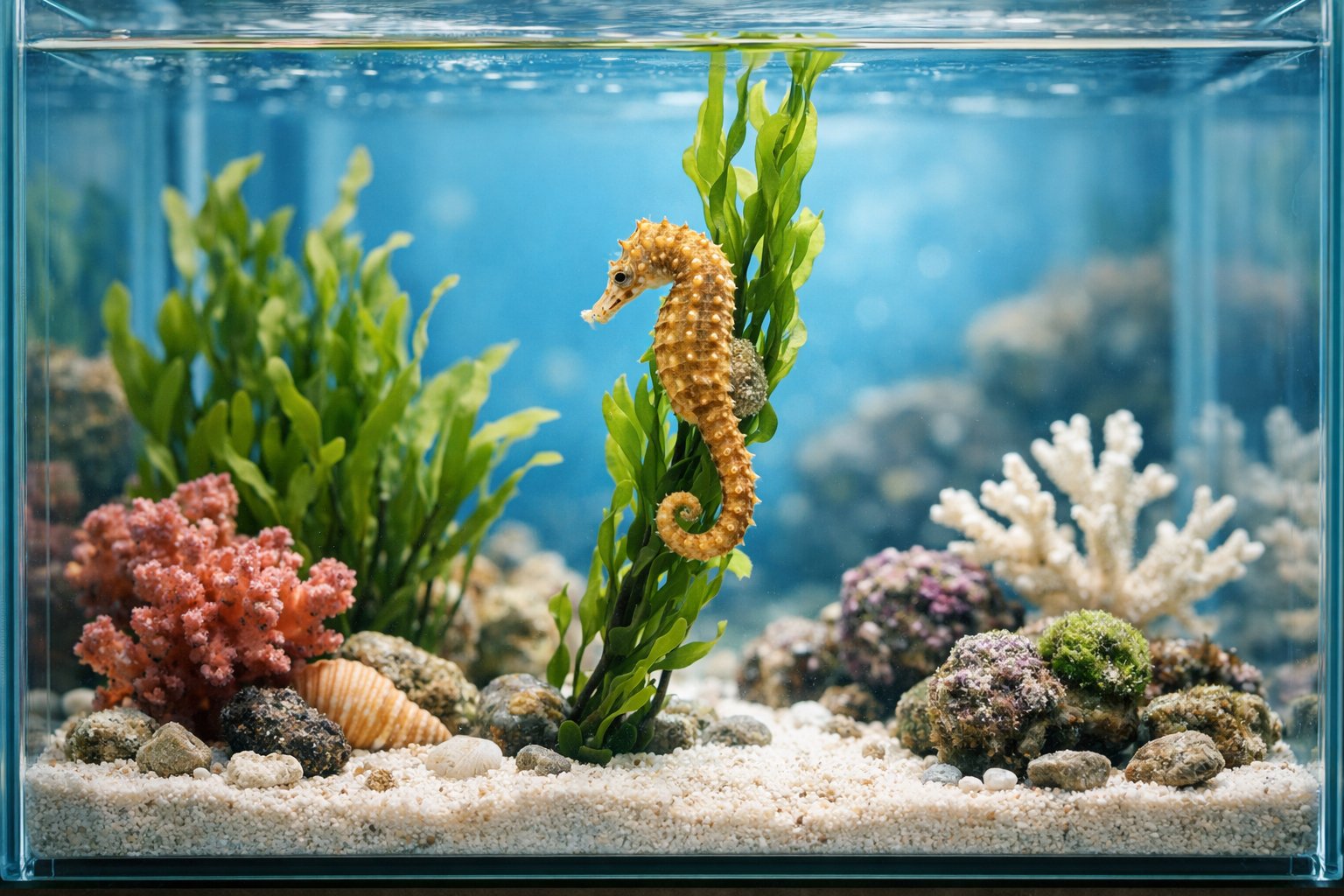
Pick a 30-gallon tank for a pair, and add another 10 gallons for each extra seahorse. Use a gentle filter that turns over water about four times per hour, but steer clear of strong currents—seahorses are terrible swimmers and need calm water.
Keep salinity between 28–32 ppt (specific gravity 1.021–1.025). Hold the temperature steady at 75–80°F. Aim for a pH around 8.1–8.4.
Add plenty of vertical and horizontal holdfasts—live or fake plants, ropes, or coral-safe decorations work. Avoid anything sharp or metal. Dim lighting helps; bright lights just stress them out.
Test your water every week for ammonia, nitrite, nitrate, salinity, pH, and temperature. Do partial water changes (20–25%) every 2–4 weeks, or sooner if things drift. Quarantine any new arrivals before adding them to your main tank.
Feeding and Diet: What Do Seahorses Eat?
Seahorses are carnivores and mostly eat small crustaceans. Feed thawed mysis shrimp two or three times a day—make that the main event for adults.
Offer baby brine shrimp as treats or for juveniles, but don’t rely on them alone—they’re not complete nutrition.
Use a feeding cup, station, or even a turkey baster so your seahorses can find their food without fighting faster fish. Hand-feeding can help picky eaters get used to frozen food.
Always thaw frozen food in tank water first. Scoop out leftovers to keep the water clean. Pay attention to each seahorse’s appetite; if one stops eating, it’s usually a sign something’s wrong.
Daily Care and Health Tips
Check the temperature and watch how your seahorses act every day. Notice their breathing, color, how they grip with their tails, and how much they’re eating.
Look for trouble signs—rapid breathing, weak tail grip, lumps, cloudy eyes, or weird swimming. If you spot these, act quickly.
Wear gloves when you handle tank stuff. Keep a log of water tests and feeding times.
Find a local aquatic vet before you run into an emergency. Stick to good hygiene: clean filters, remove waste, and avoid big water changes that could upset the helpful bacteria in your tank.
Be careful with live corals. They might sting your seahorses or get damaged by them.
Compatible Tank Mates and Challenges
Pick peaceful, slow, or non-aggressive tank mates if you want your seahorses to thrive. Small gobies, a few pipefish, and snails usually get along just fine.
Stay away from active midwater feeders, big fish, or aggressive types that might outcompete or bully your seahorses. That kind of stress isn’t worth it.
Try to keep the tank population low. Too many fish just leads to unnecessary competition.
Quarantine any new tankmates for 2–4 weeks so you don’t accidentally introduce disease. It’s a bit of a hassle, but it pays off.
If you keep mixed sexes, remember that breeding seahorses will give you a lot of fry. You’ll need to plan ahead for space and feeding if that happens.
Notice any aggression or a seahorse not eating? Go ahead and remove the troublemaker right away—it’s better for everyone.
Looking for more setup advice? Check out specialized seahorse care guides like the PetMD seahorse husbandry page (tank and maintenance details).


