
You might be surprised, but seahorses do show up around parts of the UK. They turn up everywhere from sandy bays to rocky coasts, and even in some rivers.
Two native species live in British waters, and the law protects them. Spotting one feels genuinely special—it’s rare, and most people never get the chance.
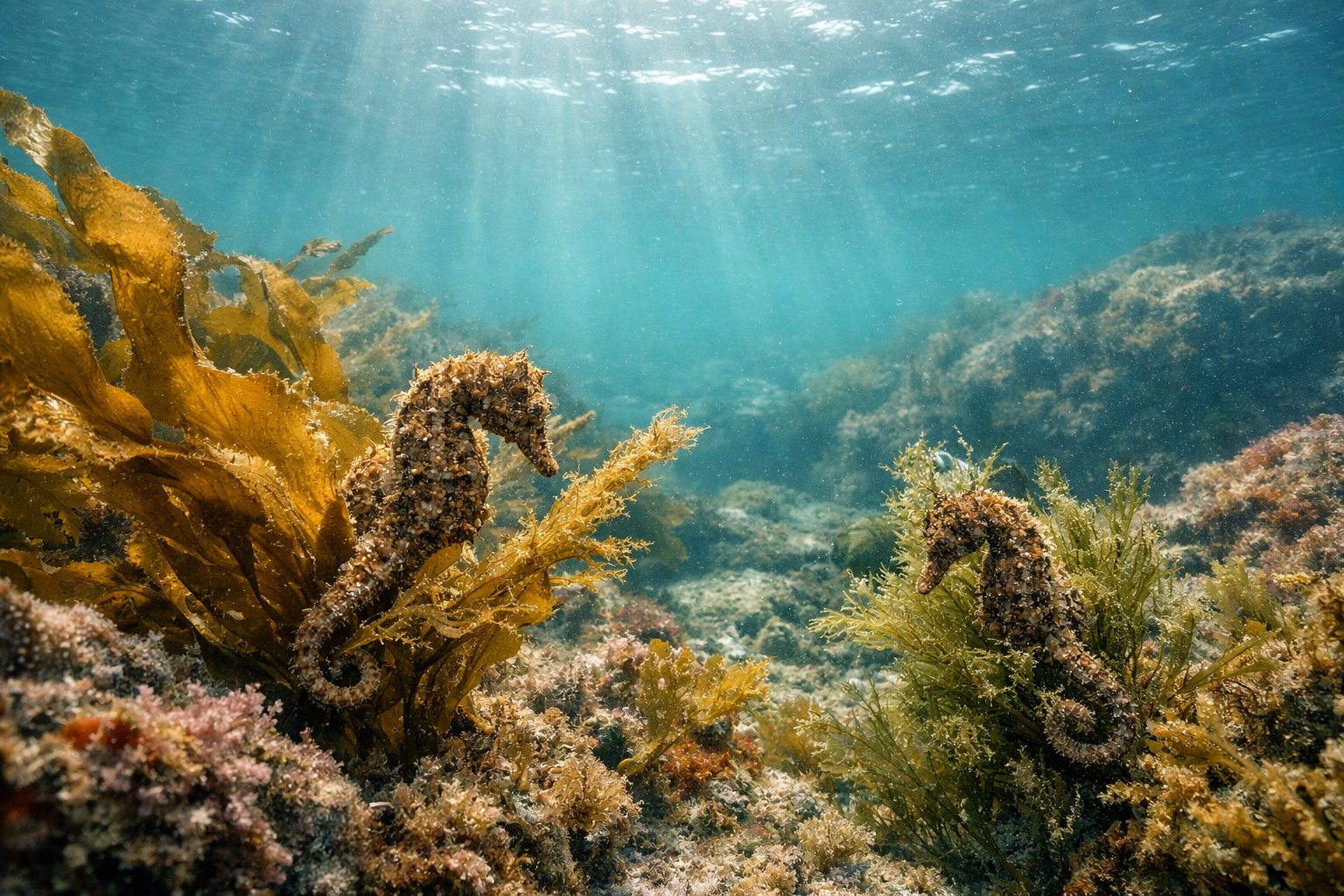
Let’s get into which species you might see, where they like to hang out, and how to tell them apart.
You’ll also find out about their favourite habitats, why they need protection, and a few simple ways you can help.
Seahorses in the UK: Species, Distribution, and Identification

Two native seahorse species swim around British coasts. One prefers sheltered southern bays, while the other shows up along rocky shores and seagrass beds.
British law protects both species.
Native Seahorse Species in British Waters
You’ll find the spiny seahorse (Hippocampus guttulatus) and the short-snouted seahorse (Hippocampus hippocampus) in UK waters.
The spiny seahorse usually has small skin filaments or bumpy bits along its body. The short-snouted seahorse, as you’d guess, has a much shorter snout and a smoother body.
Both species munch on tiny crustaceans like mysids and copepods. They grip seaweed, seagrass, or eelgrass with their tails.
The British Seahorse Survey tracks sightings and helped get both species legal protection. They feed records into the National Seahorse Database for science and conservation (https://www.theseahorsetrust.org/conservation/british-seahorse-survey-2/).
Where Are Seahorses Found Around the UK?
Seahorses pop up all around the UK coastline, but some areas get more sightings than others.
You’re more likely to spot them in sheltered bays, estuaries, seagrass meadows, and among kelp or cobbles. Southern England—especially Dorset’s Studland Bay—has some well-known spiny seahorse populations.
People have recorded them as far north as the Irish Sea and even up toward the Shetlands.
Survey reports suggest that recorded sightings depend a lot on where divers and volunteers actually look. If you spot a seahorse, let local recording schemes know. It helps keep maps and protections up to date.
How to Distinguish Spiny and Short Snouted Seahorses
Here’s how to tell them apart:
- Spiny seahorse (H. guttulatus): Look for skin bumps or spines, a longer body, and sometimes a pointed crown. Colours range from brown to yellow or orange.
- Short-snouted seahorse (H. hippocampus): Noticeably shorter snout, smoother body, and a rounder head shape. Colour varies, but the snout length really stands out.
Check their behaviour too. Spiny seahorses often wrap their tails around seagrass or fronds and have more skin texture.
If the snout looks short compared to the head, it’s probably H. hippocampus.
If you can, snap a photo from the side and top—but skip the flash and don’t disturb them. UK rules protect these marine species, so follow guidance when recording sightings (https://www.gov.uk/government/publications/protected-marine-species/seahorses).
Seahorse Habitats, Behavior, and Conservation in Britain

Seahorses in Britain stick to sheltered coastal waters. They love places where seagrass and eelgrass grow thick.
You’ll often spot them clinging to seagrass blades, seaweed, or even soft coral. They anchor themselves while they snack on plankton.
Preferred Habitats and Adaptations
British seahorses mostly turn up in seagrass meadows, eelgrass beds, rocky reefs, and among horsehair or wrack seaweeds.
These spots give them cover and something to grip with their tails. Seahorses eat tiny prey like plankton and small crustaceans, sucking them up through their long snouts.
Their bodies blend in thanks to skin filaments and colour changes that match eelgrass or seaweed. This camouflage hides them from predators and helps them sneak up on food.
They move slowly with small dorsal fins and rarely leave their holdfasts.
Breeding and Life Cycle of UK Seahorses
Seahorses in Britain breed from spring into autumn, when the water warms up and food gets plentiful.
The female deposits eggs into the male’s brood pouch. The male then carries the eggs for several weeks and eventually gives birth to tiny, fully formed baby seahorses.
Young seahorses drift around like plankton when they’re born before settling down in seagrass or weed beds.
Their survival depends a lot on thick habitat and plenty of plankton. The British Seahorse Survey and National Seahorse Database collect sightings and breeding records, which helps track where baby seahorses thrive.
Current Conservation Efforts and Legal Protection
You can actually help protect seahorses just by recording your sightings and being careful when boating. After years of surveys led by Neil Garrick-Maidment and a bunch of dedicated volunteers, both British seahorse species finally got legal protection under wildlife laws.
The Seahorse Trust manages the British Seahorse Survey and adds every sighting to the National Seahorse Database. This data really shapes how conservation happens. If you spot a seahorse, you can email the Seahorse Team at Natural England or just use the Seahorse Trust’s forms—pretty straightforward.
The Marine Management Organisation (MMO) hands out research licences for seahorse studies. In some areas, people have set up eco-moorings to stop anchors from wrecking the seagrass.
Conservation groups also work on pollution, habitat loss, and the impacts of the Gulf Stream and climate change on water temperatures. All these efforts focus on keeping seagrass beds healthy and giving seahorses a fighting chance.


