
You see a seahorse and probably feel that urge to reach out and scoop it up. Those slow, upright swimmers look harmless—almost like they’re asking for a gentle hold. But you shouldn’t hold a seahorse—handling them can hurt and really stress them out.
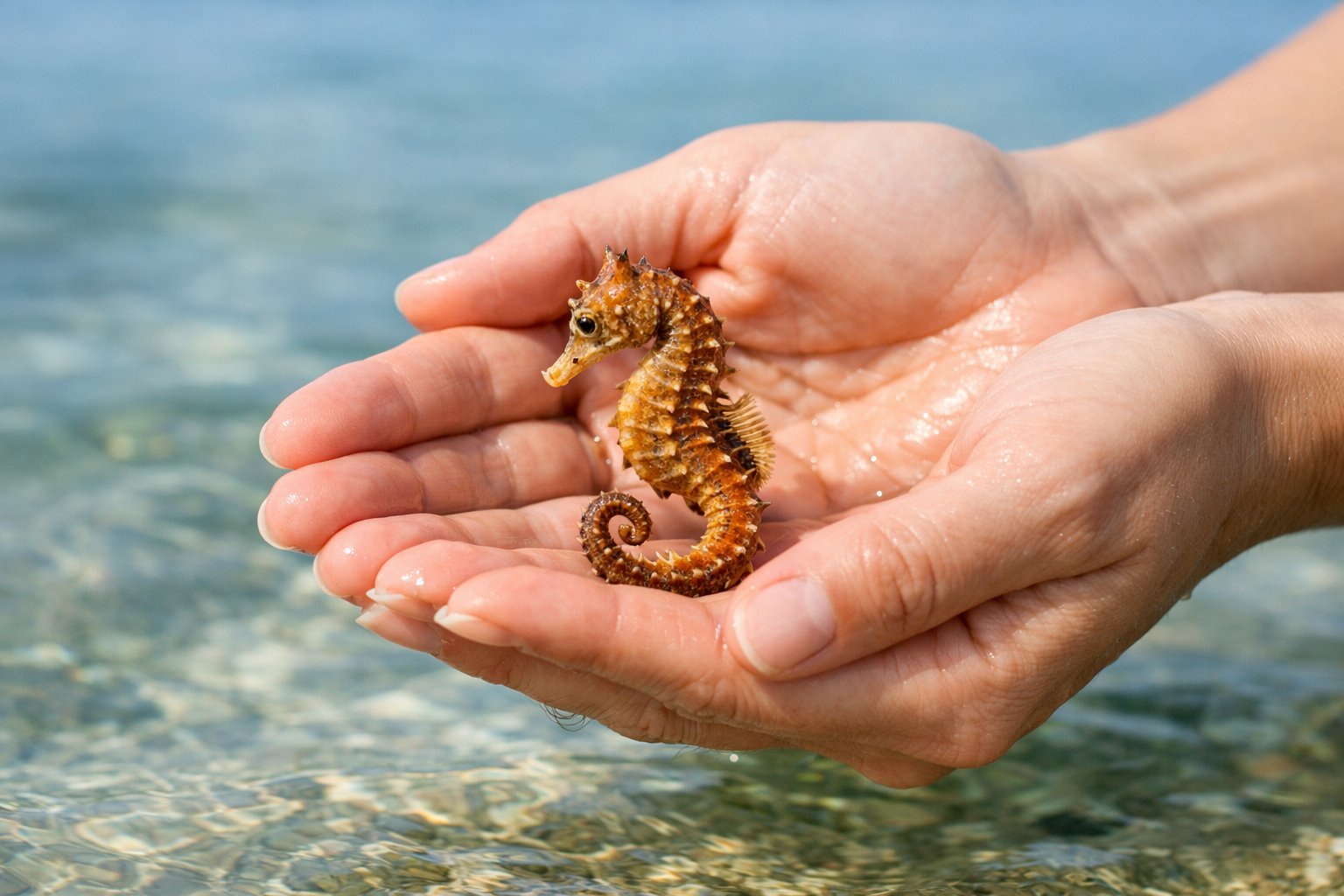
If you care about seahorses and want to enjoy them up close, there are safer ways to watch them. This post will walk you through the risks, the ethics of handling, and how to set up an aquarium that actually keeps them healthy.
Let’s get into some simple, practical steps so you can enjoy seahorses without putting them in danger.
Can You Hold a Seahorse? Risks, Ethics, and Best Practices
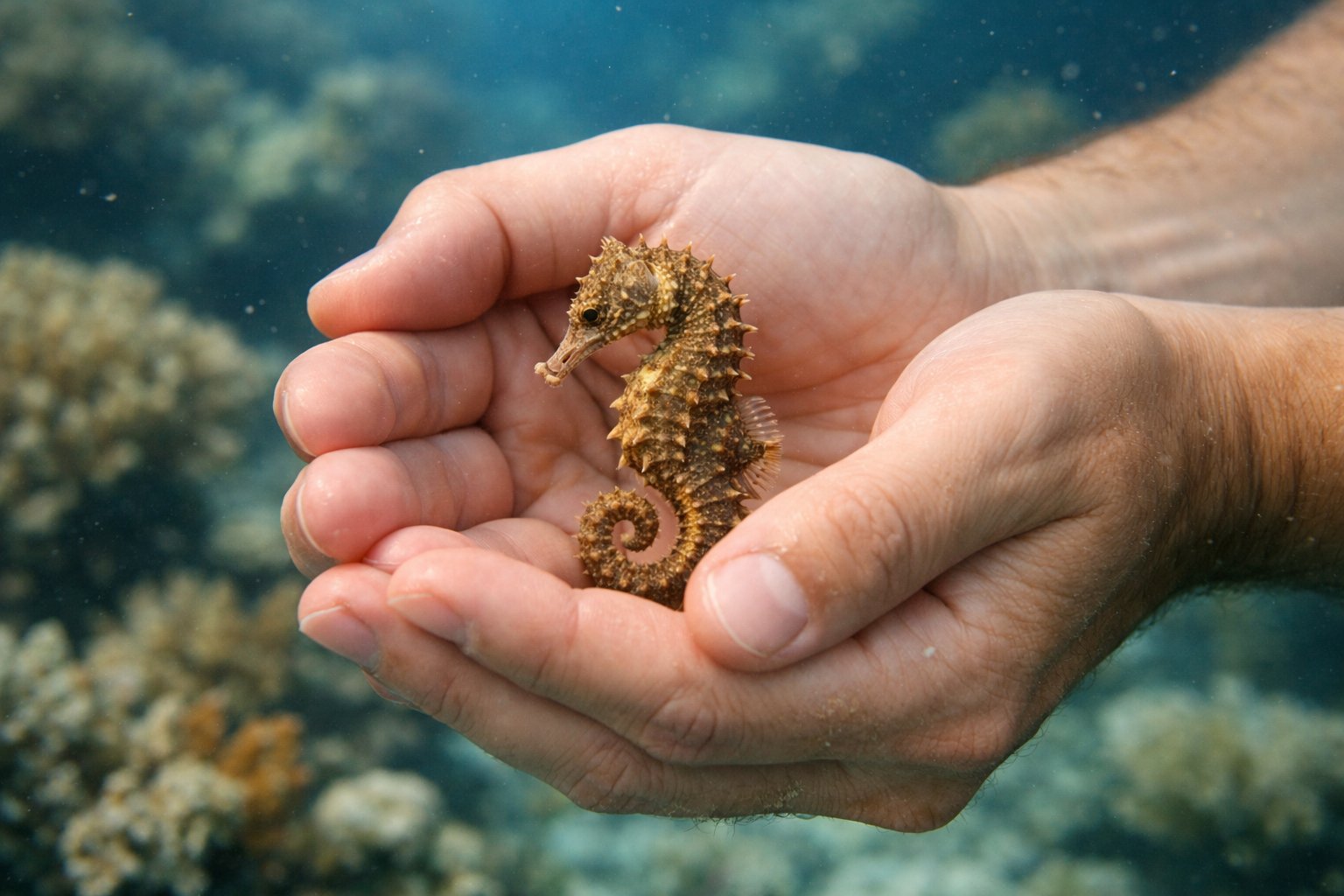
You really should avoid touching seahorses. Contact can harm the animal, and in some places, it’s even illegal.
Let’s talk about the physical risks, why their bodies are so fragile, when supervised handling might be okay, and safer ways to enjoy these amazing creatures.
Why Physical Contact Is Not Advised
Touching a seahorse stresses them out and can actually cause physical harm. Your skin—oils, lotions, even bacteria—can irritate their thin skin and sometimes cause infections.
Even a gentle touch can crush the bony plates that make up their bodies. It’s wild, but they’re that delicate.
Handling messes with their natural behavior, too. If a seahorse loses its grip on seagrass or a sponge, it can get swept away by currents.
For wild seahorses, losing camouflage and shelter puts them at risk of being eaten. That’s just the reality.
A lot of places have laws protecting seahorses. If you see someone handling one in the wild, you should report it to local marine authorities.
Seahorse Physiology and Sensitivity
Seahorses don’t have scales. Instead, they’ve got thin skin stretched over bony rings. That skin tears way more easily than most fish.
Their bones don’t flex, so even one finger can cause a fracture. They breathe and eat slowly, and stress pushes their metabolism up, which weakens their immune system.
Male seahorses carry eggs in a brood pouch. If you damage that pouch, you can kill the embryos or make the male infertile.
Wild seahorses cling to fragile habitats like seagrass. If you disturb that, you’re not just hurting one seahorse—you could mess up the whole area for other species, too.
Aquarium Experiences That Allow Handling
Some places, like Ocean Rider Seahorse Farm, offer supervised handling under very strict rules. Trained staff will let guests hold captive-bred seahorses for a short time.
They use species bred specifically for handling and follow strict hygiene. If you’re allowed to handle one, staff will ask you to rinse your hands and avoid lotions.
They’ll show you how to support the seahorse’s belly and avoid grabbing the tail. The sessions are short, and staff watch closely for any signs of stress.
Always check that the facility uses only captive-bred animals and has solid care standards. Ask about quarantine, vet care, and whether handling is just for education or breeding, not regular public fun.
Ethical Alternatives to Handling
You can still enjoy seahorses without touching them. Use a zoom lens or underwater camera to get photos from a respectful distance.
Binoculars actually work pretty well if you’re watching from the shore. Support captive-breeding projects and research groups instead of buying wild-caught seahorses.
Donate to organizations that protect their habitat or fund seagrass restoration. Visit aquariums that care more about animal welfare and education than just entertainment.
If you’re diving and a seahorse lands on you, just stay still and let it move off on its own. Don’t grab or poke it. That small choice keeps both you and the animal safe.
Seahorse Care: Safe Observation, Environment, and Aquarium Companions
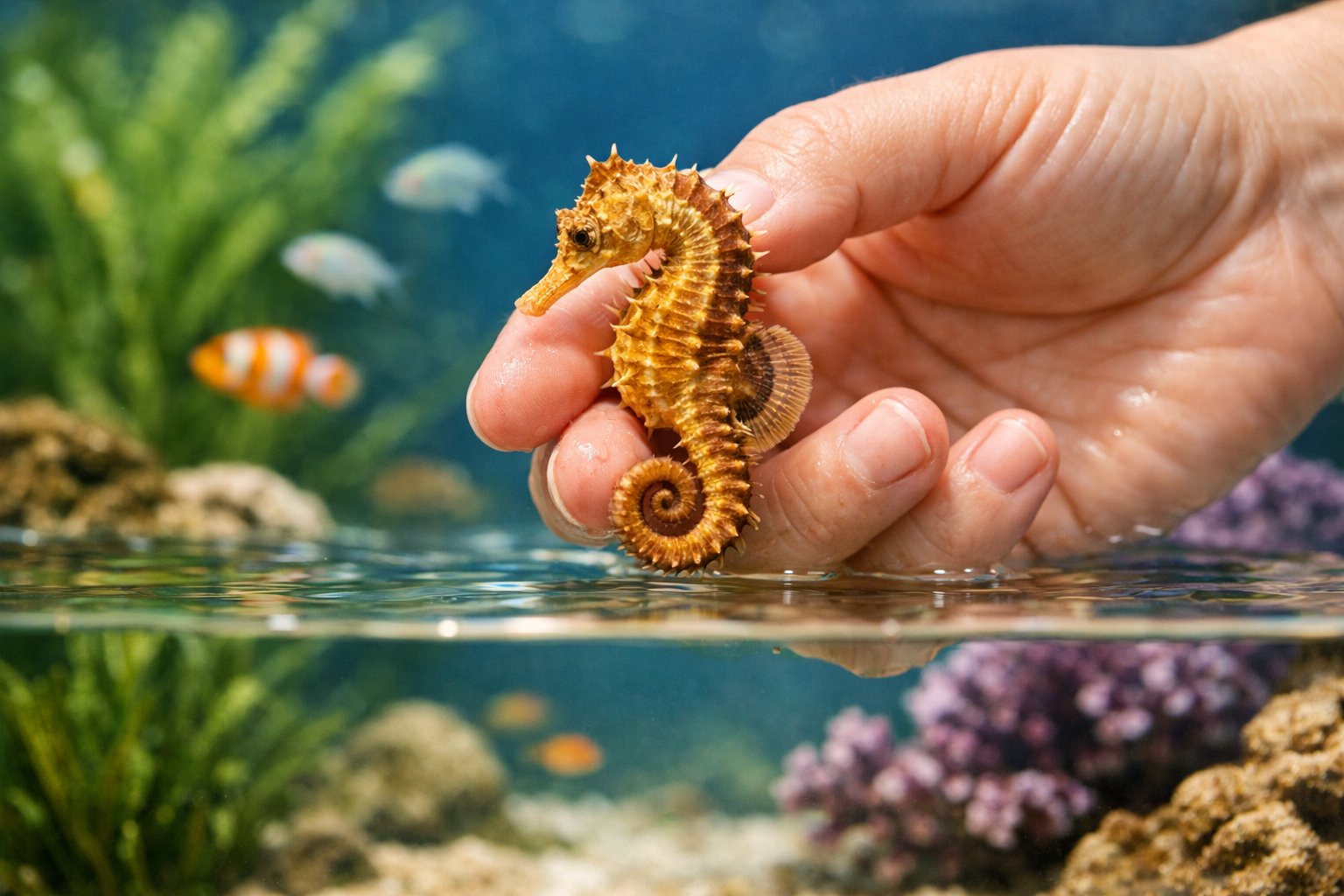
Watch your seahorses from a short distance and keep their tank stable. Give them vertical hitching posts, low water flow, and a steady feeding routine.
Seahorse Aquarium Setup Essentials
You’ll need a saltwater tank that fits your species. For a pair of larger seahorses like Hippocampus erectus or H. reidi, start with at least 30 gallons and 18 inches tall.
Dwarf seahorses, like H. zosterae, can use smaller tanks. If you want sand, use a fine substrate, or just go with a bare bottom for easier cleaning.
Add lots of vertical hitching posts—artificial plants, gorgonians, or pieces of live rock all work. Keep the current low, since seahorses aren’t great swimmers.
A controllable return pump or a baffle helps. Use strong biological filtration and a protein skimmer to manage waste.
Test the water every week. Keep salinity at 1.020–1.025, temperature between 70–78°F, pH 8.1–8.4, and ammonia/nitrite at zero.
Do regular water changes—10–25%—to keep nitrates down.
Captive-Bred Seahorses and Popular Species
Buy captive-bred seahorses if you can. They adapt better to aquarium life and don’t put pressure on wild populations.
Popular choices include the lined seahorse (Hippocampus erectus), Brazilian seahorse (H. reidi), common or tiger tail (H. kuda), and dwarf seahorses (H. zosterae or other dwarf types).
Check out species traits before you buy. Larger seahorses usually live longer—sometimes several years—and they’ll eat frozen mysis shrimp more easily.
Dwarf seahorses need small live foods like copepods and eat more often. If you want to keep males that carry eggs, look into breeding needs; it changes how many you can keep and how much you’ll need to feed them.
Choose a species that fits your tank and your experience level.
Feeding Seahorses: Diet and Nutrition
Feed mostly mysis shrimp—frozen mysis is the go-to. Offer thawed mysis in several small feedings a day: 2–3 times for larger species, more often for dwarfs.
Use a feeding station or even a turkey baster to target the food and cut down on waste. Add live foods when needed: live brine shrimp, enriched rotifers, amphipods, or spirulina-enriched brine shrimp can help young or picky seahorses.
Watch their appetite closely. Seahorses have to eat every day to avoid weight loss or digestive problems.
Remove uneaten food quickly and keep an eye on water quality—leftover shrimp can spike ammonia and nitrate levels.
Compatible Tank Mates and Health Monitoring
Go for calm, slow-moving tank mates—gobies, blennies, pipefish, and small shrimp usually fit the bill. Skip fast or aggressive fish, tangs, puffers, and stinging corals since they’ll compete for food or just bother your seahorses.
If you like invertebrates, pick peaceful ones. Nassarius snails do a nice job cleaning sand beds without causing trouble.
Take a quick look at your seahorses every day. Bright color, clear eyes, steady hitching, and a regular appetite mean things are probably okay.
Keep an eye out for gas bubble disease, skin lesions, parasites like ich, or if they suddenly stop eating. When you bring home new arrivals, quarantine them first to help prevent disease.
Jot down your water tests, feedings, and any treatments in a log. That way, you might catch problems before they get too serious.


