
If you spot a coyote nearby, you probably wonder what’s going through its mind or what it might do next. Most of the time, coyotes keep their distance and avoid people—they’re naturally shy creatures.
They usually stay out of sight and come out when there’s not much human activity, like late at night.
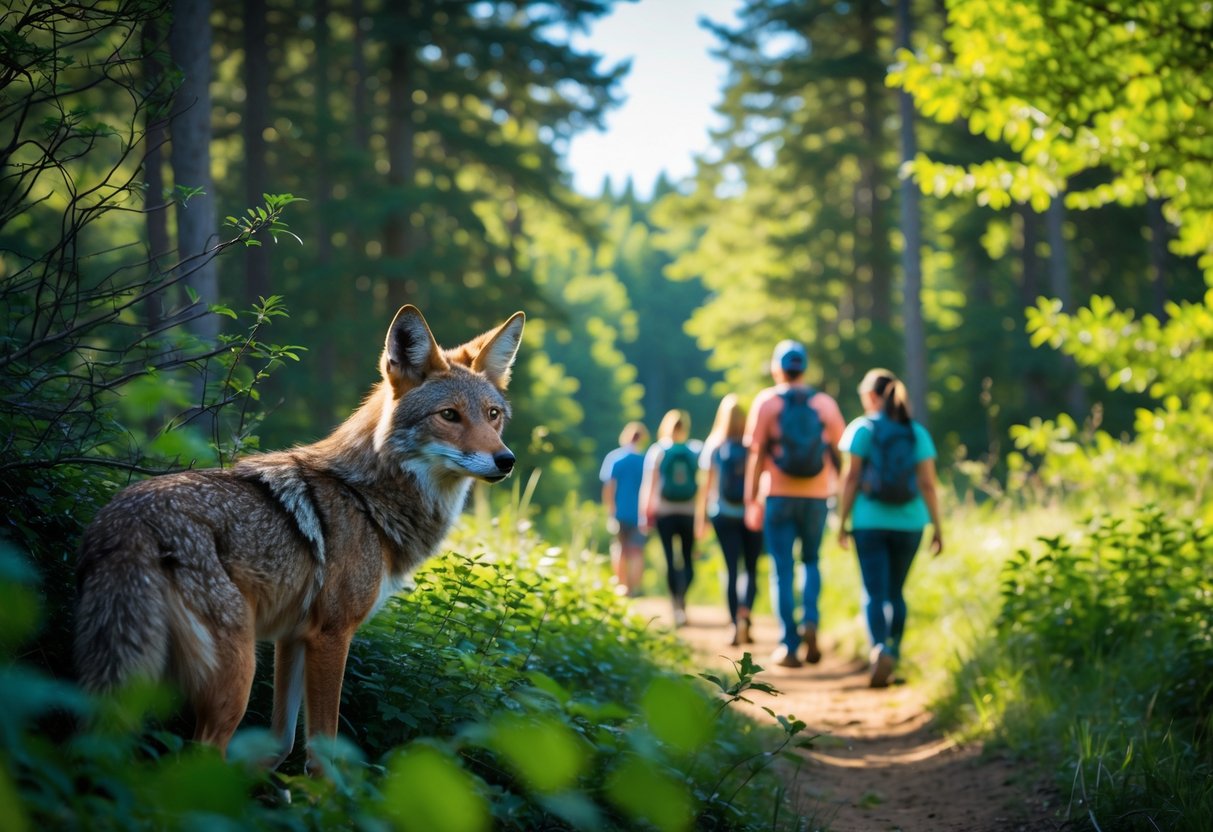
But sometimes, coyotes act curious or even follow you, especially if they’ve learned that people mean food. If a coyote seems bold or just doesn’t run away, it’s good to know how you should respond—that way, you’ll keep yourself and the animal safe.
Understanding this behavior can help you stay calm if you ever cross paths with a coyote. It’s really about learning their habits and making sure you don’t accidentally teach them to be too comfortable around people.
Coyotes’ Reactions to Seeing People

How a coyote reacts when it sees you depends on lots of things—where you are, the season, and whether the animal’s used to people. Most coyotes try to avoid humans, but sometimes they surprise you with different behavior.
Knowing what they usually do can help you stay safe.
Typical Coyote Responses to Human Presence
Most of the time, coyotes keep their distance when they spot you. They might run off quickly or slip away quietly into the brush.
Sometimes, you’ll see one pause for a second, checking if you’re a threat before it leaves. They’re shy and don’t want trouble.
If you make a loud noise or wave your arms, the coyote usually bolts. Human activity tends to push them to be more active at night, so you see them less during the day.
If a coyote has gotten used to people, it might not seem scared right away. These coyotes sometimes hang around or watch you, especially if there’s food nearby.
Territorial Behavior and Escorting
Coyotes protect their territory, especially during denning season—from February to June. If you wander too close to a den or pups, adult coyotes might act bold.
They usually don’t attack, but they could bark, growl, or try to “escort” you away from their area. That means they’ll give warning signs and try to lead you off.
If you see this, back away slowly—don’t turn your back. Never run, since that could trigger them to chase.
This behavior is about protection, not aggression.
Curiosity and Investigative Actions
Sometimes, you’ll notice coyotes act more curious than scared. Maybe a younger one or a group will watch you or even move a bit closer to check things out.
Coyotes are clever and investigate new sights or sounds. If they spot pet food or garbage, they might come closer to explore.
A group of coyotes can act bolder than just one. You might see them strolling through a neighborhood, but most still act cautious around people.
If you spot a curious coyote, don’t feed it or encourage it to stick around. Keeping your distance makes things safer for everyone.
If you want more info on how coyotes behave around people, check out coyote reactions to a human.
Factors Influencing Coyote Response
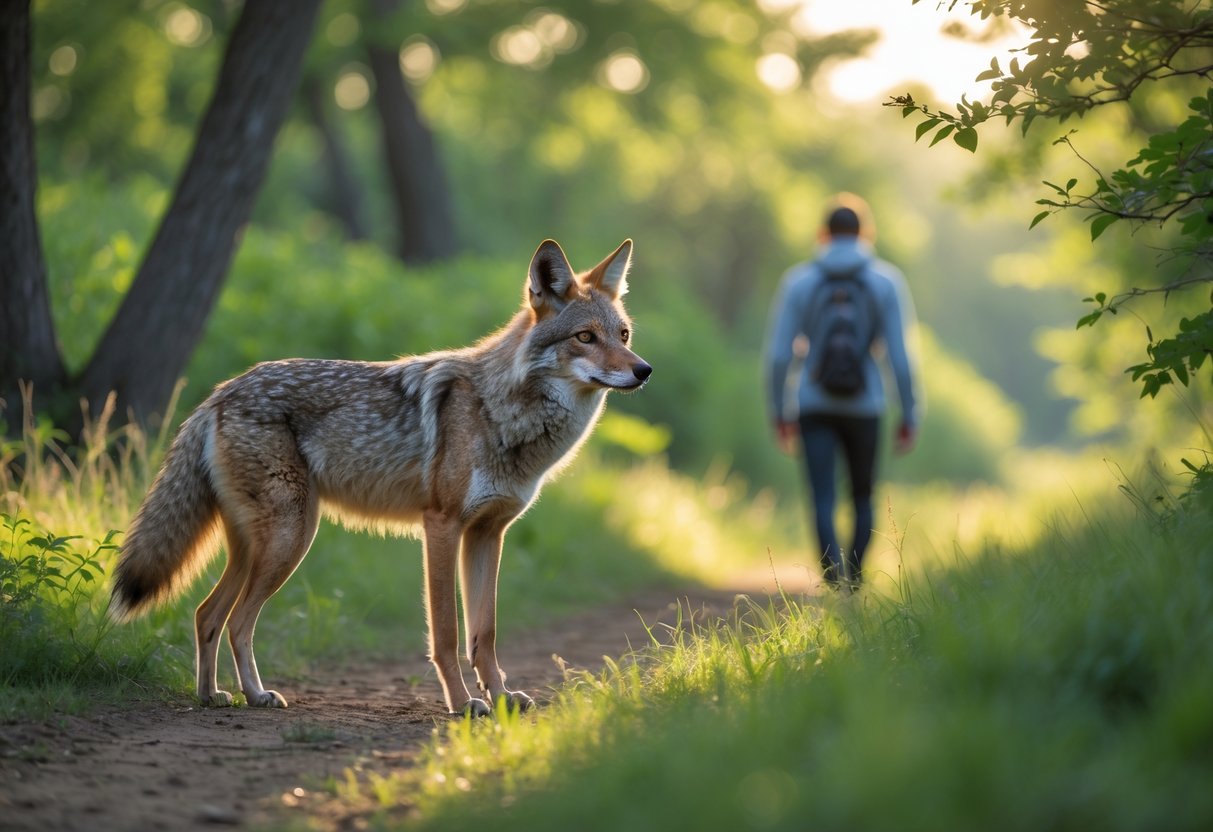
Coyotes don’t always react the same way when they see people. Their behavior shifts depending on how used they are to humans, whether pets are nearby, where they live, and how they differ from wolves.
Understanding these things helps you know what to expect.
Food Conditioning and Human Habituation
When coyotes find food near people—like trash, pet food, or handouts—they start to lose their natural fear of us. We call this food conditioning.
A coyote that expects food from humans might come closer or even act bold during the day. Leaving food outside or feeding coyotes makes them think people are an easy meal ticket.
That can lead to more conflicts and even aggressive behavior. If you keep your trash secured and don’t feed coyotes, you help stop this from happening.
Coyotes that haven’t been food-conditioned usually take off fast when they see you. It’s helpful to notice which animals seem too comfortable around people.
Pet Involvement and Increased Vigilance
Pets—especially small dogs and cats—can make coyotes more alert or even aggressive. Coyotes see them as prey or maybe as a threat and might come closer if they spot or smell pets outside.
If you walk your dog near coyote territory, keep it on a short leash. Be ready to pick up your pet if you need to.
Coyotes sometimes chase leashed pets or act bold near families with little kids. Staying alert around pets helps cut down risk, since coyotes usually avoid adults but might target smaller animals.
Watching your pets closely keeps them safer and lowers the odds of a coyote encounter.
Urban Versus Rural Coyotes
Coyotes living in cities act differently from those in the countryside. Urban coyotes often get used to people and easy food, so they’re more active during the day and hang around parks or playgrounds.
Rural coyotes usually stay shy, hunting small animals and steering clear of humans. But as cities expand, more coyotes end up sharing space with people, which can make them bolder.
Urban coyotes tend to cause more trouble because they lose their fear of people and pets. Knowing how coyotes behave in your area helps you avoid problems.
Comparison: Coyotes and Wolves Around People
Wolves usually keep their distance from humans. They act much more cautious than coyotes do.
Coyotes, on the other hand, show up more often near towns. They’re smaller and adapt quickly, so you might spot one at the edge of a neighborhood.
Most wolf attacks on people almost never happen, and when they do, wolves are just trying to defend themselves. Coyotes can get a little bolder in cities, especially if someone’s fed them or they feel trapped.
Even so, most coyotes would rather stay away from people.
Both coyotes and wolves howl, but coyotes mostly do it to call their family or mark their spot. They’re not out there trying to scare people.
Honestly, knowing these differences might help you stay calm if you ever see one of these animals.
For more on coyote behavior near people, check this guide on urban coyote behavior and safety.


