You might spot deer in woods, parks, or even your own garden, but not every species actually belongs here.
The main invasive non-native deer in the UK are sika, muntjac, Chinese water deer, and introduced populations of fallow and other non-native groups that end up harming native ecosystems.
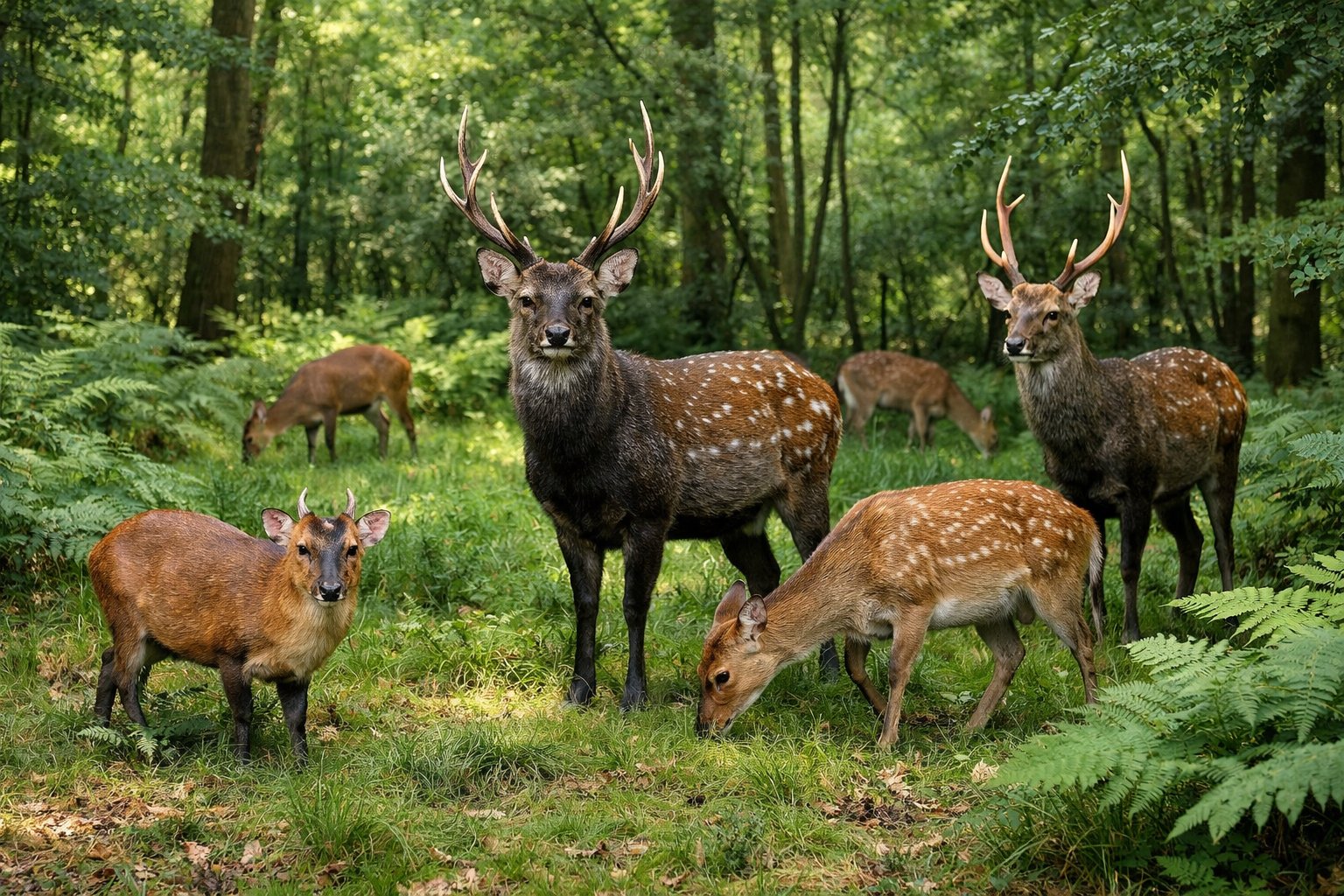
Let’s talk about how each of these species behaves, where they tend to spread, and why they’re causing headaches for native plants and animals.
The next sections dive into the most common invasive deer and the ways their browsing, breeding, and hybridisation mess with woodlands and farmland.
If you care about wild places or manage land, you’ll want to know the practical impacts and what you can actually do about them.
This article should help you spot which species are around and figure out what steps might help protect native wildlife.
Main Invasive Deer Species in the UK

These deer came over from Asia and now they’ve spread into woodlands, gardens, and farmland.
You’ll catch them in hedgerows, ancient woods, and even urban parks, and honestly, each species brings its own set of problems.
Reeves’ Muntjac (Muntiacus reevesi)
Reeves’ muntjac are small, chunky deer—about as big as a large dog.
They’ve got short legs, rounded bodies, and the males sport little antler stubs.
They breed all year, hit sexual maturity fast, and can raise several young in a short time, so their numbers shoot up quickly.
You’ll often find muntjac feeding close to the ground.
They munch on bulbs, seedlings, and young shoots, which means woodland floors, bluebell carpets, and even your garden plants can take a hit.
They prefer thick cover and rarely stand out in the open, so spotting or controlling them isn’t easy.
People sometimes call them Chinese muntjac or barking deer.
Groups like the British Deer Society track their spread.
If you manage land, look for signs like chewed shoots and trampled ground—those are usually the giveaways that muntjac are around.
Chinese Water Deer
Chinese water deer don’t have antlers, but they do have these prominent canine tusks that look a bit like little fangs.
They’re medium-small and seem to prefer wetland edges, reedbeds, and low scrub, though you might see them in farmland and gardens too.
What stands out is their high reproductive rate and how adaptable they are.
They don’t stick to a strict breeding season, and females can have multiple fawns in a year.
That means local populations can explode if no one manages them.
They mostly graze on low vegetation and crops, which isn’t great for meadow plants and young trees.
Originally from East Asia, they haven’t spread as widely as muntjac, but wildlife groups still keep an eye on them, especially in parts of England.
Sika Deer
Sika deer (Cervus nippon) are bigger and look a lot like native red deer.
You’ll run into them in woodlands and parkland across England, Scotland, Wales, and Northern Ireland.
Stags get territorial and can be pretty noisy.
Sika cause two main headaches.
First, they browse and strip bark from young trees, which hurts timber growth.
Second, they can crossbreed with native red deer since they’re closely related, and that threatens to change red deer genetics over time.
You might notice sika stags gouging tree trunks with their antlers—a behaviour called bole scoring.
If you work in forestry or conservation, keeping sika numbers in check really matters for timber and to protect native red deer bloodlines.
For more on their impact and management, the British Association for Shooting and Conservation has a helpful review of invasive deer.
Impact and Management of Invasive Deer

Invasive deer can really change woodlands, farmland, and even the edges of towns.
They damage young trees, reduce native plants, and sometimes force local species to move out or decline.
Ecological Effects and Biodiversity
Muntjac, sika, and Chinese water deer eat seedlings and ground plants, which lowers plant diversity and stops woodlands from coming back on their own.
When young trees die, birds like nightingales lose nesting cover, and ground-nesting insects start to disappear.
Too much grazing also helps non-native shrubs spread.
These shrubs then crowd out native plants and shift the whole balance of local ecosystems.
You might notice fewer wildflowers and insects in areas with lots of deer.
Protected sites and small nature reserves, especially in southeast England, show these changes pretty fast.
Woodland understoreys get sparse, which hurts mammals, reptiles, and birds that need dense cover.
Distribution and Key Areas
Invasive deer now show up in regions all over England, especially in woods, parklands, and farmland.
You’ll find muntjac pretty much everywhere in Bedfordshire and southeast England.
Sika are more localised but they’re expanding, especially where they crossbreed with native deer.
Big estates and parks like Woburn Park and the nearby countryside often report damage to crops and young trees.
Small reserves and hedgerows near towns also feel the pressure, since deer use green corridors to move into gardens and business parks.
When deer gather in big numbers, you’ll see tree damage, crop loss, and more vehicle collisions.
Local councils and landowners track sightings to map out hot spots and figure out how to manage the problem.
Population Control and Deer Stalking
You need to use humane and legal ways to cut down invasive deer numbers. Trained shooters mostly rely on deer stalking to keep populations in check and protect both forestry and farmland.
In the UK, stalking has to follow the Deer Act 1991. You’ll also need licences for certain lands.
People try other things too, like targeted fencing, running contraception trials for research, and changing habitats to make sensitive areas less appealing to deer.
Landowners often mix these methods. They might put fences around young trees, ask experienced stalkers to help with culling, and keep track of what’s working.
It’s smart to team up with local conservation groups or hire professional contractors when planning control strategies.
Good planning means setting clear goals, recording how many deer you cull, and checking how it affects local biodiversity. That way, you can tweak your approach as you go.


