
Coyotes are fascinating animals. You might spot one near your home and not even realize it. These clever creatures belong to the dog family, but honestly, they’ve got some wild behaviors and skills that make them stand out. Coyotes can run up to 70 km/h, use more than 11 different vocal sounds, and somehow manage to live almost anywhere—from forests to city streets.
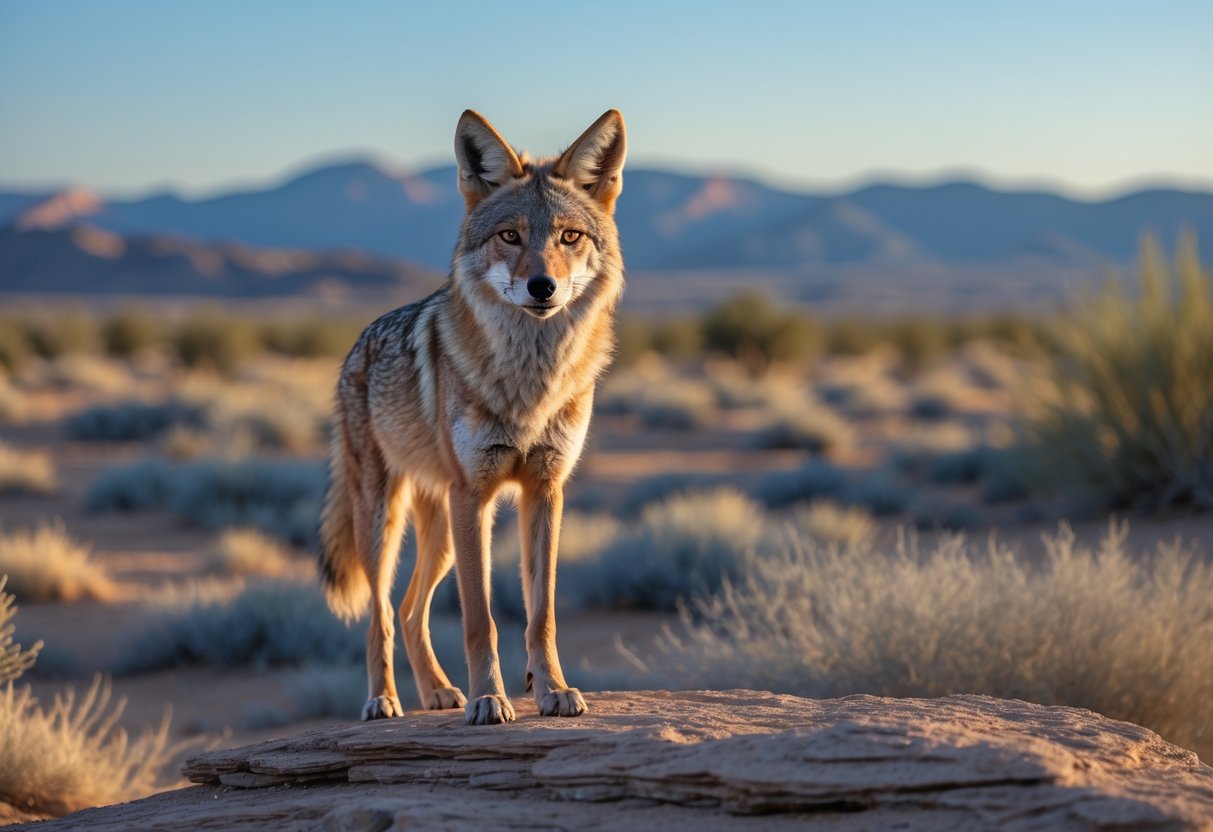
Coyotes play a big role in nature by keeping rodent populations in check. They help balance ecosystems too. They’re not just survivors; they’re quick thinkers and can switch up their habits to fit wherever they end up.
Learning about these traits really shows why coyotes are so interesting. If you think you know all about them, think again. There are facts about their history, diet, and family life that might just surprise you.
Core Coyote Facts and Identification

People often confuse coyotes with wolves or even dogs, but coyotes have some traits that make them easy to tell apart. Their scientific name actually hints at their story and family ties. You can spot a coyote by looking at its size, shape, and those sharp senses that help it get by almost anywhere.
Coyote vs. Wolves and Dogs
Coyotes go by the scientific name Canis latrans, which means “barking dog.” They share the Canidae family with wolves and dogs, but coyotes usually look smaller and more slender. Wolves have a bulkier build, broader heads, and shorter tails. Dogs come in all shapes and sizes, but most look and act pretty different from wild coyotes.
People sometimes call coyotes “prairie wolves” or “brush wolves.” Those names come from where they live and how they look. Coyotes can even interbreed with wolves or dogs, creating hybrids like “coywolves” or “coydogs.” You’ll see mixed traits in those hybrids, but pure coyotes are still more common.
Wolves stick to bigger packs, but coyotes usually hunt alone or with their family. Coyotes have learned to live around people, while wolves mostly keep to wild places. That’s why you might see a coyote in a city, but you’ll almost never see a wolf there.
Coyote Names and Scientific Classification
The coyote’s scientific name is Canis latrans. That puts them in the Canidae family with wolves, foxes, jackals, and dogs. Some folks call them American jackals or little wolves, which hints at their close ties to other wild canines.
The word “coyote” comes from the Aztec “coyotl,” which means trickster. That’s pretty fitting, considering how clever they are. There are several coyote subspecies across North America. Each subspecies has small differences in size, color, or where they live, but the main coyote traits stick around.
Eastern coyotes, for example, tend to be bigger than western ones—probably because they’ve mixed with wolves and dogs. Snow coyotes live up north and grow thicker fur to stay warm. Knowing these names and differences helps put coyotes in context with other animals.
Physical Features and Adaptations
Coyotes measure about 2 to 4 feet from nose to tail, and males are usually bigger than females. The biggest coyote ever found stretched over 5 feet long and weighed nearly 80 pounds. Most adults fall between 20 and 50 pounds, though.
Look for a slim body, pointy ears, and a bushy tail with a black tip. Their fur can be grayish-brown, reddish, or almost black. Coyotes have sharp eyesight, amazing hearing (they hear about 14 times better than us), and a strong sense of smell.
These senses help coyotes hunt alone or with a partner. They’re fast, running as quick as 43 miles per hour when chasing prey. You might hear their howls—those sounds can travel up to six miles. Coyotes use howling to communicate or mark territory.
Coyotes can live just about anywhere—deserts, forests, even cities. Their bodies and skills let them survive where lots of other animals just can’t.
Coyote Behavior, Diet, and Habitats

Coyotes are smart and adaptable. You’ll find them living in all sorts of places, eating whatever they can find. Their behavior changes depending on where they are and what they need. They’re skilled hunters, social animals, and can blend into places people live without much fuss.
Habitats and Adaptability
Coyotes live all over North and Central America. You’ll see them in forests, grasslands, deserts, and even in the middle of cities. They make use of parks, green spaces, and alleys for shelter and food.
Originally, coyotes stuck to dry areas and open forests. As people changed the land and cut down on wolves and cougars, coyotes moved into new places. Their knack for adapting helps their population grow and spread.
Hunting and Diet
Coyotes mostly eat meat and have some real hunting skills. They go after small mammals like rabbits and rodents, and sometimes even young deer. They’ll eat frogs, birds, insects—pretty much any animal they can catch. When meat’s hard to find, they’ll switch to fruits, berries, or even grass.
Coyotes usually hunt alone, using sharp hearing and smell to find prey. They can hit speeds up to 40 miles per hour chasing something down. Besides hunting, they’ll scavenge roadkill or leftovers. This flexible diet helps them do well in forests, deserts, and cities.
Social Structure and Communication
Coyotes often live in family groups called packs. A pack usually has a breeding pair and their pups from that year. Sometimes older pups stick around too.
These packs work together to hunt, raise the young, and protect their space. Coyotes talk to each other by howling, yipping, and leaving scent marks. Howling helps them keep in touch, warn off rivals, and keep track of their territory—which can be anywhere from 6 to 12 square miles.
Communication is key for keeping the family together and avoiding fights with other coyotes.
Living Close to Humans
Coyotes have been showing up more often in cities these days. They get by around people, snacking on small animals, digging through garbage, or grabbing pet food left outside.
Most urban coyotes hunt at night or during those quiet hours around dawn and dusk. That way, they avoid drawing attention.
If you spot a coyote, don’t panic or bolt—just stay calm. Make sure you never feed them, and always keep your trash bins closed up tight.
Want to dig deeper? Check out IFAW’s page on coyote habitat and diet to see how these animals manage city life.


