
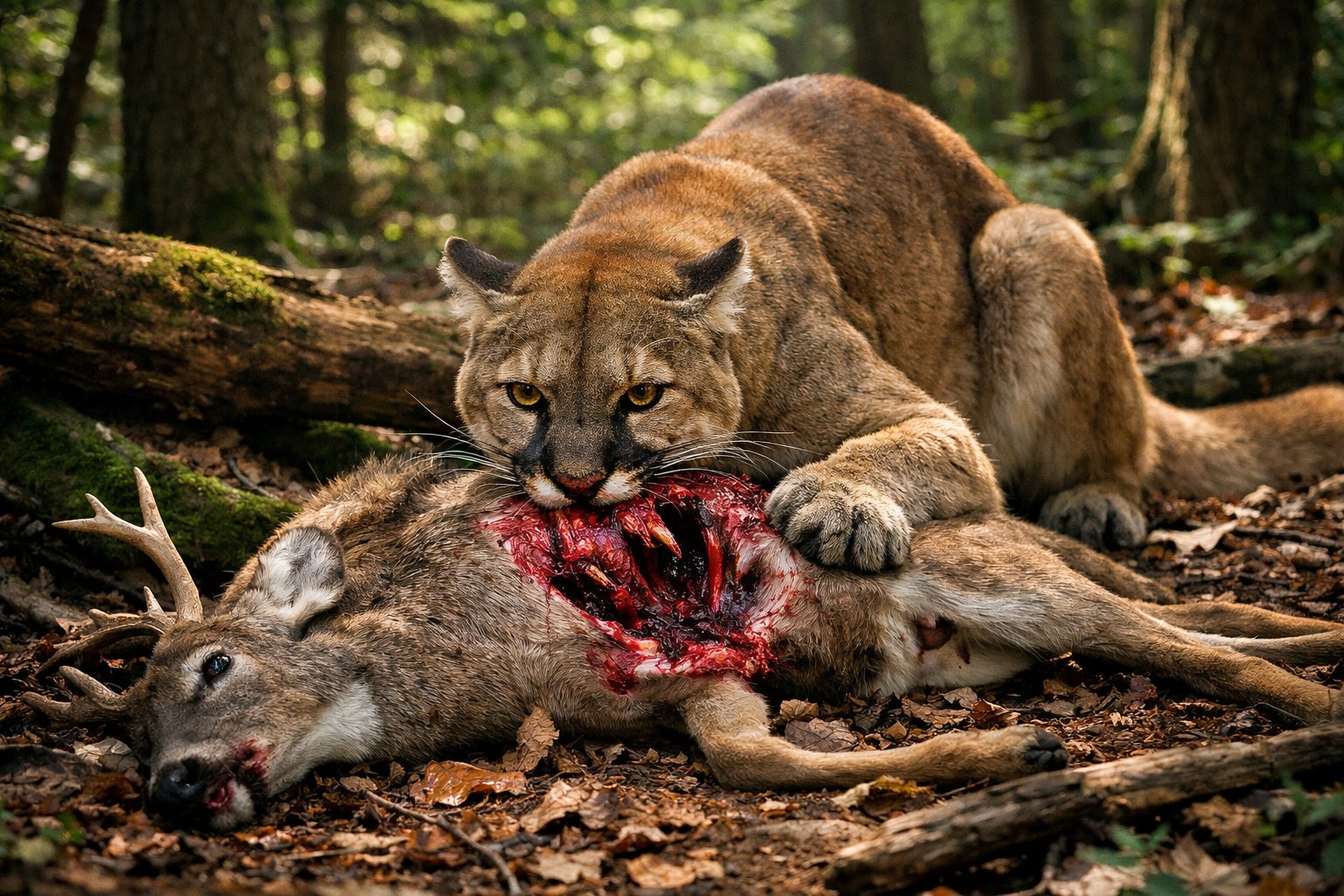
You’ll run into all sorts of animals that eat deer—wolves, bears, coyotes, big cats, and, believe it or not, even alligators in certain regions. Wolves, cougars, bears, coyotes, and humans usually top the list of deer predators. Let’s dig into where and why each of these hunters goes after deer, and how that shapes deer populations in different places.
You’ll also get a look at how deer try to stay alive—their speed, herding instincts, and hiding tricks. Sometimes those work, sometimes not so much. Curious which predators target fawns, which go for adults, or how a simple riverbank can turn dangerous? Stick around.
Main Animals That Eat Deer

Deer end up as food for a bunch of predators, depending on where they live. Let’s see who hunts adult deer, who focuses on fawns, and when deer are at their most vulnerable.
Wolves and Their Hunting Strategies
Wolves usually hunt deer in packs, teaming up to take down bigger prey like elk, moose, or white-tailed deer. You’ll spot wolves chasing, flanking, and wearing out a deer, often picking off the old or injured first.
Pack size really matters. Big packs can bring down healthy adults, while smaller groups stick to fawns or weakened deer. Wolves count on endurance and tight teamwork, not just speed.
Wolves push deer to change their habits. Deer start avoiding open ground and shift their grazing times when wolves are around. This pressure helps keep deer numbers in check and can even prevent forests and fields from being overbrowsed.
If you want more details, check out this list of major deer predators.
Role of Humans in Deer Predation
People—yeah, us—are actually the biggest direct predator for many deer species, mostly through hunting and car accidents. Hunting usually targets certain ages or sexes, depending on local laws, and that changes the population makeup.
Humans also mess with deer numbers by changing the landscape. Suburbs, farms, and highways can either make deer more common or push them out, depending on the spot.
Sometimes domestic and stray dogs chase or hurt deer, and hunting dogs help people track them down. Wildlife managers use hunting to control deer numbers, cut down on disease, crop damage, and those frustrating car crashes.
Influence of Bears on Deer Populations
Bears—black, grizzly, brown—grab deer when they get the chance, especially fawns, weak adults, or any carcass they find. Bears mostly go after fawns in spring and early summer, when young deer are everywhere and not very quick.
Grizzlies might chase deer in open spaces, but black bears prefer sneaking up in thick woods. Since bears eat just about anything—plants, bugs, fish—deer are just one menu item.
Bears can really affect local deer survival, especially if there are lots of bears or not much other food. They also scavenge carcasses, which helps recycle nutrients back into the ecosystem.
Mountain Lions and Big Cat Predators
Mountain lions (puma concolor) and other big cats like jaguars and leopards hunt deer using short, powerful ambushes. You’ll find them lurking near trails, hidden in brush, waiting to strike with a bite to the neck.
Cougars go after all sizes—mule deer, white-tailed deer, sometimes elk. Jaguars and leopards take deer in places where their ranges overlap, especially in dense forests.
These cats hunt solo, picking off lone adults, yearlings, or fawns when they get the chance. They’re so stealthy that deer have to stay alert and often change where they eat or sleep.
Coyotes: Opportunistic Predators
Coyotes often focus on fawns but won’t pass up a sick or injured adult deer if the opportunity pops up. During fawning season, you’ll see coyotes work in pairs or small groups to boost their odds.
Coyotes use both speed and stamina, and they don’t mind scavenging deer killed by bigger predators or hit by cars. In suburbs and farmlands, coyotes take advantage of open lawns, field edges, and fence lines where fawns try to hide.
Because they’re so adaptable, coyotes move into areas with few big predators, putting more pressure on local deer, especially where people leave food lying around.
Alligators as Unique Deer Hunters
American alligators lie in wait for deer that come to drink or cross water near swamps, rivers, or lakes. You’ll spot them blending in, then lunging out to grab a deer and drag it underwater.
Alligators usually snatch smaller deer or fawns, but the really big ones can pull down adults near deep water. These attacks mostly happen in southeastern U.S. wetlands where deer and alligators share space.
Alligator attacks peak during certain seasons, usually tied to when deer use water more. In those habitats, alligators add a whole new kind of danger for deer.
Birds of Prey: Eagles, Vultures, and Other Raptors
Big raptors like golden eagles and bald eagles sometimes go after fawns, snatching or tearing apart small deer in open country. You’ll mostly see this in mountains or tundra, where raptors can spot easy targets from above.
Vultures and other scavenging birds don’t hunt live deer, but they quickly clean up any carcasses. Turkey vultures and black vultures eat remains and help stop disease from spreading.
Crows and ravens scavenge too. These birds form a cleanup crew that returns deer nutrients to the ecosystem after death.
Other Predators: Bobcats, Lynx, Wolverines, and Hogs
Smaller hunters like bobcats and lynx usually take fawns or small deer species like roe deer. You’ll find them sneaking through forests, pouncing from cover.
Wolverines, surprisingly strong, scavenge or take down weak adults—especially up north where moose and caribou live. Feral hogs and wild boar will attack fawns and eat carcasses, and their rooting messes up habitat, which can hurt deer in other ways.
Dogs, both domestic and feral, sometimes chase, hurt, or even kill deer. In places with big wild cats like jaguars or leopards, these join the list of ambush predators.
Scavengers and Deer Carcasses
Scavengers break down deer carcasses fast. You’ll see vultures circling, finding carrion by sight and smell, while mammals like foxes or coyotes show up later.
This cleanup stops carcasses from piling up and spreads nutrients back into the soil. In cold places, animals like wolverines and foxes depend on carcasses when food gets scarce.
Scavengers also lower disease risk by eating decaying meat. Their work keeps ecosystems healthy and keeps the cycle going after a deer dies.
How Deer Defend Themselves Against Predators
Deer count on their senses, movement, group habits, and physical defenses to stay alive. Each trick lowers the odds of getting spotted or caught, and helps keep fawns and the herd safer.
Camouflage and Hiding
You’ll notice deer use their coat color and stillness to disappear into woods and grass. Their coats change with the seasons—reddish in summer, gray-brown in winter—so they blend in better.
Deer freeze if they sense danger. Just a second or two of not moving can fool a predator that hunts by sight. Does hide their fawns in tall grass or under bushes while they feed. Fawns stay very still, and their spots break up their shape, making them harder to spot.
If you manage land, keep in mind that thick cover helps fawns survive, but it can also lead to more browsing and change local plants. Where deer hide and how well they do it really shapes their behavior.
Speed, Agility, and Evasion
When hiding doesn’t work, deer bolt. Adults can sprint up to 30–40 mph for short bursts and make sharp turns. Those quick moves and leaps help them shake off predators that can’t turn as fast.
Deer use the landscape to their advantage. They dash through brush, jump over logs, or run down steep hills—places where bigger predators struggle. Herds escape together, so when one deer sounds the alarm, the whole group runs, making it less likely any one deer gets caught.
Over time, deer and their predators push each other to adapt. Heavy predation can make deer feed in different spots, which changes plant growth patterns and sometimes even helps prevent overgrazing.
Deer Antlers and Physical Defense
Antlers do more than just help bucks fight each other. Bucks use them to defend territory and, if cornered, to jab or push at predators. A big buck’s antlers can scare off or injure mid-sized attackers, making predators think twice.
Does don’t have big antlers, but they’ll use their hooves and weight to defend fawns. Both bucks and does can kick hard enough to hurt a canine or feline predator. Sometimes you’ll see a mother stand over her fawn and stomp at a threat.
Antler growth and shedding depend on seasons and nutrition. Healthy habitats mean better antlers and bigger deer herds, which can shift how predators and deer interact and even change the local balance in the ecosystem.
Behavioral Adaptations in Fawns
Fawns pick up some pretty unique behaviors to make it through their first, fragile weeks. Right after giving birth, mothers actually hide their fawns by themselves and only show up when it’s time to nurse.
If you stumble across a fawn, it’s best to leave it alone. The mother probably just stepped away and plans to come back soon.
When danger gets close, fawns will freeze and breathe as quietly as possible. Their spotted coats and staying still help them slip under the radar of eagles, coyotes, bobcats, and other predators looking for an easy meal.
This instinct to stay put really matters in those early days, since fawns don’t have much speed or strength yet.
As they get older, fawns start foraging alongside their mothers and pick up on escape routes. The chances of fawns making it through those first weeks have a big impact on deer populations.
High survival rates can lead to population booms, which in turn might change how much pressure deer put on local plants. That ripple effect even reaches predators and the way they feed.


