
As a rabbit owner, you may be wondering whether you should pick up your bunny every day. The answer is no. You should avoid picking up your rabbit daily, as they can feel stressed by frequent handling. Rabbits are prey animals, and keeping them grounded in their environment helps them feel safe and secure.

Instead of lifting your rabbit often, focus on spending quality time with them while they are on the ground. You can pet, play, or simply sit next to them to build trust. Learning effective ways to interact with your rabbit can lead to a stronger bond and a happier pet.
Remember, handling your rabbit should always be done gently and with their comfort in mind. Understanding their body language and boundaries will help you know when they feel ready to engage more closely.
Understanding Rabbit Behavior

Knowing how your rabbit behaves helps you build a strong relationship with them. Every little action can tell you something about how they’re feeling. By paying attention, you can make better decisions about handling them, including whether daily picking up is a good idea.
Common Rabbit Behaviors and What They Mean
Rabbits have unique behaviors that show their mood and health. Binkying is when your rabbit jumps and twists in the air, showing they are happy. When they nose nudges you, it’s a sign of affection or curiosity.
If your rabbit is flopping on their side, they’re feeling relaxed and safe. In contrast, if they are thumping, it usually means they are alarmed or alerting you to something. Understanding these behaviors can help you gauge their comfort level during interactions.
Signs of Stress to Be Aware Of
Knowing when your rabbit is stressed is just as important. A stressed rabbit may hide or avoid contact. If you notice excessive scratching or fur pulling, this could indicate anxiety or discomfort.
Watch for twitching noses or an increased heart rate, which can signal fear. Excessive litter box issues might also suggest they are upset. If your rabbit grinds their teeth, it may mean they are in pain or stressed. Being observant can help you recognize when they are not feeling their best and adjust how you interact with them.
Handling Your Rabbit with Care

When it comes to handling your rabbit, it’s important to prioritize their comfort and safety. Using gentle handling techniques can help your rabbit feel more relaxed and secure. Here are some key tips to make the experience positive for both you and your pet.
Getting Your Rabbit Used to Being Touched
Start by spending time near your rabbit without trying to pick them up. Let them approach you first. You can gently stroke them while they are relaxed. This builds trust and helps them associate your touch with a positive experience.
Use treats like small pieces of fruit or vegetables to encourage them. Offer a treat while you pet them to create a link between touch and rewards. Regular short sessions are better than long ones that may stress them. Always pay attention to their body language. If they seem tense or try to hop away, give them a break.
Safe Techniques for Picking Up and Holding
When you are ready to pick up your rabbit, it’s crucial to use proper handling techniques. Always scoop from underneath rather than grabbing from above, as this can scare them. Place one hand under their chest and the other under their hindquarters for support.
Keep your rabbit close to your body for security. This mimics how they would feel with their mother. Aim to hold them for only 20-30 seconds at a time to avoid stressing them. If they seem anxious, it’s best to lower them back to the ground. You can reward them with a treat afterward to reinforce good behavior.
When to Give Your Rabbit Space
Not every moment is right for handling your rabbit. If your pet is eating, resting, or showing signs of stress, it’s best to give them space. Rabbits need their alone time to feel secure.
If they start to thump their feet, it could be a sign that they’re uncomfortable. Respect their signals and allow them to dictate the pace of interaction. By observing their behavior, you can create a routine that honors their needs while still allowing you to bond.
Training Your Rabbit

Training your rabbit can be a fun and rewarding experience. It helps build trust between you and your pet while also providing mental stimulation. Using positive reinforcement and incorporating agility training can make your sessions enjoyable and effective.
Using Positive Reinforcement Effectively
Positive reinforcement is key to training any rabbit. This method involves rewarding your rabbit for good behavior. Use treats like small pieces of fruit or vegetables to encourage desired actions.
Here’s how to implement it:
- Timing: Reward your rabbit immediately after they perform the desired action. This helps them connect the action with the reward.
- Consistency: Be consistent with your commands and rewards. This makes it easier for your rabbit to learn.
- Patience: Always remain patient. Training may take time, and every rabbit learns at their own pace.
As your rabbit becomes more comfortable, gradually reduce treats, substituting with praise or gentle petting. This builds a positive bond and encourages them to respond to your commands more readily.
Fun Agility Exercises for You and Your Rabbit
Agility training is a great way to engage your rabbit. It promotes physical activity and mental sharpness. You can set up simple courses at home using everyday items.
Consider these elements for your agility course:
- Tunnels: Use cardboard boxes or pet tunnels for your rabbit to crawl through.
- Hurdles: Place small objects like books or toys for them to jump over.
- Weaving: Set up cones or cups aligned in a row for your rabbit to weave through.
Begin with simple exercises and gradually increase difficulty. Always reward your rabbit for completing tasks, keeping the experience positive and fun. Engaging in agility training not only provides exercise but also enhances the bond between you and your pet, making it enjoyable for both of you.
Breed-Specific Handling Advice
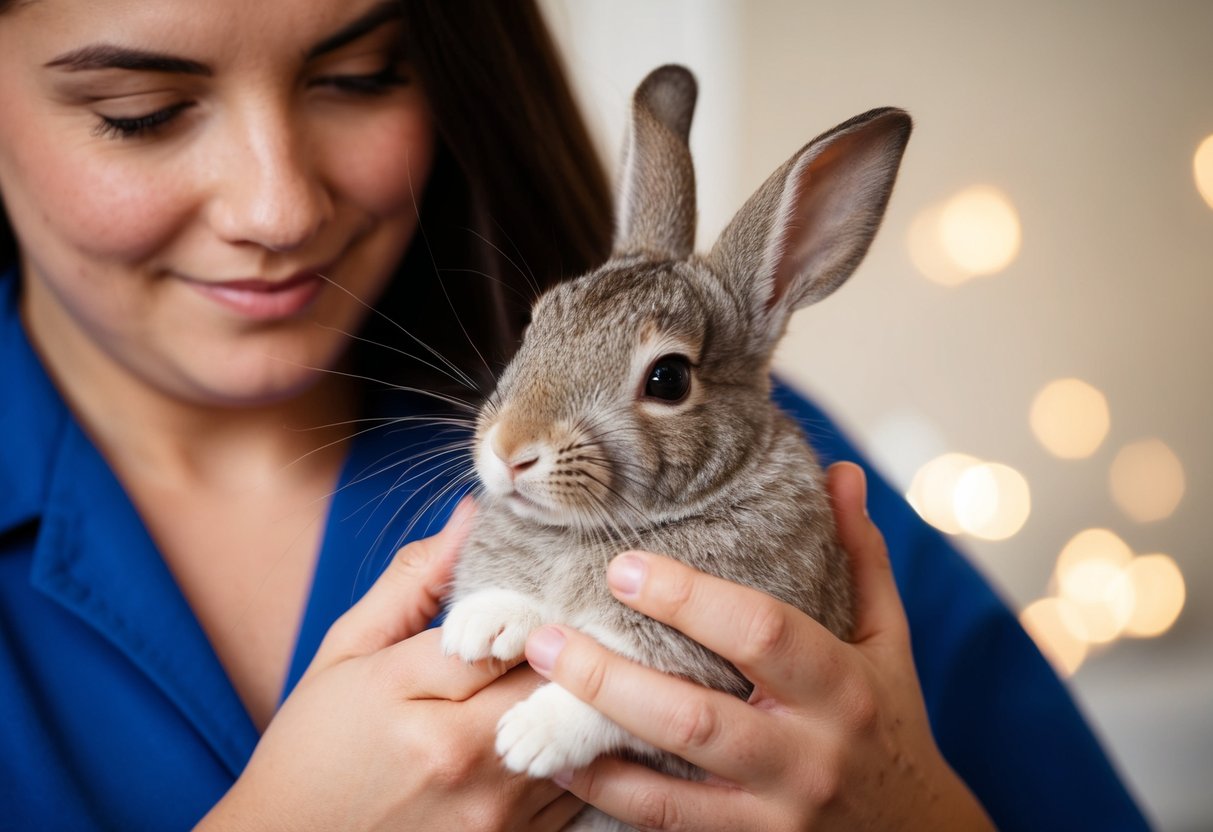
Different rabbit breeds have unique needs and characteristics that can affect how you should handle them. Understanding these differences helps ensure a positive experience for both you and your rabbit.
Understanding the Needs of Different Rabbit Breeds
Not all rabbits are the same. Their size and temperament can vary significantly by breed. Larger breeds, like the Flemish Giant, may require more support when picked up due to their weight. Smaller breeds, such as the Netherland Dwarf, may be easier to handle but can be more skittish.
It’s essential to gauge your rabbit’s personality. Some may enjoy being held, while others might prefer to stay on the ground. Observing their body language will tell you how comfortable they are.
Tailored Handling Techniques for Breed Characteristics
When handling your rabbit, you should consider specific techniques that fit their breed. For instance, many small to medium breeds work well with the football hold. To do this, cradle your rabbit with one arm underneath and use the other hand to support their back.
For larger rabbits, hold them firmly but gently. Make sure to support their rear end and chest to avoid injury. Always use a calm and nurturing approach.
Tailor your handling based on your rabbit’s personality and breed characteristics. This thoughtful approach fosters trust and a strong bond between you and your pet.


