
It’s tempting, right? You spot a calm deer in the woods, and you just want to reach out and touch it. But honestly, that’s not a great idea. Touching wild deer isn’t safe—for you or the animal. They can carry diseases, act unpredictably, or even start relying on humans if we interfere. It’s better to keep your distance and find safer ways to enjoy their presence.
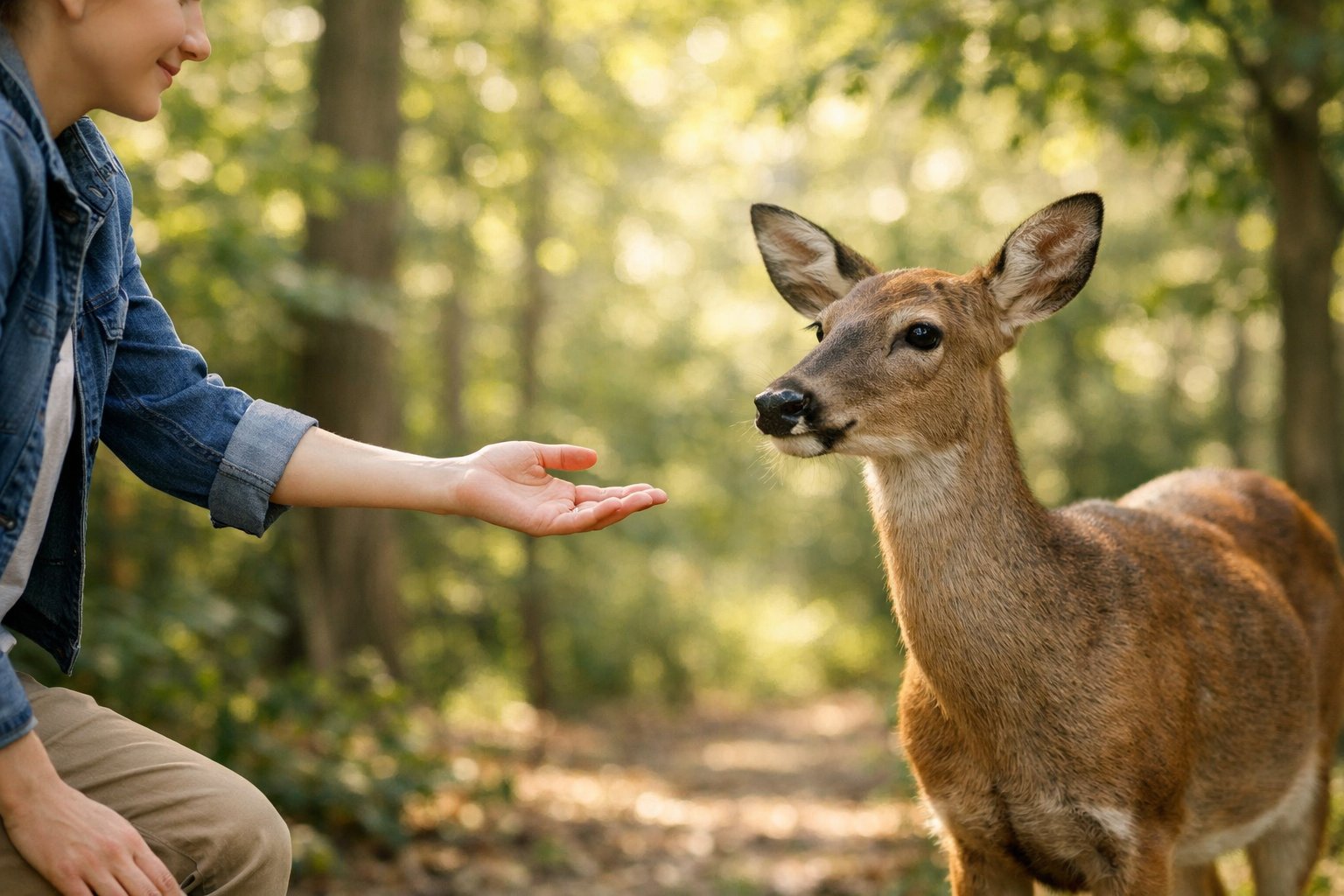
Let’s get into why it’s smarter to keep your hands to yourself, how deer behavior and health can affect you, and what you can actually do if you run into a deer that needs help.
You’ll pick up some practical tips to protect yourself and the deer you care about.
Is It Safe to Touch a Deer?

Touching a deer puts your health, the animal, and even local rules at risk.
You might pick up ticks, spread disease, or accidentally cause a deer to panic and hurt itself—or you.
Health Risks from Touching Wild Deer
Wild deer often carry ticks that spread Lyme disease and other nasty illnesses.
If a tick gets on you after contact, it might transmit an infection in just hours or days.
Always check your skin and clothes after being near deer, and remove ticks right away with fine-tipped tweezers.
Deer can also have bacteria like Salmonella or E. coli on their fur or in their droppings.
If you handle a deer or touch a contaminated carcass without gloves, you’re more likely to get sick.
Chronic Wasting Disease (CWD) affects deer brains and is a serious problem in some places.
Stay away from carcasses or parts in areas with CWD and follow local advice.
If you notice a deer acting weird—wandering around during the day, drooling, or looking confused—it might be sick with rabies or something else.
Don’t touch animals like that. Just call wildlife officials.
Risk of Injury and Deer Behavior
Deer aren’t pets. Even the calm ones can kick, bite, or hit you with their antlers if they get startled or feel trapped.
During rut (mating season), male deer get even more aggressive and might charge.
If you approach suddenly, a deer could bolt.
If you’re close when it happens, you could get knocked down or even trampled.
Dogs can make things worse. If your dog gets near a deer, especially when fawns are around, the deer might go into defense mode.
Keep your pets leashed and under control.
Don’t assume a deer wants to be close just because it lets you get near.
Deer that are used to people may seem friendly, but they’re still wild and unpredictable.
Wildlife rehabilitators use special gear and know what they’re doing—most of us don’t.
Touching Fawns and Baby Deer
Fawns often look abandoned, but their moms leave them alone for hours at a time.
If you touch a fawn, you might leave your scent and cause its mother to reject it, or you could attract predators.
If the fawn looks healthy and is hiding, just leave it be.
If you see a fawn that’s hurt, weak, or in real danger, call your local wildlife agency or a licensed rehabber.
Don’t try to feed or bottle-feed a wild fawn; that can do more harm than good.
Only professionals should move or care for orphaned deer.
Don’t try to keep a baby deer as a pet. Deer need special care and legal permits in many areas.
Taking a fawn without permission can be illegal and bad for the animal.
Legal Consequences and Regulations
A lot of places ban feeding, bothering, or having wild deer.
These laws protect both people and wildlife.
Breaking them can get you fined or worse, depending on your local rules.
CWD zones often have extra rules about moving deer carcasses, testing, and disposal.
Stick to the posted regulations when hunting or getting rid of deer remains, or you could face penalties and help spread disease.
If you come across an injured or sick deer, call animal control or a wildlife agency.
They know what to do and how to keep everyone safe without breaking the law.
For more info, check out the Institute for Environmental… (https://iere.org/is-it-safe-to-touch-wild-deer/).
How to Responsibly Interact with Deer in the Wild

Keep your distance, don’t feed deer, and call professionals if you see an injured or orphaned animal.
Use things like binoculars, fences, or repellents to protect your garden and avoid getting too close.
Observing Deer Safely
Try to stay at least 25–50 yards away from deer.
Binoculars or a spotting scope let you watch them without making them nervous.
Move slowly, talk quietly, and don’t make sudden moves that could spook them.
Always keep your pets leashed and close.
Dogs can chase deer or spread parasites, and they just make things more stressful for everyone.
If a deer walks up to you, back away slowly and put something like a tree or car between you and the animal.
Never offer food.
Feeding deer messes up their natural habits, attracts more animals, and increases disease risk.
Want more on this? See How to Befriend Deer: Risks and Responsible Observation (https://biologyinsights.com/how-to-befriend-deer-risks-and-responsible-observation/).
What to Do If You Find an Injured or Orphaned Deer
If you spot a deer that’s clearly hurt or a fawn in real danger—maybe it’s bleeding, near a road, or crying—call your local wildlife rehabber or animal control right away.
Don’t try to move or treat the animal unless a professional tells you to.
If the fawn looks healthy and the area is safe, just leave it.
Moms often hide their babies for hours.
Keep pets and people away and note the location for rehab centers.
If a professional says you need to contain the animal, use gloves, handle it as little as possible, and keep it warm and quiet until you can get it to a licensed wildlife center.
Jot down details like the time, exact spot, obvious injuries, and how the animal is acting.
That info helps rehabbers decide what to do next.
Don’t feed or give water unless a trained rehabber specifically asks you to.
Preventing Negative Wildlife Interactions
Try planting deer-resistant varieties in your yard. If you live where deer wander in often, put up a fence—make it at least 8 feet tall.
You can set up motion-activated lights or sprinklers. They’ll spook deer away from gardens and compost piles pretty well.
Buy some deer repellents and spray them on your most vulnerable plants. Switch up the brands every few weeks, or deer might get used to them.
Don’t leave out food sources like open garbage, fallen fruit, or birdseed. Those things can draw in deer, and sometimes their predators too.
Ask your family and neighbors to respect wildlife boundaries. Post a few simple rules: leash your dogs, don’t feed the deer, and call professionals if you spot injured wildlife.
Taking these steps makes it a lot easier to avoid unwanted run-ins with wildlife. It’s better for you—and the deer, honestly.


