
Ever spotted a wild canine and wondered if it’s a coyote or a fox? You’re definitely not alone there. At first glance, they might look pretty similar, but honestly, they’re quite different animals. A coyote isn’t a fox; they come from separate branches of the dog family and have their own sizes, behaviors, and looks.

Coyotes usually look bigger and more muscular. Foxes, on the other hand, are smaller, sport bushier tails, and show off a wider range of colors.
If you can spot these differences, you’ll have a much easier time figuring out which animal you’re looking at—whether that’s in the wild or, who knows, maybe in your own backyard.
When you learn how coyotes and foxes differ, you also pick up some cool facts about their habits and survival tricks. Let’s check out some simple ways to tell them apart—and maybe why it actually matters.
Is a Coyote a Fox? Fundamental Differences

Coyotes and foxes might look a bit alike, but they really aren’t the same. You can spot the differences if you know what to look for—like their size, family tree, and the way they live.
If you keep these points in mind, you’ll see why a coyote isn’t just a big fox.
Wild Canids and Canid Species
Both animals belong to the wild canid family, which covers dogs, wolves, jackals, and other wild dogs. Still, coyotes and foxes sit on different branches of that family tree.
Coyotes fall under the Canis genus, making them close cousins of wolves and domestic dogs. Foxes don’t—they belong to groups like Vulpes and Urocyon.
Even though they’re both wild canids, they come from different groups. This split changes how they act, where they live, and how they make it in the wild.
Scientific Classification: Canis latrans and Foxes
Coyotes go by the scientific name Canis latrans. That puts them pretty close to wolves and dogs.
Foxes don’t share that Canis label. They come from separate groups, which shows just how far apart these species really are.
Because of these separate roots, foxes and coyotes have developed different traits and behaviors. Coyotes look and act more like wolves and dogs, while foxes have their own quirks that set them apart.
Size, Appearance, and Physical Traits
Coyotes usually dwarf most foxes. Their bodies stretch from about 3 to 4.5 feet, tail included, and they weigh in anywhere from 15 to 50 pounds.
Foxes stay smaller—think 1 to 3 feet long, and their weight can range from 2 to 30 pounds, depending on which species you’re looking at.
A fox’s tail stands out—long, bushy, and often tipped in white or black. Coyotes carry shorter, less fluffy tails that just hang down when they run.
Coyotes show off a more muscular build and longer legs. Foxes have shorter legs and surprisingly big ears for their size.
Behavior and Social Structure
Coyotes like company. They often stick with family groups or packs, a bit like wolves do.
They spend most of their time above ground, only ducking into dens for mating season. Their loud howls carry far, helping them keep in touch with others.
Foxes usually go solo, except when they’re raising pups. They prefer cozy dens or burrows with twisting tunnels underground.
If you hear a fox, you’ll notice high-pitched calls—more like whining or yelping than howling. Foxes hunt smaller prey and sometimes even play with their food before eating it. Clever, right?
Comparing Foxes and Coyotes in Nature
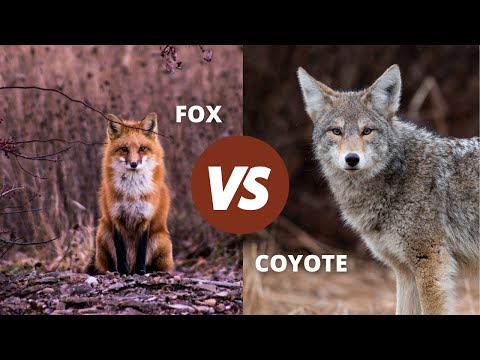
Foxes and coyotes might look similar at first, but you’ll spot some big differences in their size, color, and the way they act. If you learn about a few fox types and their habits, you’ll get the hang of telling them apart. Oddly enough, even their droppings look different—which can tell you who’s living nearby.
Red Fox Versus Coyote
The red fox comes in smaller and lighter than a coyote. Usually, it’s about 1 to 3 feet long, and its bushy tail almost matches its body length.
Red fox fur often shows a reddish-orange color, with white and black markings tossed in.
Coyotes, though, are bigger—think 3 to 4.5 feet long with the tail, and weighing anywhere from 15 to 50 pounds. Their fur tends to be gray or reddish-brown. Their tails are bushy but not as dramatic compared to their body size.
Red foxes move quickly and lightly. Coyotes have a sturdier, muscular build and longer legs, letting them run farther and faster.
Gray Fox and Coyote Distinctions
The gray fox looks a bit different from the red fox. Sometimes people confuse it with a coyote because of its color.
Gray foxes sport a salt-and-pepper gray coat with reddish patches on the legs and neck. They’re smaller, measuring about 2 to 3 feet long and weighing 8 to 15 pounds.
Coyotes, as you’d guess, are much larger and heavier. Gray foxes can climb trees and prefer wooded areas, while coyotes stick to open spaces—fields, deserts, that sort of thing.
Behavior-wise, gray foxes usually stay alone or with family. Coyotes sometimes travel in small groups or packs.
Habitat and Territory
Foxes and coyotes sometimes share the same areas, but they like different habitats. Gray foxes love dense woods where they can hide and even climb trees.
Red foxes do well around farms and suburbs, especially where there’s some brush or small forests.
Coyotes live all over North America. They like open land, forests, deserts, and even towns. They dig dens or use old burrows but mostly rest above ground.
Coyotes need bigger territories because they hunt larger animals. Foxes keep to smaller areas with plenty of cover.
Depending on where you live, you might spot a fox den or a coyote den—or maybe just catch a glimpse of one darting through the trees.
Coyote Scat and Fox Scat
If you check out animal droppings, you can figure out if a fox or coyote has been around. Fox scat tends to be smaller—usually just 1 to 2 inches wide. You might spot fur, little bones, or seeds in it.
It usually tapers off to a point at one end. That’s a pretty good clue.
Coyote scat, on the other hand, looks bulkier and longer. Sometimes it measures up to 3 inches wide.
Coyotes eat all sorts of things, so you might see bigger bits in their scat—deer fur, bones, or even chunks of plants. Sometimes there’s fruit or rabbit remains in there too.
Both foxes and coyotes use scat to mark their territory. Coyotes often drop theirs right along trails or out in the open, kind of to send a message.
Foxes, though, tend to be sneakier. They’ll tuck their scat under leaves or hide it beneath rocks.
If you pay attention to these little details, you can usually tell which animal has been visiting.
For more on the differences between foxes and coyotes, check this detailed fox vs coyote comparison.


