
If you’ve noticed some digging and disturbances in your garden, chances are a badger is to blame. These clever creatures are drawn to gardens to search for food, leaving behind signs like snuffle holes and droppings.
To get rid of badgers in your garden, focus on creating an environment that is less appealing to them while respecting their protected status in the UK.

Understanding the behavior of badgers can help you prevent their intrusion. They usually come looking for earthworms, insects, and plants.
By taking some simple steps, like securing your compost and using barriers, you can keep your garden safe from these nocturnal visitors.
It’s important to note that badgers are protected wildlife in the UK. This means you cannot harm them or interfere with their setts. Your focus should be on deterrence and making your garden less inviting.
With some effort, you can enjoy your garden while coexisting with these fascinating animals.
Understanding Badgers in the UK

Badgers are fascinating creatures that play an important role in the ecosystem. They are nocturnal animals, often seen in gardens and may sometimes cause concern for homeowners. Understanding their natural habits and legal protection can help you manage their presence effectively.
Natural Habits of Badgers
Badgers are social animals that live in groups called clans, usually within a badger sett. These setts are complex burrows made up of interconnected tunnels. Badgers are mainly nocturnal, venturing out at night to search for food such as earthworms, insects, and fruits.
In your garden, you might notice signs of their activity. Latrines are common; badgers often leave droppings in open pits to mark territory. Additionally, they create snuffle holes, which appear as small pits in your lawn. These happen when badgers dig with their snouts looking for tasty treats. Look for scratch marks on trees and soil disturbances to identify their presence.
Legal Protection
Badgers in the UK are protected by law, specifically the Protection of Badgers Act 1992. This means it is illegal to harm badgers or interfere with their setts. If a badger has an established sett in your garden, you cannot disturb it or attempt to remove the animal.
Violating these laws can result in severe penalties, including fines and imprisonment. It’s important to learn about local wildlife laws and respect the role badgers play in the ecosystem. Keeping badgers safe contributes to biodiversity, helping maintain a healthy balance in your garden.
Preventive Measures
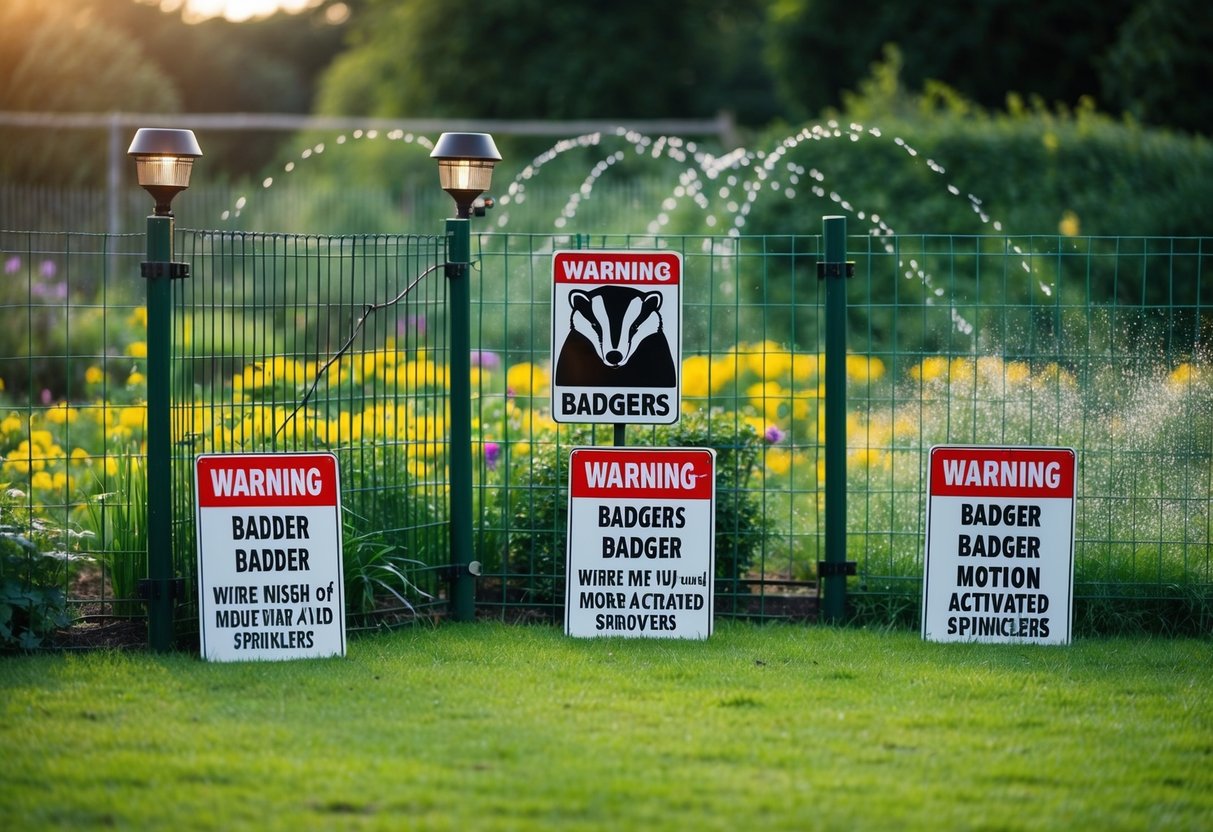
To keep badgers out of your garden, it’s important to take proactive steps. This includes restricting their access and removing food sources that might attract them.
Restricting Access
Fencing is one of the most effective ways to deter badgers. You can use strong materials like chicken wire or wood.
Ensure the fence is at least 1.2 meters high and buried about 30 centimeters underground to prevent digging.
Consider adding an electric fence for extra protection. This can offer a strong barrier against any curious badgers.
Make sure to check the fence regularly for gaps or damage. If you find any, repair them promptly to keep your garden secure. A well-built fence can significantly reduce badger visits.
Removing Food Sources
Badgers are often attracted to gardens because of available food. To make your garden less appealing, remove any food sources they might find.
Start by cleaning up fallen fruit and vegetables. Also, be mindful of leaving pet food outside, as it can attract wildlife.
You should also limit their access to grubs, earthworms, and slugs, as these are their favorite snacks.
Consider using barriers or natural repellents to keep these pests at bay.
Lastly, avoid planting sweetcorn or other favorites that might draw them in. By taking these steps, you can make your garden less inviting to badgers.
Using Deterrents
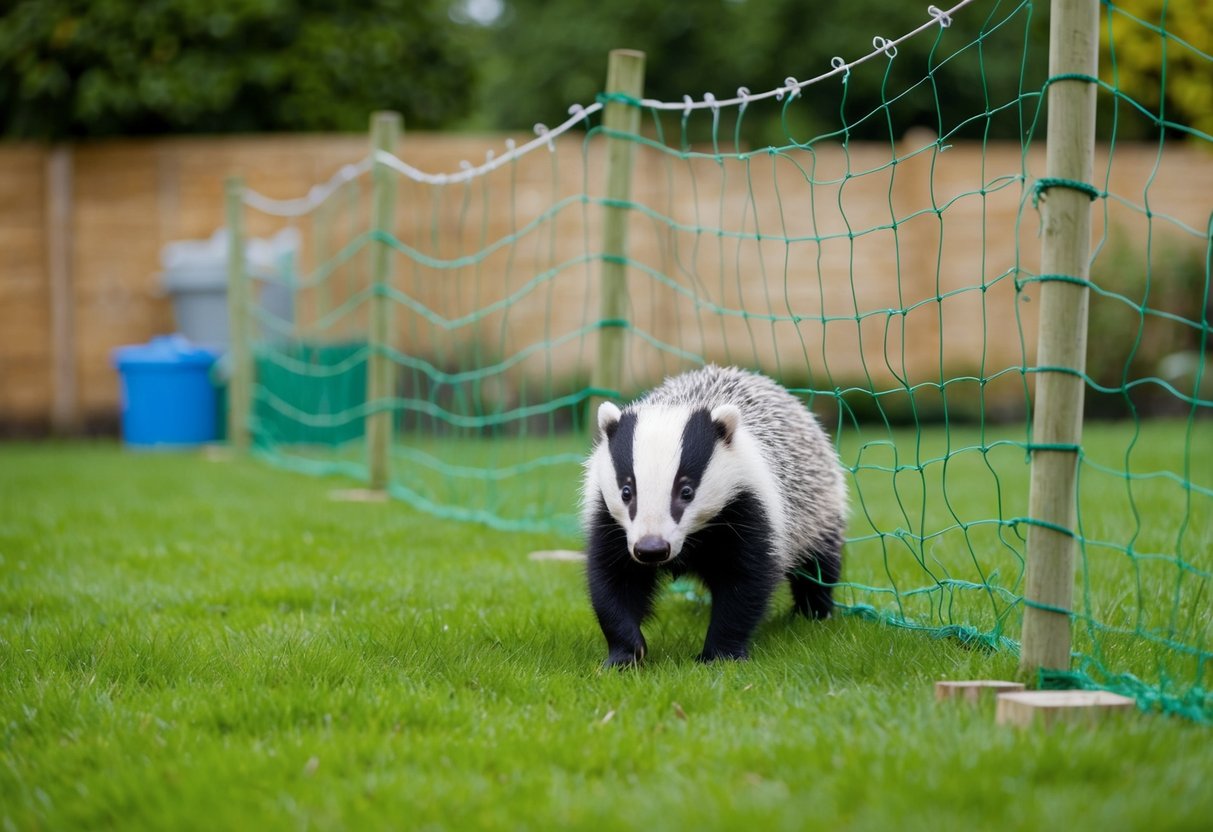
When dealing with badgers in your garden, deterrents can be an effective way to keep them away. You have several options to consider, ranging from natural solutions to more technological approaches. Here’s how you can use them.
Natural and Chemical Deterrents
One popular approach is to use natural deterrents.
For instance, male urine can be effective, as it naturally signals danger to badgers. You can purchase commercial products that mimic this scent.
Another natural option is using bonnet peppers. Their strong smell can deter badgers if you sprinkle some crushed peppers around the garden.
You might also consider badger repellent granules available at garden centers. These products are designed to keep badgers at bay without harming them.
Make sure to reapply these substances after rain or watering to maintain their effectiveness.
Technological Solutions
If you prefer a more high-tech solution, consider installing ultrasonic devices.
These devices emit high-frequency sounds that are unpleasant for badgers but inaudible to humans. This can effectively discourage them from entering your garden.
Electric fencing is another option that can create a physical barrier. It deters badgers by delivering a mild shock if they try to dig under or climb over the fence.
Both options can be effective, but ensure they are installed correctly for safety and effectiveness.
When to Seek Professional Help

Dealing with badgers digging in your garden can be tricky. There are times when you should consider getting professional help.
First, make sure you understand the law. Badgers are protected by law in the UK. If badgers have set up a home in your garden, it’s illegal to disturb them. You can learn more about this from sources like the Badger Trust.
Next, if you notice a sick or injured badger, contact professionals. Badgers may seek safety in your garden. It’s best to let experts handle the situation to ensure safety for both you and the animal.
If you’ve tried basic methods like deterring badgers with natural repellents or scarers but nothing works, it’s a sign to seek help. Professionals have tools and techniques that can be more effective.
Moreover, if you have pets or children, safety is key. Badgers can act aggressively if they feel threatened. Don’t risk your safety; get in touch with local wildlife authorities or pest control.
Finally, if badgers are causing significant damage to your garden or lawn, consider badger control services. They can provide a safe and legal way to address the problem while respecting wildlife laws.


