
Badgers are known for their digging habits, but you might wonder if these creatures actually disturb graves. Yes, badgers do dig up graves, which can cause distress for grieving families and disrupt the resting places of loved ones. You may have heard stories about badgers creating chaos in cemeteries, and it’s a topic that has gained attention in various communities.

These animals are natural diggers, often searching for food or creating homes underground. In some cases, badgers have been reported to disturb graves across different locations, such as the Tweedmouth Cemetery in Northumberland. Their digging can unearth human remains and belongings, leading to emotional issues for those who have lost someone.
As you read on, you’ll discover more about the impact of badger activity on cemeteries and what options exist to address this unusual problem. Understanding the relationship between badgers and graves can shed light on a lesser-known challenge faced by several communities.
Understanding Badger Behavior and Habitats

Badgers are fascinating creatures with unique behaviors and specific habitats. Knowing more about where they live and how they dig can help you understand their role in the ecosystem and the impact they can have near human spaces.
Typical Habitat and Burrowing Habits
Badgers typically make their homes in woodlands, grasslands, and open fields. They dig intricate systems called setts, which are underground tunnels where they sleep and raise their young. A badger’s digging ability is impressive; they can create deep burrows to escape predators and store food.
These animals often dig for earthworms but will also hunt smaller animals like hedgehogs. Their strong front claws enable them to burrow through various materials, including soil and even thin concrete. When you see evidence of burrowing, it’s likely a sign that badgers are nearby and actively using their habitat.
The Impact of Digs near Human Dwellings
When badgers dig close to human homes, it can lead to frustration for residents. Their burrows may disrupt gardens, fences, and other structures. You might notice areas where the soil has been disturbed, indicating that badgers have been active.
In some cases, these digs can be problematic, especially if badgers are digging under fences or driveways. They may even disturb graves, causing concerns for families. Organizations like the Woodland Trust and Natural England work to manage badger populations and protect their natural habitats, ensuring a balance between wildlife needs and human spaces.
Conflict between Badgers and Grave Sites

You might be surprised to learn that badgers can cause significant issues in graveyards. They dig up graves, disturb remains, and create concerns for those who visit these sites. Understanding their behavior and the specific situations around them can shed light on this growing problem.
Historical Instances of Grave Disturbances
Instances of badgers digging up graves are not new. In some regions, such as those with older cemeteries, badgers have been known to disturb the resting places of the deceased. Reports show that they can unearth bones and even expose human remains.
Medieval churchyards, in particular, have experienced these disturbances. Their age makes them more vulnerable, as badgers dig through soft, older soil. Communities in areas like Leicestershire have raised concerns about how these actions affect the sanctity of burial sites.
Current Concerns in the UK
In the UK, the issue is becoming more pressing. For example, at Tweedmouth Cemetery in Berwick, badgers have been known to churn up the ground. This activity poses risks to headstones and ancestral graves. Northumberland County Council is currently dealing with this dilemma as families express their distress.
The problem isn’t isolated. Other reports show similar behavior across the country, leading to heartbreak for grieving families. It’s a tough situation that balances wildlife preservation with respect for those buried. Local authorities are exploring ways to manage these badgers while maintaining the integrity of grave sites.
Legal Framework and Conservation Efforts
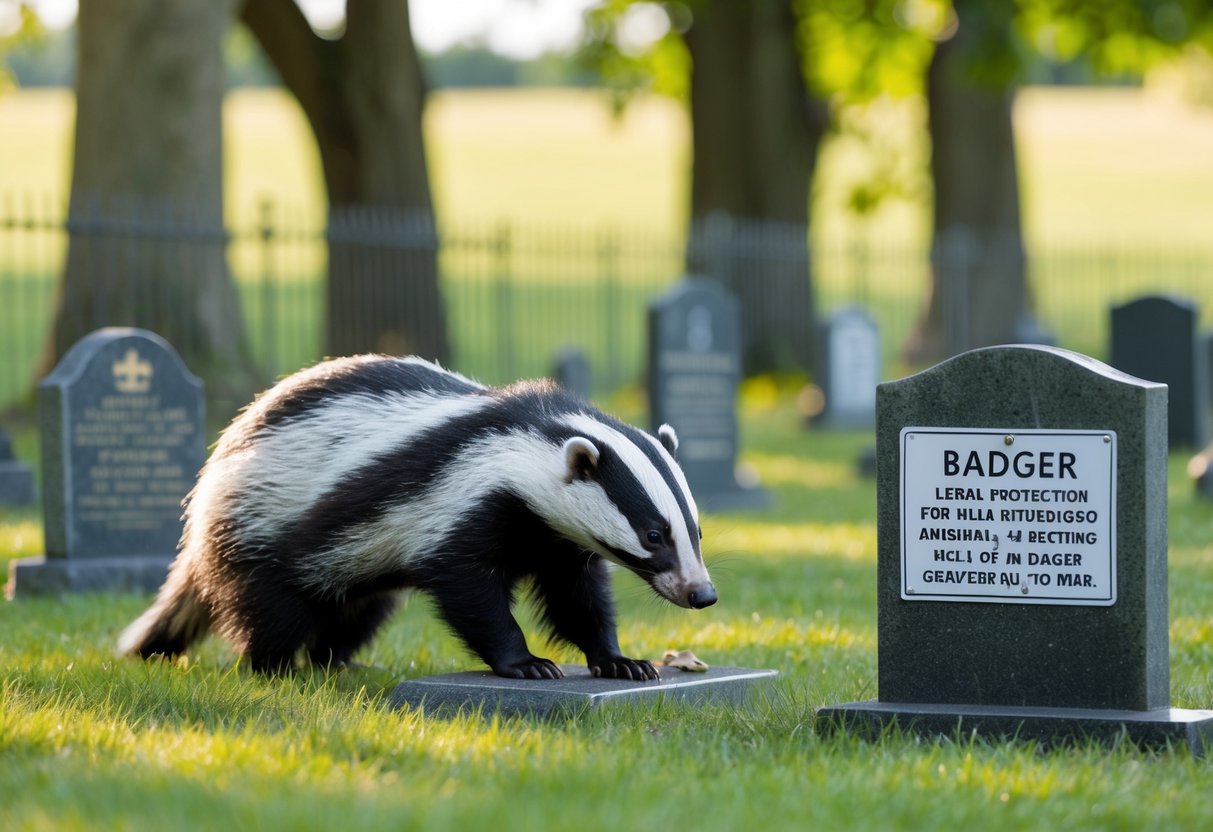
Badgers enjoy a special status in the legal framework that protects them from various harms. This ensures their survival and preservation across the UK. It’s important to understand the specific laws and regulations related to these fascinating creatures, especially when issues like grave disturbance arise.
Wildlife Protection Laws
Under the Protection of Badgers Act 1992, badgers are classified as protected species. This means it is an offence to kill, injure, or damage them or their habitats. The law aims to prevent unnecessary distress and destruction to these animals, promoting their well-being. Furthermore, any actions that disturb their setts, which are their burrows, are also prohibited.
Violators can face serious penalties, including fines or imprisonment. The Badger Trust plays a crucial role in advocating for badgers and ensuring that these laws are enforced. This group also educates people about the importance of badgers in the ecosystem.
Specific Regulations Regarding Badgers
In areas like the Northumberland Cemetery, badgers may dig up graves. Legal regulations are particularly relevant here. It’s essential to manage these situations sensitively. The law prohibits interference with badger setts. It also ensures that landowners handle conflicts with care. This promotes coexistence rather than conflict.
Natural Resources Wales also emphasizes the importance of preserving badger habitats. If badgers are causing issues like grave disturbances, you may need to seek advice from local wildlife experts. Understanding your legal responsibilities can help protect both your interests and the welfare of these wild animals.


