
Bees buzzing around can really get on your nerves, especially if you’re just trying to chill outside.
If you want a bee to leave you alone, try staying calm, don’t make any sudden moves, and gently shoo it away. You could also use natural repellents like citronella or a bit of vinegar. These little tricks help you stay safe, and you won’t hurt the bees either.
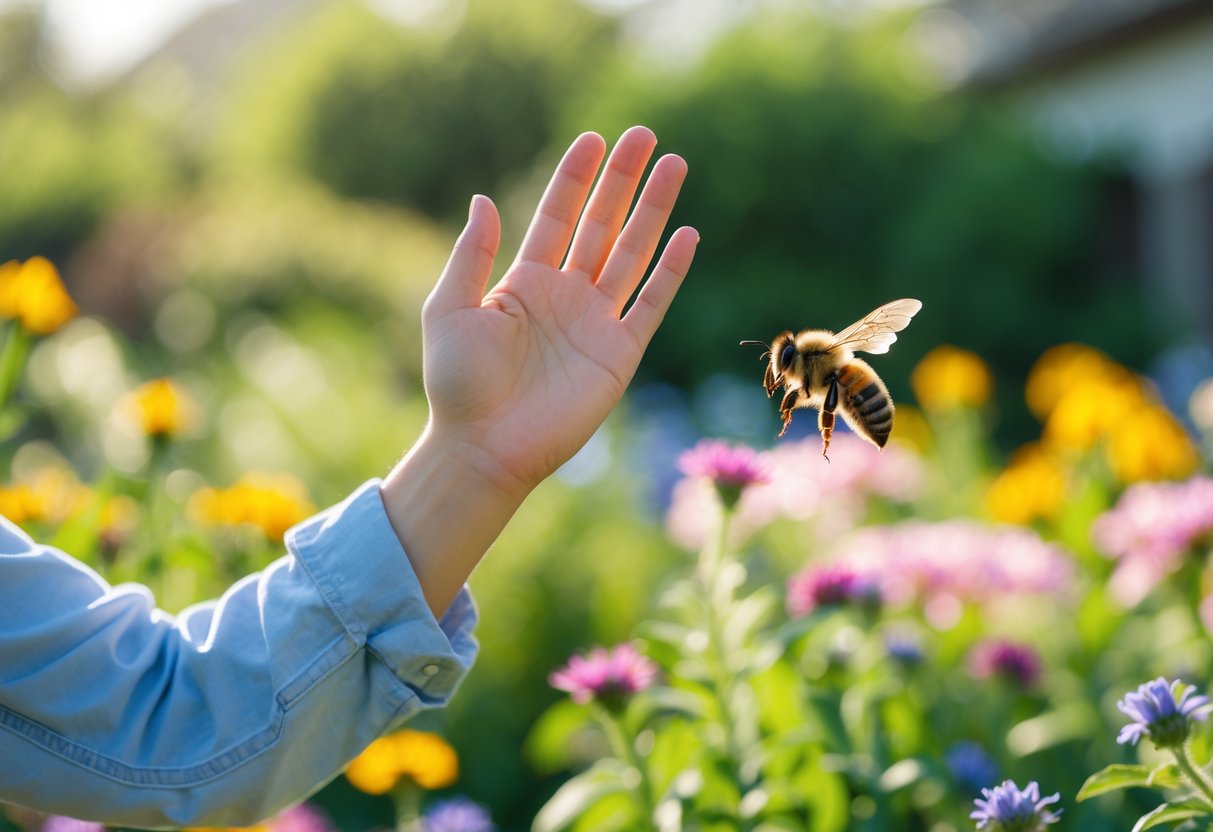
Smoke or strong scents that bees dislike can also work if you need them to buzz off.
If you know how to react and what to use, you can share the outdoors with bees without getting too stressed or risking a sting.
Immediate Actions to Get a Bee to Leave You Alone

When a bee gets close, what you do in those first moments can make all the difference.
If you stay calm, avoid certain scents or colors, and move gently, you’ll seem less interesting or threatening to bees.
Stay Calm and Move Slowly
Honey bees, bumblebees, and solitary bees all react better if you keep calm.
If a bee comes near, don’t freak out or start waving your arms wildly.
Just take a few slow steps away from the spot.
Sudden movements can freak the bee out and make it more likely to sting.
If you need to guide it away, grab a piece of paper or something light and gently usher it outside.
When you stay chill, bees usually decide you’re not a threat and lose interest.
Avoid Strong Scents and Bright Colors
Bees love sweet smells.
Perfumes, scented lotions, and even certain foods can pull them in.
If you want bees to keep their distance, skip the strong fragrances when you’re outside.
Bright colors—especially yellow and blue—catch a bee’s attention.
Try wearing soft, neutral colors if you want to blend in a bit more.
This trick works well, especially with honey bees and bumblebees, since they’re always on the lookout for flowers.
Do Not Swat or Make Sudden Movements
Swatting at bees just puts them on edge.
If you try to hit a bee, it’ll probably feel threatened and might sting to defend itself.
If a bee lands on you, just stay still or move slowly.
Fast jerks or waving your arms around will only make things worse.
Bees, even solitary ones, usually only sting when they’re scared.
So, being calm really is your best bet.
When you avoid swatting and keep your movements gentle, the bee will usually feel safe enough to fly away.
How to Repel and Prevent Bees Naturally

To keep bees from bugging you, try natural repellents, plant specific flowers, tidy up your outdoor spaces, or call a beekeeper if things get out of hand.
These ideas let you protect your space without hurting the bees.
Use Natural Bee Repellents
You can use a bunch of natural things to keep bees away without harming them.
Mint and peppermint oils? Bees can’t stand the smell.
Citronella candles are great for patios and decks too.
Vinegar and cinnamon also work.
Mix a little vinegar with water in a spray bottle and spritz spots where bees hang out.
Sprinkle cinnamon near doors or places where bees might nest.
Try these around play areas or picnic tables to keep bees away, and you won’t need harsh chemicals.
Plant Bee-Repelling Plants
Some plants naturally send bees packing.
Marigolds look nice and have a strong scent that bees don’t like.
Planting mint around patios or along the garden edge helps too.
Citronella plants are another good pick.
If you crush their leaves, you’ll get that classic citronella smell, which bees avoid.
They look good and work as a natural barrier.
Pick these plants and put them near spots you want to keep bee-free, like doorways or outdoor seating.
You get some extra color, and bees will probably stay away.
Maintain Clean Outdoor Spaces
Bees flock to food, sweet drinks, and open trash.
Keep your outdoor eating spots clean by wiping tables and picking up crumbs right away.
Cover your drinks, and make sure garbage goes in sealed bins.
Standing water attracts bees too, since they use it for their hives.
Dump out water from things like flower pot trays.
Check for bee nests now and then, especially from ground bees or carpenter bees that like wood or soil.
A clean yard with no easy food or water makes your place less tempting for bees.
It’s a simple way to cut down on bee visits.
Contact a Local Beekeeper for Removal
If you spot a bee hive or a swarm near your home, reach out to a local beekeeper instead of handling it on your own. Most beekeepers know exactly how to move honeybees safely, and they’ve got the right gear for the job.
Letting a pro handle it keeps you safe and helps protect the bees too. These little guys are crucial for pollination and, honestly, the environment could use all the help it can get.
Skip the insecticides—those just end up killing bees and can mess up your yard’s ecosystem. It’s just not worth it.
When you call a beekeeper, you’re helping the bees and keeping your property free from stings or damage that big hives can cause. A lot of beekeepers will even do the removal for free or for a small fee, especially if they collect honey or beeswax.


