
Spotting a bee flying around after dark isn’t something you see every day. Usually, bees stick to daylight hours because they need sunlight to find flowers and get around.
Most bees don’t bother flying at night since they can’t navigate well in the dark. So, if you see one buzzing by your porch light, something unusual is probably going on. Sometimes, it’s just a special kind of bee that manages better in low light, or maybe it’s reacting to an emergency.
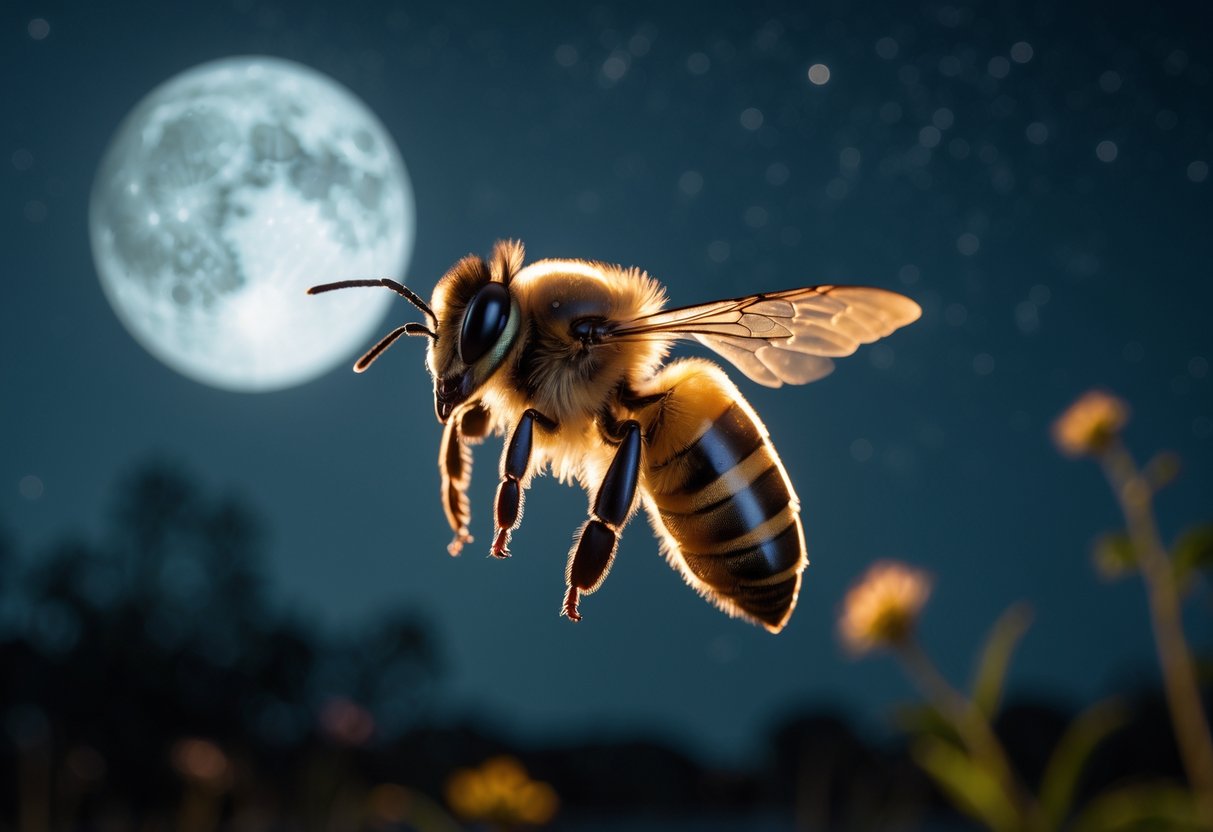
Ever wonder how a few bees can handle the dark when most can’t? Some, like the Indian Carpenter Bee, have figured out how to fly under moonlight. Even they don’t risk total darkness, though.
Learning about these quirks gives you insight into bee health and the ways their environment shapes what they do.
If you’ve ever felt curious about why bees turn up after sunset, you’re not alone. It’s a bit odd to see them out of their usual schedule.
This article digs into what’s really behind those rare night flights. You’ll also get a few tips on how to spot the difference between bees and other nighttime flyers.
For more on this, you can check out what it means when a bee is flying at night.
Why A Bee Might Be Flying At Night

Sometimes, bees do end up flying after dark, even though that’s not their thing. This happens for a bunch of reasons—maybe their schedule gets thrown off, or a parasite messes with them, or something weird is going on in their hive.
Knowing why helps if you ever spot a bee buzzing around your porch light at night.
Unusual Bee Behavior After Dark
Most bees, like honey bees and bumblebees, get busy during the day and rest at night. But sometimes, if there’s enough light—say, a full moon or a bright porch lamp—they’ll venture out.
Bees might also leave the hive at night if it’s warm enough. If something stresses the hive or there’s an emergency, a few might fly out to deal with it.
Maybe they’re searching for food or responding to a disturbance. You’ll see this more in places with warm nights, like California, but it’s still pretty rare.
Parasite-Induced Nighttime Activity
A parasite called Apocephalus borealis (the zombie fly) can really mess with bees. This fly lays eggs inside honey bees, and when the larvae hatch, they change the bee’s behavior.
Infected bees end up flying at night, which isn’t normal for them. If you notice bees circling porch lights after dark, they could be dealing with this parasite.
Sadly, these bees usually die soon after and end up close to where they were flying. The zombie fly is a big problem, especially in places like California, because it can really hurt hive health.
Circadian Rhythm Disruptions in Bees
Bees run on a daily schedule—a circadian rhythm—that tells them when to sleep and when to work. Sometimes, artificial lights or stress mess with this rhythm.
Bright streetlights can trick bees into thinking it’s daytime. When that happens, bees might leave the hive at weird hours, which puts them at risk of exhaustion or predators.
Messing with their natural schedule can weaken the whole hive and make honey production harder.
If you want to dive deeper, there’s more info about what causes bees to be out at night.
Factors Influencing Nocturnal Bee Flight and Risks

Bees that fly at night run into a lot of trouble, from getting drawn to lights to dodging parasites. If you spot one, it’s smart to be careful—nighttime bees don’t act quite like their daytime selves.
Compared to other insects, like ants, bees face their own set of risks after dark.
Artificial Light Attracting Bees
Street lamps and porch lights can really throw bees off. They rely on sunlight to get around, so bright lights at night lure them in.
Bees might circle these lights for ages, wearing themselves out or making themselves easy targets for predators. If you see bees near your lights, they’re probably confused.
This puts them in danger. Dimming your outdoor lights or switching to yellow bulbs can help keep bees away from artificial light.
Impacts of Fly Larvae and Parasitic Infections
Fly larvae often go after bees, especially at night when bees are more vulnerable. These parasites latch onto the bee or invade the hive, causing all sorts of problems.
Infections from these parasites make it tougher for bees to fly or find food. That’s one of the reasons most bees stay inside after dark.
If you see bees flying oddly or moving slow at dusk or after dark, they might be dealing with parasites. Healthy bees usually prefer to stay tucked away in the hive after sunset.
Potential for Bee Stings
Bees generally calm down at night, but they can still sting if you bother them. Because they’re stressed or confused, night-flying bees might sting faster than you’d expect.
If you notice bees nearby after dark, try not to make sudden moves or touch them. Getting stung at night can catch you off guard, since most people don’t expect to see bees then.
Watch your step if you’re outside, and keep your hands away from places bees might be hiding. Wearing light-colored, covered clothing can help avoid bee stings near dim lights.
Comparison With Other Insects: Ants and Their Predators
Ants usually get busy at night, but their risks aren’t quite the same as bees’. Bees have to watch out for bats or sneaky fly larvae, while ants mostly worry about spiders or nocturnal beetles.
Ants stick close to the ground and hang around their nests, so they don’t become easy prey. You might catch ants moving quietly while bees seem to face tougher problems during their night flights.
If you think about it, these differences help explain why bees rarely venture out after dark, and why ants act the way they do. It’s handy to know this stuff if you want to respect both insects and avoid causing them trouble.


