
When a bee lands on you, you might instantly wonder, “Is it about to sting me?”
Most of the time, bees don’t sting just because they land on you.
They’re usually calm and a bit curious, not really out to hurt anyone.
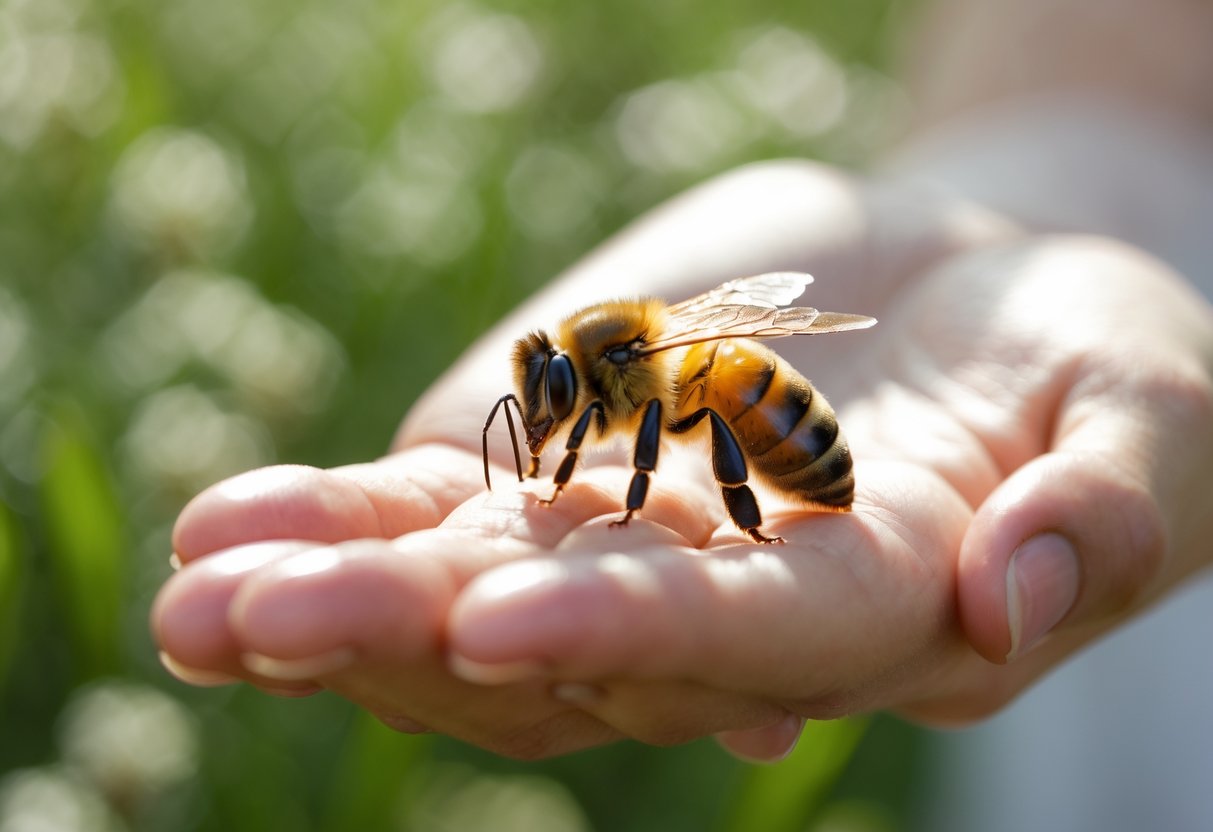
Bees sting only if they feel threatened or scared.
If you stay still and relaxed, you can keep both yourself and the bee safe.
It helps to understand why bees act this way.
Once you get it, those moments feel a lot less scary, and you can handle things with a bit more confidence.
Knowing what to do when a bee lands on you really makes a difference.
Simple moves—like gently brushing the bee away—can help you avoid getting stung and keep the peace.
If you want some tips on staying safe and calm, well, let’s keep going.
Will a Bee Sting You If It Lands on You?

When a bee lands on you, it doesn’t automatically mean you’ll get stung.
Honestly, bees want to avoid stinging you because it usually harms them, and they only sting if they feel threatened or in real danger.
Typical Bee Reactions to Landing on Humans
Most bees land on people because they’re curious or attracted to a certain scent or color.
They might just rest or explore without doing anything harmful.
You might notice a tickle or a bit of warmth, but that’s not a sign of danger.
Bees really don’t want to sting unless you provoke them.
If the bee just sits there for a moment, it’s probably just checking things out.
They use their legs and antennae to explore.
If you stay calm, the bee will likely fly off soon.
No need to panic or swat—doing that could actually make things worse.
Reasons Bees Sting When Landing
Bees sting to defend themselves.
If they sense a threat, like sudden movement or getting squeezed, they’ll sting to protect themselves or their hive.
A bee’s sting injects venom, causing pain and swelling.
Honey bees sting once and then die, but other bees can sting more than once.
You make it more likely you’ll get stung if you disturb the bee.
Swatting or trapping the bee can make it feel threatened and ready to defend itself.
Standing Still Versus Moving: What Matters Most
How you react after a bee lands on you really matters.
Standing still or moving slowly lowers your chances of getting stung.
If you stay calm and don’t make sudden moves, the bee is less likely to feel threatened.
Honestly, just waiting it out is usually the safest bet.
Quick or jerky actions can freak the bee out and make it sting in self-defense.
Gentle movements—like softly guiding the bee away—work best if you want it gone.
Patience and calmness are your best defense when a bee lands on you.
Bee Behavior and Safety Tips

Bees usually won’t sting unless they feel threatened.
If you know what kinds of bees are around, how to act when one lands on you, and what changes when you’re near a hive, you can avoid most stings.
Types of Bees You Might Encounter
You’ll probably see honey bees most often, but you might also run into bumblebees, carpenter bees, or some solitary bees.
Honey bees tend to be gentle and sting only to defend their hive.
Bumblebees are bigger, and while they can sting, they’re not usually aggressive.
Carpenter bees look a lot like bumblebees, but they rarely sting unless you provoke them.
Some bees lose their stinger after one sting, so they can’t sting again.
Others, like bumblebees, can sting more than once.
If you know these differences, it’s easier to stay calm and avoid sudden moves.
How to Respond If a Bee Lands on You
If a bee lands on you, try to stay still and calm.
Don’t swat or make any quick movements—it’ll just scare the bee.
The bee is probably just curious or taking a break.
You can gently brush it away or just wait for it to leave.
Move slowly to lower your chances of being stung.
If you do get stung, remove the stinger fast with something flat, like a credit card, to stop the venom from spreading.
How Proximity to a Beehive Influences Bee Actions
Bees get noticeably more protective when you’re close to their hive. If you wander too near, they might just decide you’re a threat and sting to defend their home.
It’s honestly best to keep your distance if you don’t want to deal with that.
When you’re farther away from the hive, bees usually chill out and don’t bother stinging unless you really provoke them. Knowing this makes it easier to figure out how to act outside, especially around flowers or gardens where bees like to hang out.
For more on how bees behave (and how to stay safe), check out Understanding Bee Behavior and Safety Tips.


