
You really can make tender, flavorful deer meat at home if you just use the right prep and cooking methods for each cut. Go for quick, high heat with tender cuts like steaks, but slow-cook or braise the tougher pieces to keep things juicy.
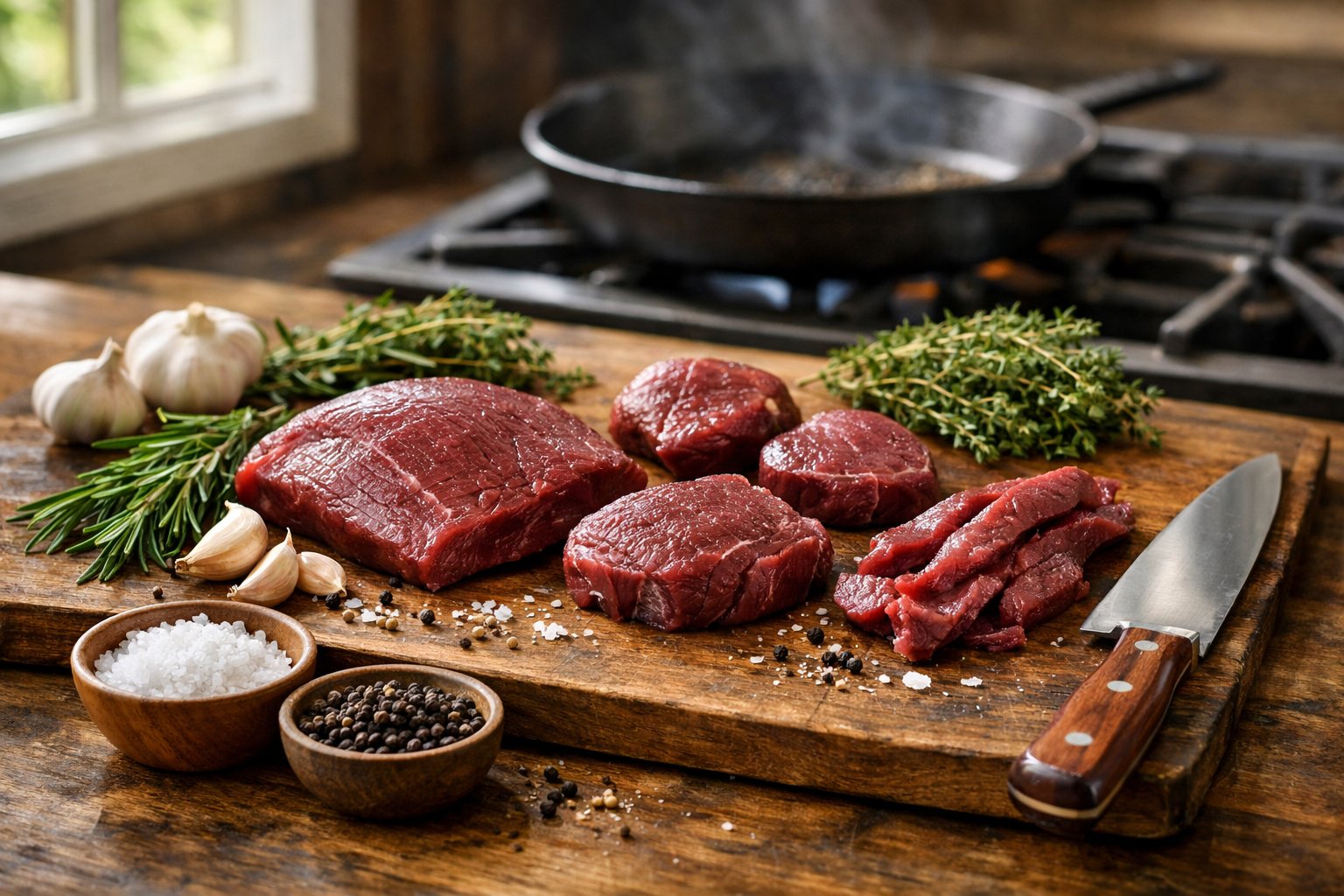
You’ll find some easy prep steps here that cut down that gamey flavor and help the meat cook more evenly. No more guessing—just clear temp targets.
I’ll share practical tips for steaks, roasts, and ground venison. You can turn your deer into meals the whole household will actually eat.
This post covers simple techniques, from trimming and marinating to searing, braising, and slow cooking. You’ll cook with more confidence and get the best from every cut.
Essential Preparation for Cooking Deer Meat

Start by choosing the right cuts. Clean and trim the meat carefully.
Decide if you want to soak or marinate for better flavor and tenderness. The right tools and a few simple steps can mean the difference between dry venison and a juicy meal.
Selecting and Handling Venison Cuts
Pick your cuts based on how you plan to cook them. Use backstrap and tenderloin for quick sears in a hot cast iron skillet—they’re lean and very tender.
Go for hindquarter and shoulder if you want to slow roast, braise, or stew. These tougher cuts need low-and-slow heat to break down connective tissue.
Keep your meat cold. Store venison on a clean cutting board, loosely wrapped in the fridge at 34–40°F.
Trim off silver skin and large veins with a sharp knife. Remove excess venison fat if it smells off.
Handle ground venison quickly. Add a bit of fat when making burgers or meatballs so they don’t dry out.
Field Dressing and Trimming Techniques
Field dressing helps prevent spoilage and that strong gamey flavor. Open the chest cavity carefully—try not to puncture the organs.
Work fast: cool the carcass and hang it if possible. Remove hair, dirt, and debris before you skin or quarter the animal.
When you butcher, leave bone-in roasts whole for braising. Separate backstraps right away to avoid freezer pressure.
Trim silver skin from tender cuts—it won’t soften no matter how long you cook it. Cut away any bloodshot or bruised areas; those taste strong.
Always use a clean cutting board. Wash your knife between tasks so you don’t cross-contaminate.
Marinating and Buttermilk Soak Options
Think about whether you want a short marinade or a buttermilk soak, depending on how fresh your venison is.
Soak backstraps or steaks in buttermilk for 2–12 hours if you want to mellow out a gamey flavor. The mild acid helps a bit with tenderizing.
Rinse and pat dry before you sear. Use oil-based marinades with acid (vinegar, wine, or citrus) for tougher roasts and for extra flavor.
Marinate steaks for 1–6 hours, and roasts for 6–24 hours in the fridge. Add garlic, herbs, and a touch of fat like olive oil or bacon fat, since venison is lean.
Always toss out used marinade or boil it before using as a sauce.
How to Cook Different Cuts of Deer Meat

Every cut’s a little different. Use quick, high heat for tender muscles, and low, slow heat for tough joints.
Add some fat or binder to ground venison. Grab an instant-read thermometer for accuracy.
Salt and pepper are usually enough, but add beef tallow or pork fat when grinding or making burgers.
Cooking Tender Cuts: Steaks, Backstrap, and Tenderloin
Treat backstrap and tenderloin like you would premium steaks. Trim the silver skin and sinew, then pat the meat dry.
Season with salt and pepper, or go for a light rub of garlic, rosemary, and thyme. Sear hot in a cast-iron pan or grill for 2–4 minutes per side, depending on thickness.
Aim for 125–130°F for medium-rare. Carryover heat will bump it up a bit.
Let it rest for 5–10 minutes before slicing against the grain. If it tastes lean or dry, add a pat of butter or finish with a pan sauce—red wine, garlic, and sage work great.
Slice venison steak or roast thinly across the grain to keep every bite tender.
Slow Cooking and Braising Tough Cuts
Use low, moist heat for shanks, brisket, neck, and leg roasts. Brown the meat first to build flavor.
Braise in a pot with aromatics like bay leaf, cloves, juniper, onion, and garlic. Add red wine and stock so it covers half the roast.
Simmer at low heat or use a slow cooker for 6–8 hours, until the meat pulls apart. Add root vegetables and herbs near the end so they keep some texture.
Tough cuts become fork-tender when the collagen breaks down. Use these roasts for venison stew, chili, or pulled meat for tacos and shepherd’s pie.
Save any pan juices for gravy or to moisten sliced venison roast.
Ground Venison: Burgers, Sausage, and More
Ground venison doesn’t have much fat, so I usually blend in about 10–25% beef or pork fat. That way, you get juicy venison burgers and sausage that aren’t dry.
I like to season the ground meat with salt, pepper, oregano, and a pinch of red pepper flakes for burgers. If I’m making breakfast sausage, I’ll toss in sage, thyme, and garlic instead.
When you form patties, go easy—handle the meat gently. If you overwork it, the burgers can turn out kind of dense, and nobody wants that.
I cook burgers over medium-high heat and sear both sides to keep the juices in. If I’ve added fat, I make sure they hit 160°F; an instant-read thermometer helps a lot.
For meatballs, chili, or tacos, I brown the ground meat first. Then I’ll simmer it with tomatoes, spices, or broth, depending on the dish.
Venison shepherd’s pie or venison meatballs work great, too. The added fat and a simmered sauce help keep everything nice and tender.


