
Feeding your Boxer dog the right amount is crucial for their health and happiness. Adult Boxers typically need between 4 to 6 cups of high-quality dry dog food each day. The amount they need depends on their weight, age, and activity level. You want to ensure that your furry friend maintains a healthy weight and has the energy to enjoy their playful nature.
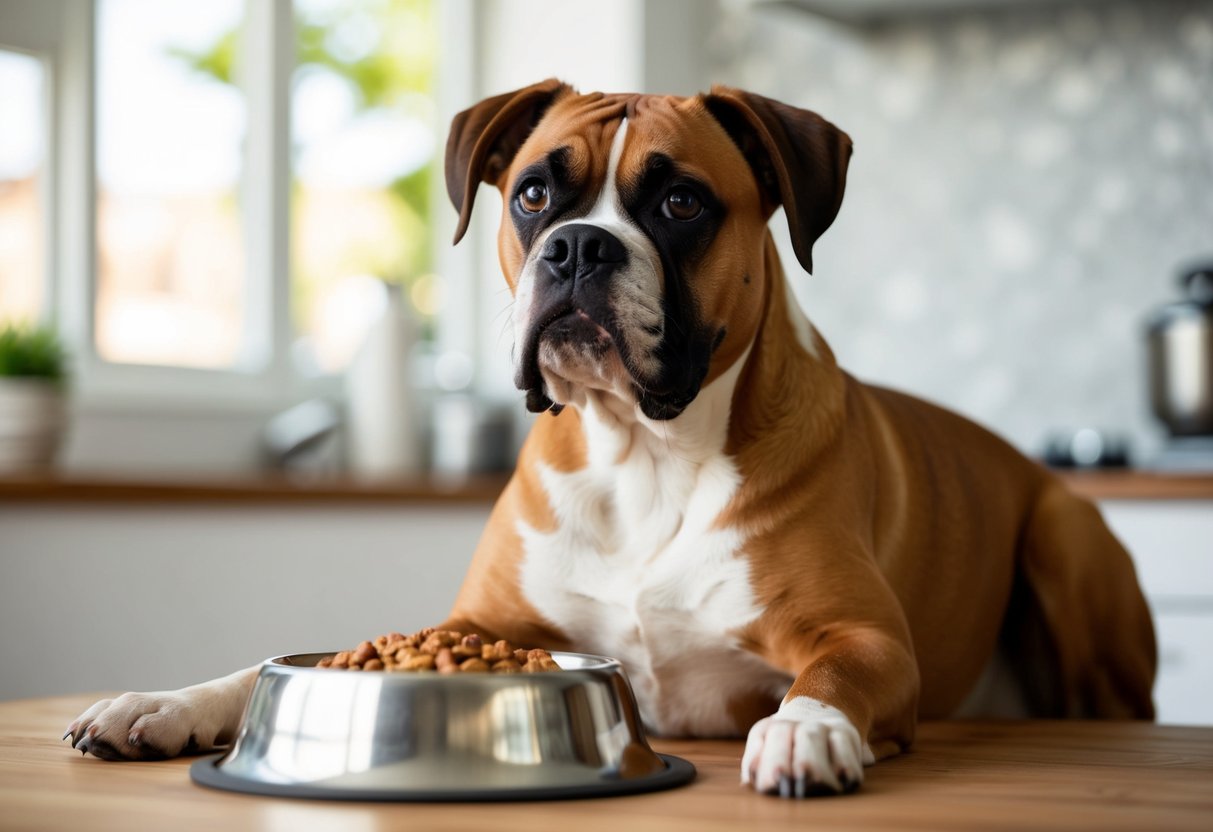
As a Boxer owner, it’s important to create a consistent feeding schedule. During puppyhood, a 15-week-old Boxer requires about 3.8 cups of food daily, which can be divided into two or three meals. By paying attention to their specific needs, you can help your Boxer thrive.
Understanding how much to feed your Boxer will guide you in providing the proper nutrition they deserve. With the right care, your Boxer can lead a vibrant and active life by your side.
Understanding Your Boxer’s Nutritional Needs

Feeding your Boxer the right way is essential for their health and energy levels. Knowing the right balance of nutrients can help support their unique needs. Let’s look into what makes a balanced diet and how to adjust their food based on their activity level.
The Importance of a Balanced Diet
A balanced diet for your Boxer should include high-quality protein sources like chicken, beef, or fish. These proteins are crucial for muscle development and overall health. Aim for options that list real meat as the first ingredient.
In addition to protein, include healthy fats such as fish oil or flaxseed. Healthy fats support skin health and provide energy.
Don’t forget about vitamins and minerals! Look for dog food that includes fruits and vegetables like carrots or blueberries. These can improve digestion and boost the immune system. Proper nutrition helps your Boxer stay active and healthy.
Tailoring Nutrition for Active vs. Resting Boxers
Your Boxer’s activity level plays a big role in their nutritional needs. If your Boxer is active and playful, they will need more calories and nutrients. Consider feeding them around 3 to 3.75 cups of food daily, adjusting based on their energy level.
For a more relaxed Boxer, reduce their food intake. They might only need about 2.5 to 3 cups per day. Monitor their weight closely and adjust their food accordingly.
Whichever your Boxer’s lifestyle, always choose high-quality dog food. Look for products that provide balanced nutrients, good protein, and healthy fats. This will help them stay fit and energetic!
Decoding Boxer Feeding Charts

Understanding how to read Boxer feeding charts can help you provide the right amount of food for your dog. Feeding charts break down daily food requirements based on your dog’s age, weight, and activity level.
How to Read Dog Food Labels
When you choose dog food, start with the label. Look for ingredients listed by weight. A good quality food should have meat as the first ingredient. Pay attention to the guaranteed analysis, too. This shows the protein and fat percentages. For Boxers, aim for a diet with no more than 18% protein and 5.5% fat.
The label should also list feeding guidelines based on your dog’s weight. If your dog weighs 60 pounds, a typical Boxer feeding chart suggests around 3 to 4 cups of dry food per day, split into two meals. This guides you for portion control, ensuring your dog gets the right amount without overeating.
Calculating Resting Energy Requirement (RER)
To determine how much to feed your Boxer, you can calculate their Resting Energy Requirement (RER). The formula for RER is simple: multiply your dog’s weight in kilograms by 30 and then add 70.
For example, if your Boxer weighs 25 kg, the calculation would look like this:
RER = (25 kg x 30) + 70 = 820 calories/day.
Once you know the RER, factor in your dog’s activity level to find their Total Daily Energy Requirement (TDEE). Use this to guide how much food you should serve based on the calorie content of their dog food. Always check the feeding chart on the dog food package to align with your calculations.
Feeding Your Boxer Through Different Life Stages
Feeding your Boxer properly at different life stages is crucial for their health and growth. Boxers have specific nutritional needs as puppies and as adults. Understanding these needs can help you maintain their energy levels and overall well-being.
Boxer Puppy Feeding Practices
Puppies require a balanced mix of proteins, fats, and carbohydrates for growth. You should feed your Boxer puppy three to four meals a day.
Use a Boxer puppy feeding chart to guide you on portion sizes based on their weight and age. For example:
| Age | Weight Range | Daily Food Amount |
|---|---|---|
| 8-12 weeks | 10-15 lbs | 2-3 cups |
| 3-6 months | 15-35 lbs | 3-4 cups |
| 6-12 months | 35-65 lbs | 4-5 cups |
Always choose high-quality puppy food that lists meat as the first ingredient. This food should also contain essential nutrients for muscle development.
Transitioning to Adult Boxer Feeding
As your Boxer matures, typically around 1 year, it’s time to adjust their feeding. Adult Boxers require fewer meals, so you can switch to two meals a day. This change helps regulate their energy levels and maintain a healthy weight.
For an adult Boxer, the portion depends on their weight. On average, you should feed them about 3-5 cups of high-quality dry dog food daily. For instance:
| Weight Range | Daily Food Amount |
|---|---|
| 50-65 lbs | 3-4 cups |
| 65-80 lbs | 4-5 cups |
Monitor your Boxer’s body condition and adjust the food amount if they gain or lose weight. Keeping a regular feeding schedule helps create consistency, which your Boxer will appreciate.
Choosing the Right Food for Your Boxer
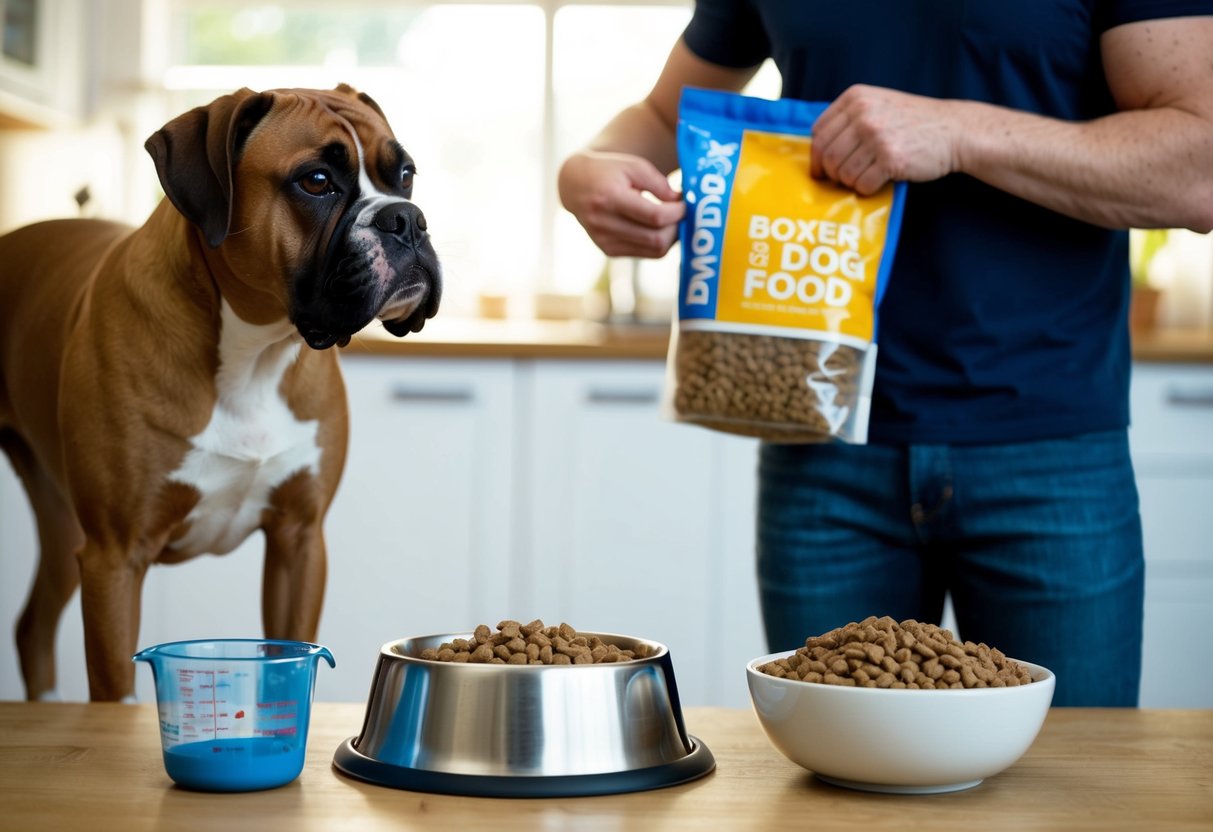
Selecting the right food for your Boxer is important for their health and well-being. You need to consider whether a grain-free diet is suitable, as well as what constitutes high-quality protein and healthy fats.
Grain-Free Diet: Pros and Cons
Grain-free dog food can be a popular choice for some Boxers. Many owners believe it helps with digestion and reduces allergies. This type of food typically contains alternative sources of carbohydrates like sweet potatoes or lentils.
However, grain-free diets can also have downsides. Some studies link them to heart issues in dogs. So, before choosing grain-free, consult your vet about your Boxer’s specific needs. Balance is key, so make sure your dog gets adequate nutrition from other sources.
Identifying High-Quality Protein and Fats
When selecting a diet, focus on high-quality protein sources. Look for foods that list real meat as the first ingredient. Options like chicken, beef, or fish are excellent choices. They provide essential amino acids that keep your Boxer strong and healthy.
Healthy fats are also important. Ingredients like fish oil or chicken fat provide omega fatty acids, which support skin and coat health.
Together, high-quality proteins and healthy fats ensure your Boxer maintains their energy and overall wellness. Always check labels for these key ingredients to make informed decisions.


