
As a proud owner of a Boxer dog, you may wonder how much sleep your energetic friend really needs. On average, Boxer dogs should sleep between 12 to 14 hours a day to stay healthy and active. Understanding these sleep requirements can help you create a routine that supports their well-being.

Boxers are known for their playful nature and boundless energy, which means they require not just exercise but also plenty of rest. Their sleep patterns can vary based on age, activity level, and health status, so it’s important to pay attention to your dog’s individual needs.
Providing a comfortable and quiet space for them to recharge will help keep your Boxer happy and healthy.
Knowing the right amount of sleep your Boxer should get can improve their mood and energy levels. By ensuring they rest enough, you can enjoy more playtime and bonding moments with your furry companion.
Understanding Boxer Dogs’ Sleep Needs

Boxer dogs have unique sleep needs that can vary based on their energy levels and lifestyle. Understanding these factors will help ensure your Boxer gets the right amount of sleep for their health and happiness.
Characteristic Sleep Patterns of Boxer Dogs
Boxers typically sleep between 12 to 14 hours a day. This amount includes naps and longer sleep periods at night.
Their sleep cycles differ from yours. Boxers often experience shorter periods of deep sleep followed by lighter sleep. During these lighter phases, they may twitch or make sounds, which is completely normal.
Factors like age, health, and activity level affect how much sleep your Boxer needs. Puppies and older dogs often require more sleep than healthy adults. A quieter and comfortable sleeping area will encourage better sleep quality for your furry friend.
How Energy Levels Influence Sleep
Boxers are energetic and playful dogs. Their need for activity means they require enough exercise throughout the day to match their natural energy levels.
The more you engage your Boxer in physical and mental activities, the better they will sleep at night. Activities like walks, playtime, and training sessions can help exhaust their energy.
If your Boxer isn’t getting enough exercise, you may notice restlessness or disrupted sleep. Ensure they have regular, vigorous playtime to help them rest well when it’s time to sleep. Keeping their energy levels balanced is essential for maintaining proper sleep patterns.
Creating a Healthy Sleep Routine
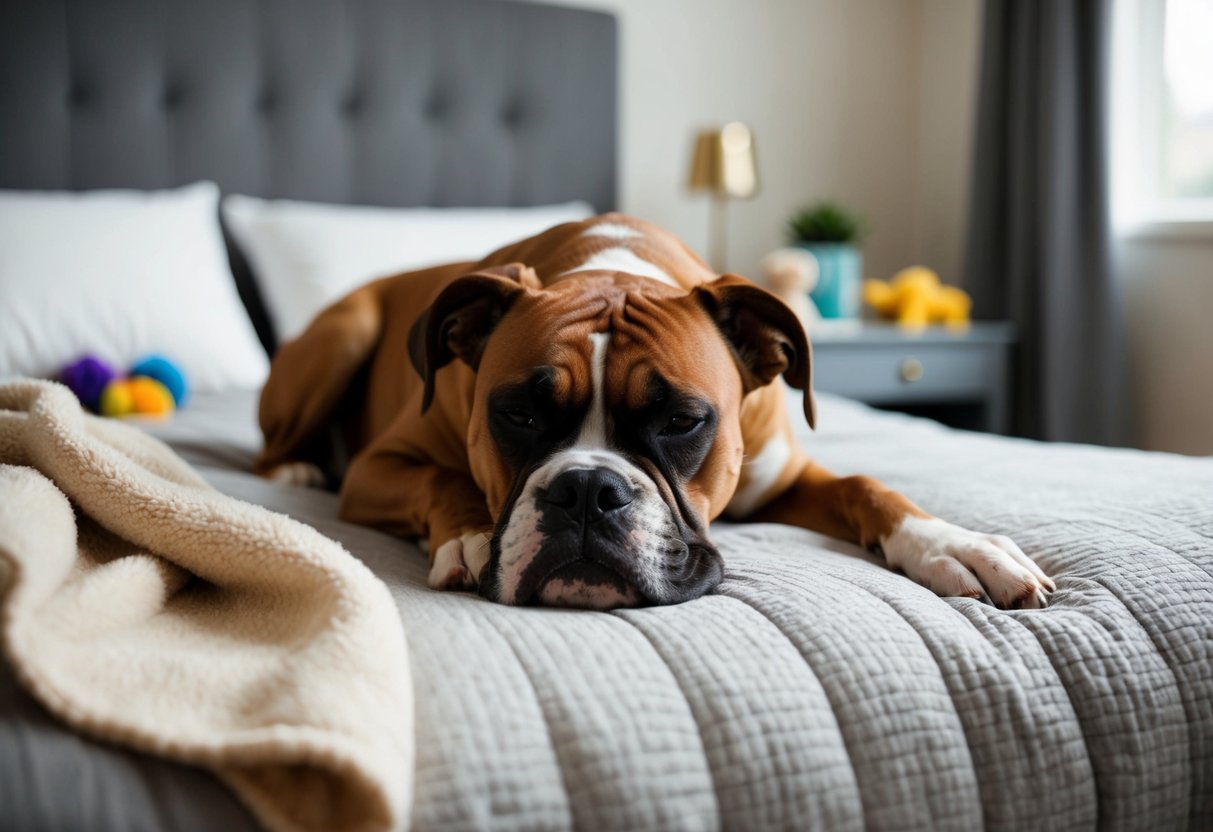
Creating a good sleep routine for your Boxer is essential for their health and happiness. A consistent schedule can help your dog feel secure and rested. Incorporating mental stimulation into their day can also improve their sleep quality, making their naptime more restful.
Establishing Regular Sleep Hours
To help your Boxer sleep well, aim to set regular sleep hours. Dogs thrive on routine, so having set times for sleeping and waking can make a big difference.
Try to put your dog in their sleeping area at the same time each night. This could be a cozy bed or a quiet corner in your home. Encourage relaxation by dimming lights and minimizing noise.
Consider creating a napping schedule. Boxers typically need around 12 to 14 hours of sleep daily. If your dog seems restless at night, it may be overtired. Allow for short naps during the day, particularly after play or exercise, to help them recharge.
The Role of Mental Stimulation in Sleep
Mental stimulation plays a key role in your Boxer’s sleep habits. Engaging activities keep your dog active and tired, allowing them to fall asleep more easily.
Include daily exercise such as walks, fetch, or agility games. These activities not only burn off energy but also provide great mental challenges.
Puzzle toys or treat-dispensing games can keep their minds busy, too. Just a short session each day can help your dog expend mental energy.
By balancing physical activities with mental challenges, your Boxer will be more inclined to enjoy restful sleep. A well-stimulated dog is often a happier and healthier dog.
Dealing with Sleep-Related Behavioral Issues

Your Boxer might show certain behaviors if they don’t get enough quality sleep. It’s essential to identify these problems and address the causes to help your dog feel better. Below are some key points to consider.
Identifying and Addressing Poor Sleep Patterns
To help your Boxer sleep better, watch for signs of poor sleep patterns. If they have trouble settling down or wake up frequently at night, they might not be getting enough deep sleep.
Establish a consistent sleep routine. Set a specific bedtime, and create a quiet, comfortable sleeping area. If your Boxer naps during the day, limit these to help them sleep better at night.
Take note of any changes in behavior, like increased irritability or clinginess. These may indicate your dog is not getting the rest they need. Adjust their environment or routine to promote better sleep.
Contributing Factors to Behavioral Issues
Several factors may affect your Boxer’s sleep and behavior. Stress and anxiety can lead to restlessness and difficulties in sleeping soundly.
Common stress triggers include loud noises, unfamiliar environments, and changes in routine. You can try to minimize these stressors. Create a calm atmosphere with soothing music or white noise.
Additionally, health issues can disrupt sleep. If your dog seems overly tired or shows signs of discomfort, consult a vet. Conditions like allergies or arthritis can affect their ability to sleep well.
Understanding and addressing these factors can improve your Boxer’s sleep quality and reduce sleep-related behavioral issues.


