
Sharing your bed with your dog can be a tough choice for many pet owners. Your furry friend adds warmth and comfort, making you feel cozy through the night. However, choosing to let your dog sleep with you can enhance your bond and provide extra comfort. On the other hand, it can also affect your sleep quality.

As a dog owner, think about how your pet affects your nightly routine. Dogs often move around and make noises, which can interrupt your sleep. You may enjoy the snuggles, but if you’re waking up frequently, it might not be the best fit for you.
This decision is personal, depending on your lifestyle and your dog’s behavior. By considering both the positives and negatives, you can find the right sleeping arrangement that keeps both you and your dog happy and well-rested.
The Benefits of Co-Sleeping with Your Dog

Sharing your bed with your dog brings comfort, strengthens your bond, and offers a sense of security. Here are some key benefits of letting your furry friend sleep beside you.
Exploring the Comfort and Warmth
When you sleep with your dog, you experience both physical and emotional comfort. Dogs generate body heat, which can keep your bed cozy on chilly nights. Their gentle presence and rhythmic breathing create a soothing environment, helping you to relax and fall asleep faster.
Additionally, cuddling up to your canine companion releases oxytocin, the “love hormone.” This chemical promotes feelings of safety and relaxation. Many people find that they sleep better knowing their dog is there, providing both warmth and comfort.
Boosting Emotional Bonds Through Oxytocin
Co-sleeping with your dog increases the production of oxytocin for both of you. This hormone enhances your emotional connection, making you feel closer to your pet. As you share intimate moments during sleep, your bond deepens, which is beneficial for both your emotional health and theirs.
This connection can reduce feelings of anxiety and loneliness. Studies suggest that having your dog by your side can help combat stress, anxiety, and even symptoms of depression. It’s a win-win for you and your furry friend!
Protection and Companionship during the Night
Dogs are naturally protective animals. When you let your canine sleep with you, you gain a sense of security. Their instinct to safeguard their human companions means that they are likely to alert you to any unusual sounds or movements.
This protective nature can allow you to sleep more soundly, knowing your dog is there. Beyond safety, their companionship can ease feelings of fear or restlessness in the dark. With your dog by your side, you’re not just sharing a bed – you’re also sharing comfort and the reassurance of friendship.
Health Considerations for You and Your Dog

When deciding if your dog should sleep with you, it’s important to think about health factors for both of you. This includes allergies and sleep disturbances, precautions against fleas and ticks, and the value of consulting a veterinarian.
Understanding Allergies and Sleep Disturbances
Your dog may bring comfort, but they can also bring allergens into your bed. Common allergens might include pet dander, saliva, or urine. If you have allergies, this could negatively affect your sleep.
You may experience symptoms such as sneezing, coughing, or itchy skin. If you notice these symptoms worsening while your dog sleeps with you, consider creating a pet-free sleeping space.
Additionally, your dog’s movements at night can disrupt your sleep. Dogs might get up often or change positions, leading to a less restful night for you.
Precautions Against Fleas and Ticks
Fleas and ticks are common pests that can easily transfer from your dog to your home. If your dog sleeps with you, it may increase the risk of these pests entering your bed.
To reduce this risk, make sure your dog is on a regular flea and tick prevention treatment. Regularly check your dog for any signs of fleas or ticks, especially after being outdoors.
Cleaning your bedding and vacuuming your home frequently will also help. Keeping the areas where your dog sleeps clean is essential to prevent an infestation.
The Importance of Consulting a Veterinarian
Consulting a veterinarian can help you make a well-informed decision. Your vet can offer advice tailored to your dog’s health needs.
If your dog has health issues or is prone to allergies, your vet may recommend alternative sleeping arrangements. They can also provide guidance on measures to reduce allergens in your home.
Regular check-ups can ensure your dog remains healthy while sharing your space. Staying informed about your dog’s health will make co-sleeping a safe choice for both of you.
Training and Behavioral Aspects of Co-Sleeping

Co-sleeping with your dog can influence their behavior and routines. Understanding training needs is essential for a smooth experience. Addressing issues like separation anxiety and knowing when to involve a professional can help maintain harmony in your home.
Addressing Separation Anxiety
Separation anxiety is common in dogs, especially puppies. If your dog struggles to be away from you, they may seek comfort by sleeping in your bed. While co-sleeping can provide reassurance, setting limits is vital.
Gradually ease your dog into sleeping alone by starting with short periods in their crate. You can make the crate inviting with toys or blankets. Use positive reinforcement when they stay calm in their space. This approach will help build their confidence and improve sleep efficiency for both you and your furry friend.
Role of a Professional Trainer
Sometimes, co-sleeping issues may require extra help. A professional trainer can assist in developing a tailored plan. They can identify specific problems and offer techniques that suit you and your dog’s needs.
Trainers often use behavior modification strategies to address anxiety and aggression. They can help you create structured routines and set clear boundaries. This guidance is particularly valuable for dogs showing extreme behaviors or difficulties during training. Utilizing a trainer’s expertise can make a notable difference in your dog’s comfort level.
Establishing Sleep Routines and Boundaries
Creating clear sleep routines helps your dog know what to expect. Establishing boundaries is crucial to ensure that both you and your pet can rest well.
Start by designating a specific sleeping area for your dog. If you choose to use a crate, make it cozy with comfortable bedding. This will encourage your dog to view it as a safe space.
You can explore polyphasic sleep patterns too. Dogs, like humans, can adjust their sleep to fit your lifestyle. By providing training and meeting their needs, you foster a positive co-sleeping environment that works for both parties.
Making the Choice: Should Your Dog Sleep with You?
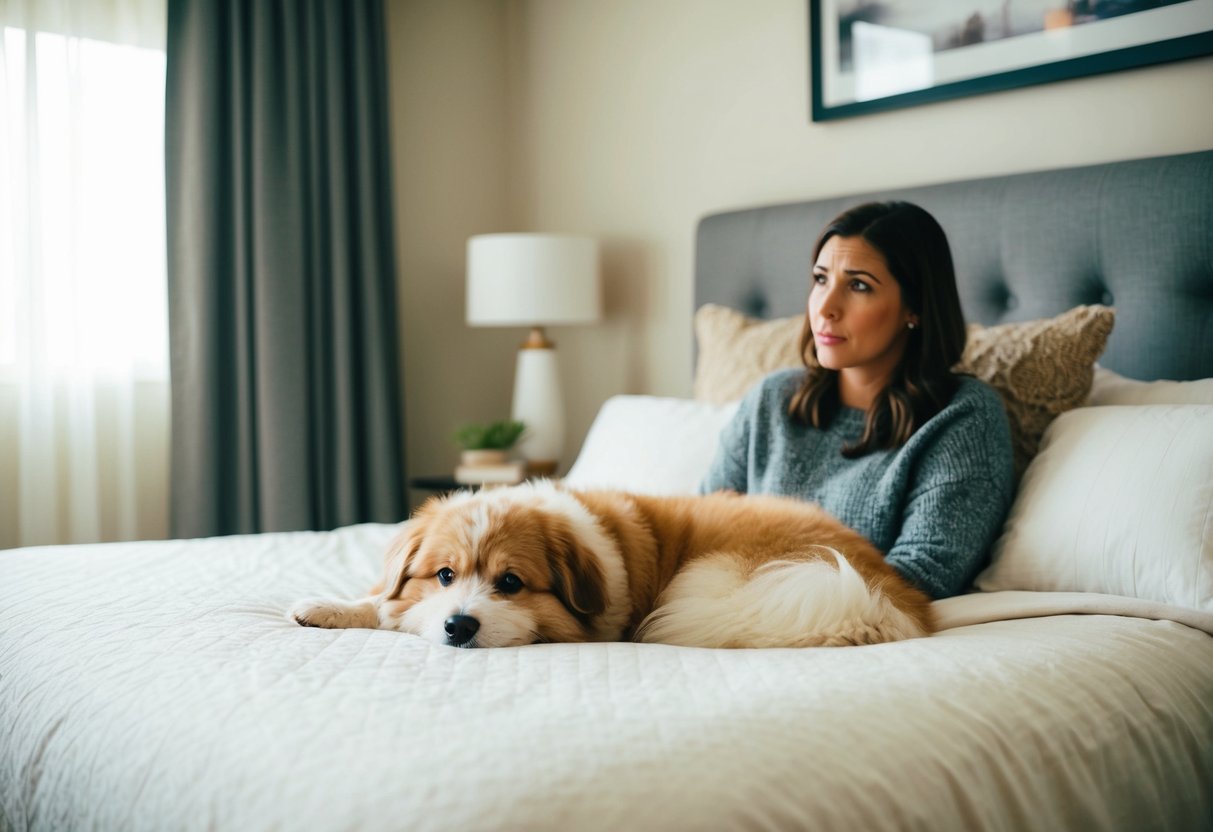
Deciding whether to let your dog sleep in your bed involves considering several factors. Your sleep quality and your pet’s behavior play significant roles in this choice. These details can help you determine if co-sleeping is a good option for you and your furry friend.
Assessing Personal Sleep Quality
Before allowing your dog to sleep with you, consider your own sleep quality. If sharing your bed improves your sleep and reduces feelings of anxiety, it might be a positive choice.
On the other hand, if your dog moves around a lot at night or disturbs your rest, co-sleeping may lead to sleep deprivation.
Try to observe how your dog behaves at night. If they bark, whine, or move frequently, these behaviors can disrupt your sleep. You might also assess how you feel during the day after sharing your bed.
Considerations for Puppies and Adult Dogs
When it comes to puppies, their behaviors can be different from adult dogs. Puppies may not be fully trained and may have accidents in your bed, so this is an important consideration. Their energy and need for potty breaks can also interrupt your sleep schedule.
Adult dogs may have established routines and behaviors that make them easier to share a bed with. However, if an adult dog shows aggression or anxiety, it’s better to keep them off the bed.
Regardless of age, ensure your dog is comfortable and secure. A stressed-out pet can impact your sleep quality. Always choose what feels right for you and your dog.
Alternatives to Co-Sleeping
If you’re unsure about letting your dog sleep in your bed, consider alternative setups. A comfortable dog bed placed nearby can be a great compromise. This way, your dog feels close to you without invading your sleeping space.
Using bed warmers or blankets can also make their bed inviting. Give them time to adjust to their own sleeping area. This way, they can feel secure and reduce any sleep disturbances.
Training your dog to sleep alone can also help. With patience and time, you can find a solution that works for both you and your furry friend.


