
If you’ve ever watched a chipmunk dash into a tiny hole, you might start to wonder—how many of those little guys actually live in there together? Well, here’s the thing: chipmunks don’t really do roommates. Each chipmunk keeps its own burrow and likes having its own space. They guard it pretty fiercely from others.
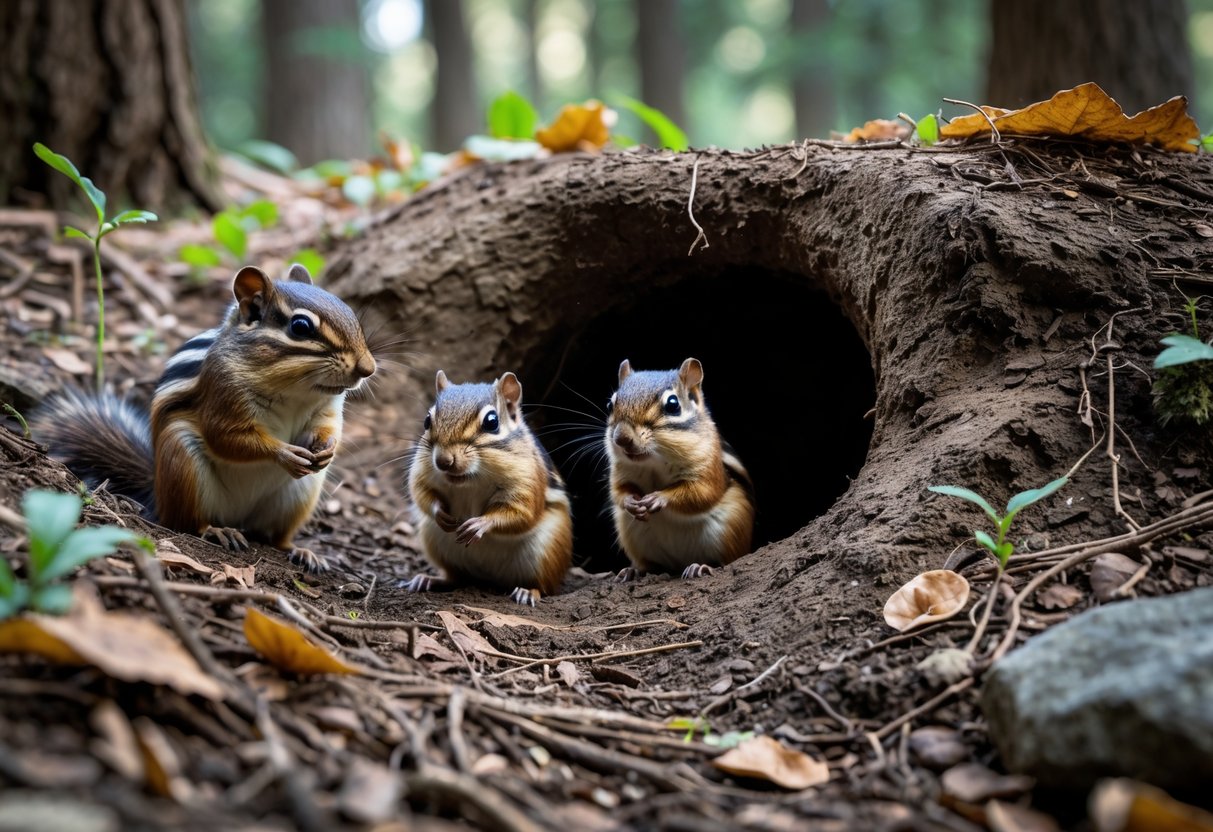
You might think these energetic critters would live in groups, kind of like other rodents, but nope—they’re different. They build surprisingly complex tunnels with several rooms, but those homes are for one chipmunk only. That’s where they sleep, stash food, and sometimes raise their babies.
Even during mating season, chipmunks keep their burrows separate. They don’t move in together.
It’s actually pretty cool how independent chipmunks are. Want to know more about their underground life and how they keep their homes safe? Let’s get into some details about their solitary ways. If you’re curious about chipmunk burrows, you can check out this article about chipmunk living habits.
How Many Chipmunks Live Together in a Hole?

Chipmunks like to live alone in their burrows. They work hard to keep their space private and only let others in under special circumstances.
You’ll almost always find just one chipmunk using a burrow at a time. There are a couple of exceptions, though.
Solitary Nature of Chipmunks
Chipmunks really are solitary animals. Each one digs and lives in its own burrow.
They don’t share with others, except for rare situations. This habit helps them avoid fights and keeps their food safer.
Chipmunks mark their territory with noises—those “chips” and “chucks”—to warn others to stay away. Because they’re so territorial, you just won’t see a bunch of chipmunks living together in one hole.
They stick to themselves, unless it’s time for mating or raising babies.
Occasional Exceptions: Breeding Season
During breeding season, chipmunks come near each other more often. Still, they don’t actually share a burrow.
The males and females meet up outside their tunnels to mate. After that, they each go back to their own homes.
Once mating is over, the males leave. The females stay and take care of their own burrows.
So, even though chipmunks get together for a bit, their homes stay separate.
Mother and Baby Chipmunks in Burrows
The only time you’ll see more than one chipmunk in the same burrow is when a mother is raising her babies. The babies stay underground with her until they’re big enough to dig their own homes.
The mother uses special pockets in the burrow to keep her babies safe and to store food. This family time usually lasts just a few weeks.
If you spot a burrow with more than one chipmunk, it’s almost always a mother and her pups.
Chipmunk Homes and Social Structure

Chipmunks mostly live alone in burrows they dig themselves. Their homes can get pretty detailed, with separate areas for sleeping, food storage, and hiding from predators.
Not every chipmunk lives exactly the same way. Some species have their own quirks and different habitats.
Burrow Complexity and Types
Chipmunk burrows aren’t just simple holes. You’ll find tunnels that can stretch up to 30 feet long.
These tunnels lead to different rooms for nesting, storing food, and even waste. Some burrows have more than one entrance, so chipmunks can make a quick getaway if they need to.
Most chipmunks stick to living alone in their burrow. They defend their space and don’t let others move in.
Sometimes, during mating season, you might see two chipmunks near a burrow. But they’re not living together—they just meet up briefly.
Where Do Chipmunks Live?
Chipmunks spend most of their time on the ground, not up in trees like squirrels. You’ll spot their homes in forests, gardens, or near meadows.
They like places with loose soil because it’s easier to dig there.
A chipmunk’s home range can cover up to 0.37 acres. Older or male chipmunks often roam farther.
They’re territorial, marking their space and defending it from others. Female chipmunks get especially protective if they have babies around.
Differences in Species Like the Siberian Chipmunk
The Siberian chipmunk comes from Asia and acts a bit differently than most other chipmunks. You’ll notice this species seems a bit more social, sometimes living closer to others.
Most chipmunks stick to themselves, but Siberian chipmunks might actually share their burrows in the colder months just to keep warm. They stash away more food for winter, too.
If you ever spot a Siberian chipmunk, you’ll probably see it moving around more in the daytime than its cousins. Honestly, it’s kind of fascinating.
Curious about how chipmunks make their homes? Check out this explanation of how chipmunk burrows work.


