
If you’ve spotted chipmunks and squirrels in your backyard, you might wonder if these two wild animals actually get along. They often live near each other and share similar environments, but chipmunks and squirrels usually avoid direct conflicts—even though they do compete for some of the same food.
You’ll often see them in the same space, but don’t expect any signs of friendship or open hostility. They just kind of coexist.
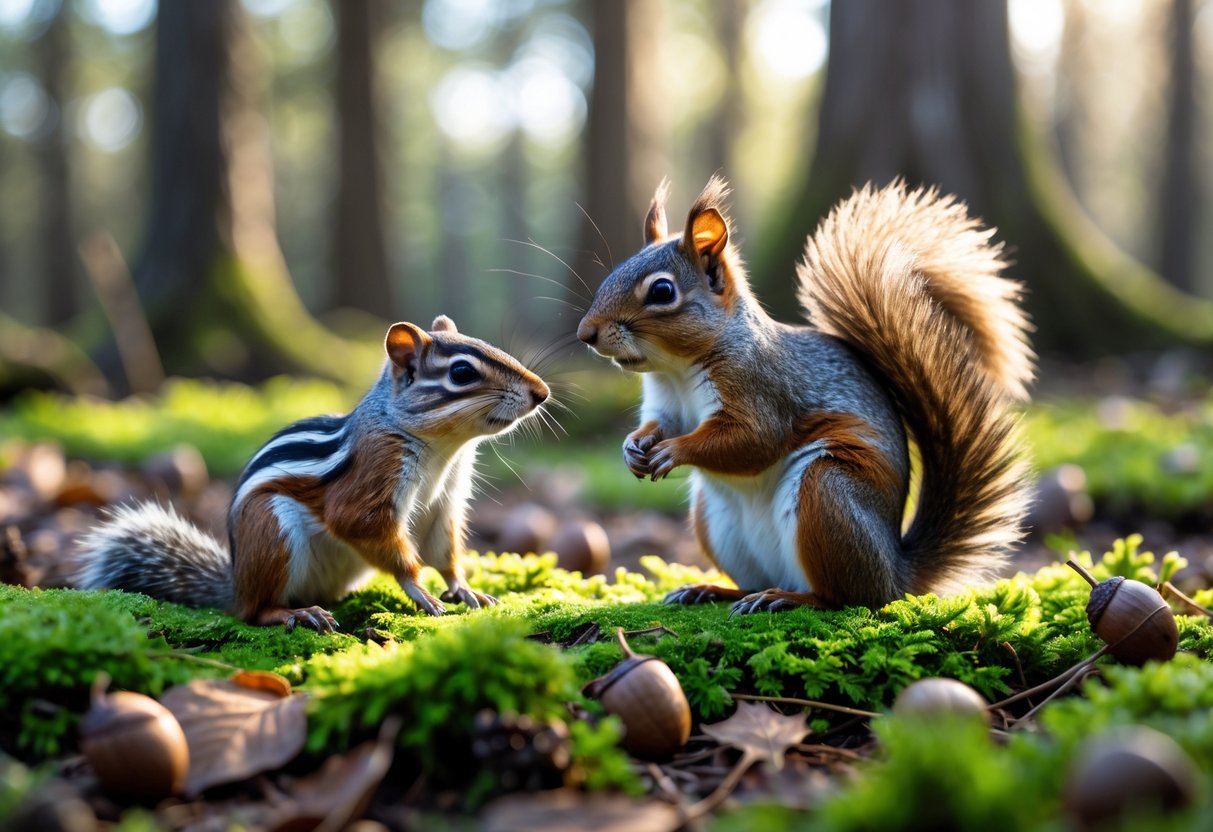
Chipmunks and squirrels have pretty different lifestyles. Squirrels like to stay up in the trees, while chipmunks mostly scurry along the ground or hide in burrows.
If you pay attention, you’ll notice squirrels sometimes chase chipmunks when food is scarce or territory gets threatened. Want to know how they actually share space and what happens when they meet? Let’s dive in a bit deeper.
Do Chipmunks and Squirrels Get Along in the Wild?

If you watch chipmunks and squirrels in nature, you’ll see them sharing the same space but not really hanging out together. Their behaviors are different, and they sometimes compete for food and territory.
Predators also change how they act around each other. That’s an important piece of the puzzle.
Typical Behaviors Around Each Other
Squirrels spend most of their time in trees, running along branches or leaping from one to another. Chipmunks, especially eastern chipmunks, stick to the ground, darting through bushes and rocks.
Both animals avoid direct fights. When they meet, squirrels sometimes chase chipmunks away if the little guys get too close to nests or food.
Chipmunks use sharp, high-pitched calls to warn others and will freeze or hide when squirrels come near. Squirrels might ignore chipmunks unless food is involved.
This helps both animals avoid bigger problems.
Resource Competition and Territory
Chipmunks and squirrels both eat nuts, seeds, berries, and insects. Their diets overlap a lot.
Squirrels usually go for tree nuts like acorns, while chipmunks also eat underground fungi and insects. You’ll find squirrels marking out large territories in trees.
Chipmunks stick to smaller, ground-level zones with burrows. Sometimes these areas overlap, which leads to competition.
If food runs low, squirrels might chase chipmunks off or try to steal their stored food. Most of the time, though, they share the space pretty peacefully if there’s enough to eat.
| Animal | Primary Territory | Main Food Sources | Interaction Over Food |
|---|---|---|---|
| Squirrels | Trees (2-10 acres) | Tree nuts, seeds, fruits | May chase chipmunks when food is low |
| Chipmunks | Ground burrows (30-50 ft radius) | Nuts, berries, insects, fungi | Avoids fights, warns with calls |
Impact of Predators on Relationships
Predators like hawks, foxes, and snakes make chipmunks and squirrels behave differently. Squirrels often dash up trees to stay safe.
Chipmunks usually freeze or blend into the ground cover.
Because their escape styles are different, they don’t really compete for protection. Still, they stay alert to danger.
When predators show up, you’ll notice both animals get more cautious and less active. Sometimes, predators push chipmunks and squirrels closer together for safety, but usually, they just stick to their own spots.
Their separate survival strategies help both species stay safe while sharing a habitat.
Coexistence in Human Environments

When chipmunks and squirrels live near people, their behavior can affect yards, pets, and gardens. Figuring out how they interact in cities and suburbs can help you manage any problems and keep everyone safe.
Interactions in Urban and Suburban Areas
In cities and suburbs, squirrels are everywhere—trees, parks, even attics sometimes. Chipmunks stick to the ground, hiding in gardens or under decks.
Both look for food like nuts, seeds, and berries. You might catch them near bird feeders or trash bins.
Food can get scarce, so they sometimes compete. This might lead to quick chases or little skirmishes, but it rarely causes big problems.
Both chipmunks and squirrels are active during the day, so you’ll often spot them moving around.
If you provide enough food and safe spots—shrubs or ground cover for chipmunks, trees for squirrels—you can encourage them to get along. Their presence even helps with seed spreading, which is great for your garden.
Conflicts With Pets
Pets are usually curious about chipmunks and squirrels. Dogs sometimes chase them, which can stress or hurt the wild animals.
Cats, being hunters, might pose an even bigger risk.
It’s smart to keep an eye on your pets if chipmunks and squirrels are around. If your dog or cat chases them a lot, it can upset the local wildlife balance.
Try to supervise pets or keep them inside, especially when the wild animals are most active. Teaching pets not to chase wildlife makes things safer for everyone.
This lowers the risk of injuries and helps protect the chipmunks and squirrels living nearby.
Burdens of Burrowing and Digging
Chipmunks dig burrows underground to live and store food. Sometimes these burrows damage gardens, flower beds, or the base of porches.
If you see holes in your yard, chipmunks might be the reason.
Squirrels usually nest above ground in tree hollows or leafy nests, so they don’t dig much. Still, squirrels can damage gardens by digging up bulbs or looking for food.
If you want to protect your plants, try using barriers like fencing or tough ground covers. Don’t rush to fill chipmunk holes because that can just make them dig more nearby.
Instead, gently discourage digging in certain spots by trimming shrubs or using safe repellents.
Health and Relocation Challenges
Chipmunks and squirrels both carry fleas, ticks, and other diseases. These can sometimes affect you, your pets, or even local wildlife.
Honestly, the risk of catching something serious is pretty low, but it’s smart to stay cautious.
If you spot an injured or trapped chipmunk or squirrel, reach out to a local wildlife professional. Trying to handle it yourself usually just stresses the animal out and might mess with local populations or spread diseases like plague.
It helps to keep your yard clean and limit food waste if you want to avoid health risks. Sealing up entry points to your attic and picking up fallen fruit or nuts can also make your property less appealing to wildlife that’s gotten a little too comfortable.
Curious about how chipmunks and squirrels get along in the city? Check out Chipmunks And Squirrels: Do They Coexist Or Clash?


