
Ever watched a deer disappear in a blink and wondered just how fast it can go? Most deer can hit about 30–40 miles per hour in a sprint, but some, like caribou, sometimes reach even higher speeds. Let’s dig into what affects those numbers and see how different deer measure up.
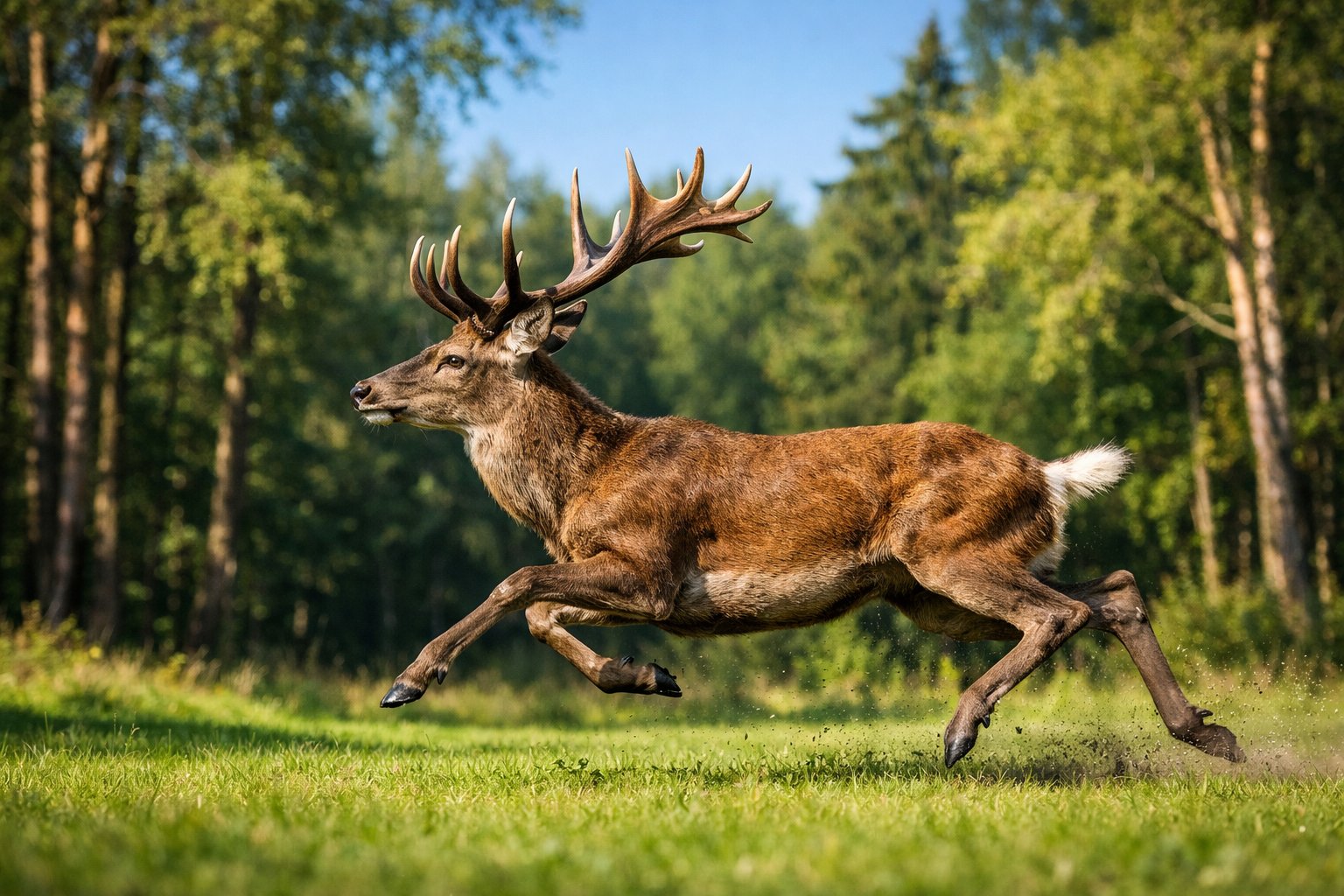
Picture this: you catch a blur of movement at the edge of the woods and try to guess how fast it’s moving. Which species are the real speedsters? Why do some deer seem quicker than others? There’s a lot more going on than you might think.
How Fast Can a Deer Run?
Deer explode into sprints, leap far, and pull off sharp turns to escape danger. They don’t just run fast—they mix speed, agility, and quick thinking to survive.
Typical Running Speed and Top Recorded Speeds
Most deer manage a sprint between 30 and 45 miles per hour, but only for a few seconds. White-tailed and mule deer usually hit that 35–40 mph range.
Elk and other bigger species sometimes get close to 45 mph. Caribou have been clocked at nearly 50 mph, but that’s rare and only in short bursts.
Shorter or younger deer tend to move a bit slower. Terrain matters, too—deep snow, mud, or a heavy winter coat can slow them down fast.
If you want a ballpark, think 30–40 mph for the most common North American deer, and up to 50 mph for the fastest outliers.
Differences Between Sprinting and Sustained Speeds
A deer’s sprint doesn’t last long—just a few seconds, maybe a minute at most. When a threat pops up, deer use every ounce of muscle to put space between themselves and danger.
That burst drains energy quickly, so deer can’t keep it up for long. For longer distances, they drop into a trot or canter, usually around 10–20 mph.
You’ll see them mix short dashes with slower movement to catch their breath. Hunters and wildlife watchers notice this: a sudden bolt, then a mix of bounding and slower moves.
Why Deer Run: Flight Instincts and Predator Evasion
Deer run mostly to escape predators—wolves, coyotes, cougars, and of course, humans. If you get too close, you’ll trigger their flight response: they freeze, tail up, then blast off.
That head start gives them a real advantage. They’ll zigzag, leap, and use cover to throw off predators.
Deer often lead pursuers into rough ground or thick brush, where most predators slow down. In open spaces, they rely on pure speed. In the woods, it’s all about quick turns and knowing the trails.
Speed Differences Among Deer Species
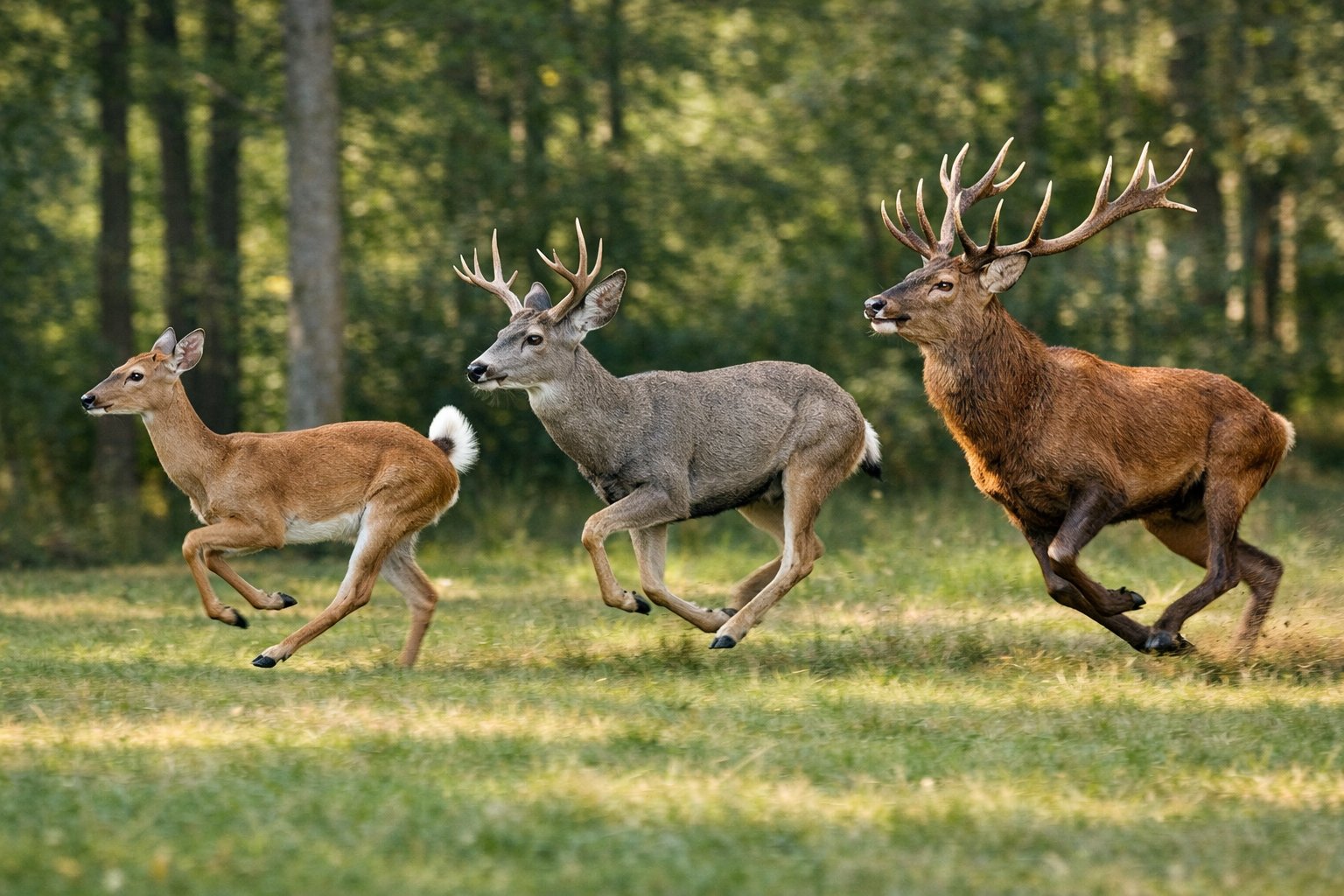
Not all deer move the same. Body size, leg length, and habitat play a big role.
Some species sprint faster in short bursts, while others can keep up a good pace for a while.
White-Tailed Deer and Mule Deer Speed Comparison
White-tailed deer and mule deer both show up all over North America, but they run differently. White-tails can hit 30–45 mph in a sprint, darting and zigzagging to dodge whatever is after them.
They count more on agility and quick jumps than on long, straight runs. Mule deer usually reach 35–40 mph, but their stride is longer and they often run straighter, especially across open country.
That helps them escape in sagebrush or mountains. If you watch them, you’ll see whitetails twisting and turning, while mule deer just power away.
Elk, Moose, and Caribou: Larger Species on the Move
Elk, moose, and caribou are bigger, but don’t let that fool you—they can move. Elk sprint up to 45 mph in short bursts, especially when wolves or cougars show up.
They pair that speed with decent stamina, crossing valleys and forests when they need to. Moose, while heavy, still reach about 35 mph.
It’s smart to keep your distance—if a moose charges, it’ll get there fast. Caribou (or reindeer) are built for both speed and endurance.
Some caribou sprint close to 50 mph, and they can keep up high speeds during long migrations. Their legs and hooves handle tundra and soft ground surprisingly well.
Fastest Deer Species Worldwide
Caribou usually top the charts, with bursts near 50 mph. Elk aren’t far behind, sometimes sprinting at 45 mph.
Other deer, like some red deer, might manage 30–35 mph in a dash. Deer that live on open plains generally run faster than those in forests.
It makes sense—open-country deer evolved longer legs and a lighter build for speed. If you want the fastest, check out caribou and elk, but don’t underestimate a white-tail’s quickness in the woods.
Unique Abilities of Roe Deer and Reindeer
Roe deer are small, and honestly, they’re impressively agile. They won’t hit the crazy top speeds you see with elk or caribou, but they can accelerate in a flash.
You’ll often spot roe deer bounding through thick brush without much trouble. They use short, high jumps and switch directions quickly to get away from danger.
Reindeer—people usually call domesticated caribou by this name—bring a different set of skills. They pack a mix of stopping power, stamina, and a surprising burst of speed.
If you want a comparison, think about wild caribou. They’re fast in short sprints but also built to handle those long, exhausting migrations.
Their hooves even change with the seasons, which is pretty cool. In winter, reindeer move faster on snow, and in summer, they manage soft ground with ease.
If you’re curious about the details, you might want to check out research on migration and sprint records for caribou and reindeer.


