
Disciplining a Boxer dog can feel challenging, but it’s an important part of being a responsible pet owner. These playful and energetic dogs thrive on routine and positive reinforcement.
To effectively discipline your Boxer, you need to focus on consistency and gentle correction. Make sure to avoid anger or harshness. This approach helps them learn the rules while building a strong bond with you.

Your Boxer is smart and eager to please, which means training can be a rewarding experience. Understanding their needs for exercise and mental stimulation can also play a big role in good behavior.
Engaging activities like fetch or frisbee not only burn energy but can be woven into your training routine, helping your Boxer learn commands in a fun way.
With patience and the right techniques, you can guide your Boxer to become a well-mannered companion. By staying calm and consistent, you’ll see positive results and enjoy a happier life together.
Understanding Boxer Dog Behavior

Boxers are lively and affectionate dogs. By recognizing their unique traits and common behavior problems, you can better connect with your boxer and teach them appropriate responses.
Characteristics of Boxers
Boxers are known for their playful energy and strong personalities. They are medium to large dogs with a muscular build. This breed is also highly intelligent, which makes training possible but requires consistency.
You’ll notice their signature traits, such as a wagging tail and alertness. Boxers are social animals who thrive on interaction. They tend to bond closely with their families.
Key Characteristics:
- Playful Nature: Boxers are full of life and love to play.
- Loyal Companionship: They offer strong loyalty to their owners.
- Intelligence: Smart enough to learn commands quickly.
Understanding these characteristics helps you create a positive environment for your boxer.
Common Behavioral Issues
Even though boxers are generally well-behaved, certain issues may arise. You might see behaviors like jumping on people, barking excessively, or being overly energetic indoors. These actions can be corrected with proper training techniques.
Common Issues:
- Jumping: Boxers love to greet people enthusiastically. Training them to sit instead can help.
- Barking: They might bark to express excitement or alertness. Teaching a “quiet” command can reduce this.
- Destructive Behavior: If bored, boxers may chew furniture. Providing toys and regular exercise will channel their energy.
Addressing these behaviors early will lead to a happier relationship with your boxer.
Fundamentals of Training
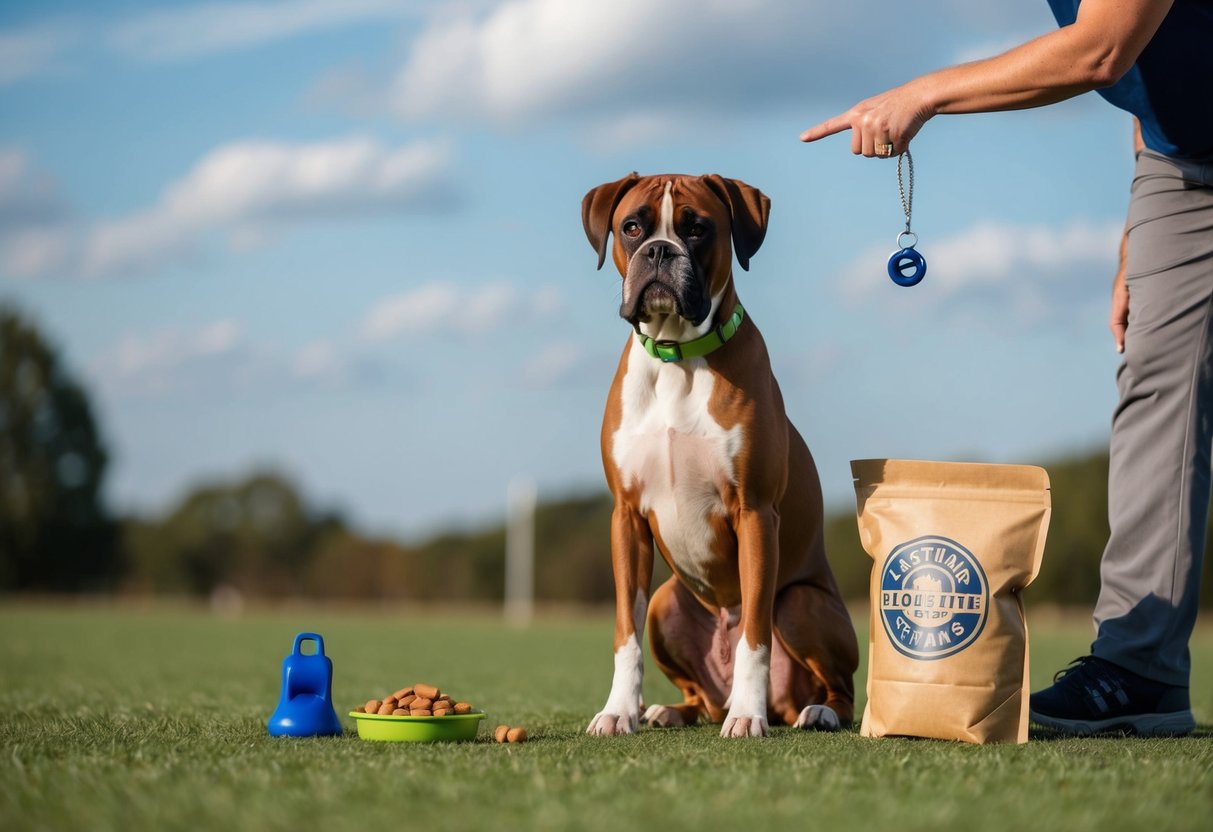
Training your boxer dog is essential to ensure they are well-behaved and happy. Focus on becoming a good leader, improving communication, and maintaining consistency. Each of these aspects plays a vital role in shaping your dog’s behavior and strengthening your bond.
Establishing Leadership
As their owner, you need to show your boxer that you are the leader. Be clear and firm in your commands. Boxers are strong-willed dogs that respond well to a confident owner.
Use positive reinforcement to reward desired behaviors. Offer treats, praise, or playtime to encourage good behavior. Avoid harsh punishment, as it can harm your relationship. Instead, guide your dog gently and assertively.
Engage in obedience training. Teach basic commands like “sit,” “stay,” and “come” to establish groundwork.
Regularly practice these commands. This helps your boxer respect your leadership and enhances their manners.
Developing Communication Skills
Clear communication is key to effective training. Use a consistent tone and hand signals when giving commands. Dogs respond better when they understand what you want.
Introduce different commands gradually. For instance, start with basic ones before advancing to more complex tasks. Include fun activities like agility training to keep your dog engaged.
Socialization also plays a big role in communication. Expose your dog to various environments, people, and other animals. This helps them learn how to interact positively with their surroundings, improving their overall behavior.
Importance of Consistency
Consistency is crucial for successful training. Stick to the same rules and commands every time. This helps your boxer know what is expected of them.
Develop a training routine. Allocate specific times for training sessions each day.
Short, frequent sessions are often more effective than longer ones. Keep your training engaging by mixing commands with fun activities.
Ensure everyone in your household follows the same training methods. If different people use various commands or rules, it confuses your boxer. Consistent training leads to better habits and helps your dog feel secure.
Effective Discipline Techniques

Disciplining your Boxer effectively focuses on correcting unwanted behaviors and using positive reinforcement. By combining these techniques, you can help your dog learn and grow in a loving environment.
Correcting Unwanted Behaviors
When your Boxer exhibits unwanted behaviors, it’s crucial to address them quickly and calmly. Use a firm but gentle tone to indicate that the behavior is not acceptable.
Here are some effective strategies:
- Timing is Key: Correct immediately after the unwanted behavior. This helps your dog connect the action with the correction.
- Redirection: If they’re chewing on furniture, redirect them to a toy.
- Consistent Commands: Use the same commands for specific behaviors to avoid confusion.
- Avoid Physical Punishment: Harsh methods can lead to fear and anxiety, making issues worse.
Being patient and consistent will help your dog understand what is expected.
Rewards and Reinforcements
Positive reinforcement is one of the best ways to encourage good behavior in your Boxer. This technique involves rewarding your dog for doing the right thing.
Consider these methods:
- Treats: Use small, tasty rewards immediately after your dog performs the desired behavior.
- Praise: Verbal praise, like saying “good boy” or “well done,” works wonders.
- Playtime: Incorporate play as a reward. Spend time with a favorite toy or game after successful training moments.
By rewarding good behavior, you help your Boxer associate positive actions with positive outcomes, reinforcing their learning effectively.
When to Seek Professional Help
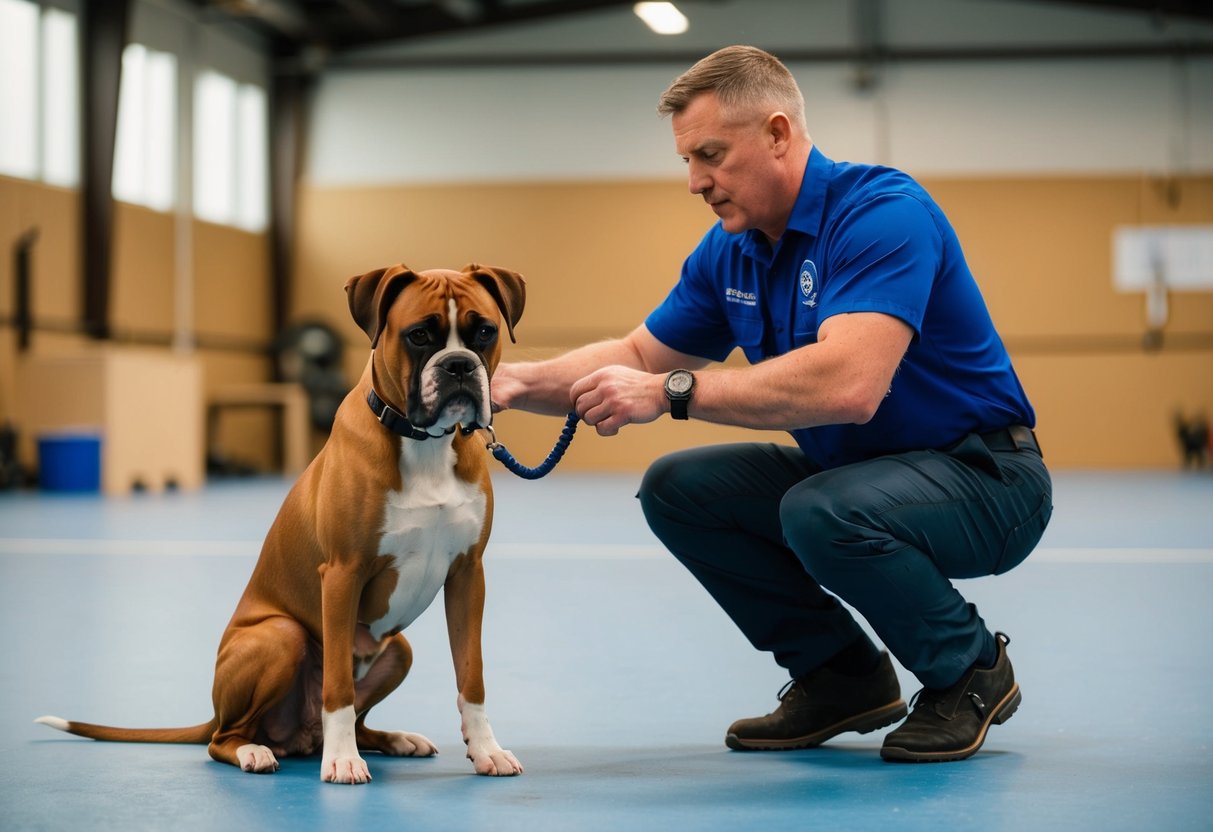
Recognizing when to seek professional help for your boxer’s behavior is vital to ensure their well-being. Professional dog trainers can provide expertise and support, especially if your dog displays concerning behaviors. Below are key details to consider.
Benefits of Professional Training
Hiring a professional dog trainer can greatly benefit both you and your boxer. They offer tailored training plans that suit your dog’s specific needs.
- Expert Guidance: Trainers understand dog behavior deeply and can help address issues effectively.
- Safety: If aggression is a concern, a trainer can help you manage and reduce risks for both your dog and others.
- Building Skills: Professional help encourages your dog to learn essential commands and social skills, boosting their confidence.
With consistent training, your boxer can become more well-behaved and happier. This can lead to a better relationship between you and your furry friend.
Choosing the Right Trainer
When selecting a professional trainer, consider these important factors:
- Experience: Look for trainers who have experience with boxers and their specific behaviors. Ask about their background and success stories.
- Training Style: Choose a trainer whose methods align with your values. Positive reinforcement is often the most effective and kind approach.
- Certifications: Check if the trainer has relevant certifications. This can give you confidence in their skills.
Meeting the trainer in a consultation can help you gauge their approach and compatibility with your boxer. A good fit is essential for successful training.


