
Ever wondered how frogs actually sleep? You’re definitely not the only one. Frogs don’t really snooze the way people do.
Instead of dropping into a deep sleep, frogs settle into a lighter rest called non-REM sleep. They stay partly alert to what’s going on around them. So, they’re resting, but if something happens, they can snap to attention pretty fast.
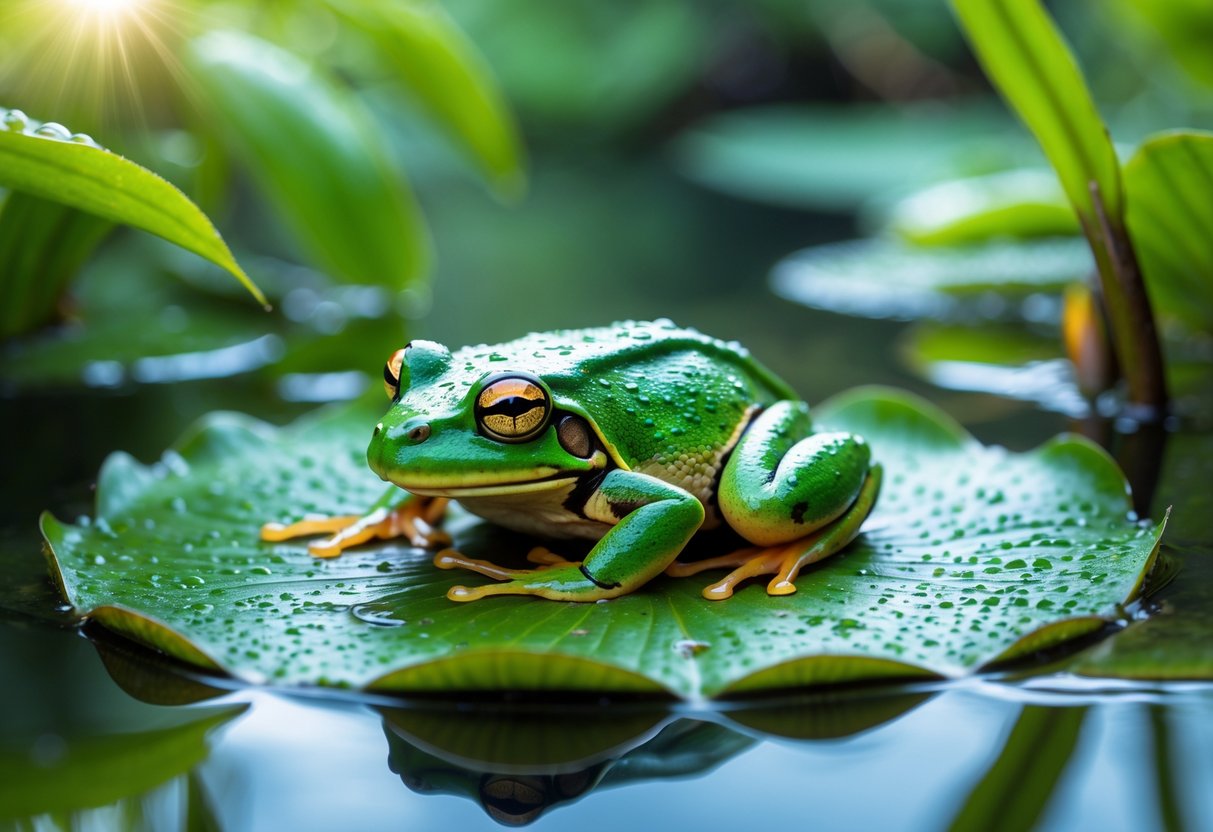
When frogs “sleep,” they usually close their eyes and barely move. You’ll often spot them with their legs tucked under their bodies.
Instead of eyelids, a thin membrane covers their eyes. This protects them while they rest, but doesn’t totally shut out the world.
Most frogs rest during the day since they come alive at night. Their sleep times change depending on the species and their environment.
Learning how frogs sleep might give you a new appreciation for these quiet little survivors.
How Do Frogs Sleep?

When frogs sleep, their rest looks pretty different from what mammals do. Their sleep stays lighter, and they’ve developed special ways to protect their eyes.
Frogs stay alert even while resting, always adapting to their surroundings and whatever comes their way.
Differences Between Frog and Mammal Sleep
Frogs don’t get REM (rapid eye movement) sleep like mammals. Instead, they slip into a lighter rest called slow-wave sleep.
During this stage, their brains stay just active enough to notice predators or prey. Mammals, on the other hand, become less responsive in deep sleep.
Most people sleep around 7-8 hours a night, cycling through several stages. Frogs usually rest for 12 to 16 hours, but it’s a more alert kind of sleep.
They don’t go through deep non-REM and REM cycles like humans do. Frogs need to stay ready to react quickly to danger or sudden changes.
States of Rest and Inactivity
Frogs shift between different resting states. In primary sleep, they tuck their limbs close and cover their eyes, staying a bit aware.
Sometimes, they stretch and relax their muscles more in what’s called catatonic sleep. In cataplectic sleep, they look completely still, but they can wake up in a flash if something happens.
These different states help them save energy while still staying safe. Their lighter sleep lets them respond to threats or anything new around them faster than most mammals.
Nictitating Membrane and Eye Adaptations
Frogs don’t have eyelids like we do. They’ve got a special clear layer called the nictitating membrane.
This membrane can slide over their eyes, keeping them moist and protected but still letting them see a bit. It’s kind of clever, honestly.
You’ll often see frogs with their eyes partly open or covered while they rest. That way, they can keep an eye out for trouble, even when they’re sleeping.
It’s a handy adaptation for creatures that might nap underwater or in places where predators lurk.
If you want to dig deeper, check out do frogs sleep? How, where, how long, and which position?
Frog Sleep Patterns and Adaptations

Frogs have some pretty unique ways of resting. These adaptations help them survive in all kinds of environments.
Their sleep changes with light, temperature, and food. Some frogs stay up at night, others during the day, and they adjust their bodies when things get chilly or food runs low.
Nocturnal and Diurnal Sleep Behaviors
Some frogs are nocturnal—they come out at night and sleep during the day. African Dwarf Frogs do this; they hunt and swim around in the dark, then rest underwater or on something solid when it’s bright.
Other species are diurnal, so they’re active in daylight and rest at night.
A frog’s activity depends a lot on its species and where it lives. Light helps set their internal clock, letting them know when to wake up or rest.
This natural rhythm helps them dodge predators and find food more easily.
Environmental Influences and Metabolic Rate
Temperature really affects how frogs sleep. Since they’re cold-blooded, their body temperature changes with the air or water around them.
When it’s warm, frogs get more active and sleep less. If it gets cold, their metabolic rate drops, so they rest longer to save energy.
Humidity and light matter too. Frogs need moist places to keep their skin healthy.
If things get too dry or loud, their sleep gets interrupted. If you keep a pet frog, giving it a cozy, quiet, and well-lit space that matches its natural home can make a big difference.
Species Variations: Bullfrog and Wood Frog
Different frogs have their own sleep styles. The bullfrog usually stays up at night and rests underwater during the day.
This keeps them cool and out of sight from predators.
The wood frog is more active in the daytime, but when winter hits, it hibernates. Wood frogs can survive freezing by slowing their body processes way down.
These examples really show how frogs change their sleep to fit their lifestyle and habitat.
| Frog Species | Sleep Behavior | Adaptations |
|---|---|---|
| Bullfrog | Nocturnal, underwater rest | Avoids heat, hides from predators |
| Wood Frog | Diurnal, hibernates in winter | Survives freezing with slowed metabolism |
Hibernation and Seasonal Dormancy
Some frogs go into a deep rest called hibernation or dormancy when the weather turns cold. Wood frogs, for example, burrow down into leaf litter or soil and barely move at all.
Their bodies slow down dramatically, which lets them survive for months without eating. It’s honestly kind of amazing how they manage that.
Hibernation lets frogs save energy when food’s scarce and the temperatures drop. This rest period really matters for their survival in places with harsh winters.
When spring finally shows up, frogs “wake up” and get back to their usual routines. They slip right back into their normal activity and sleep patterns.
If you understand these sleep habits, you’ll have a much easier time caring for frogs at home or spotting them out in the wild.


