
Ever spot a frog hopping nearby and wonder if you can just pick it up? You can, but you really need to be gentle, and it’s best to wet your hands or wear gloves first to protect the frog’s sensitive skin. If you handle them the right way, you help keep the frog healthy and safe.
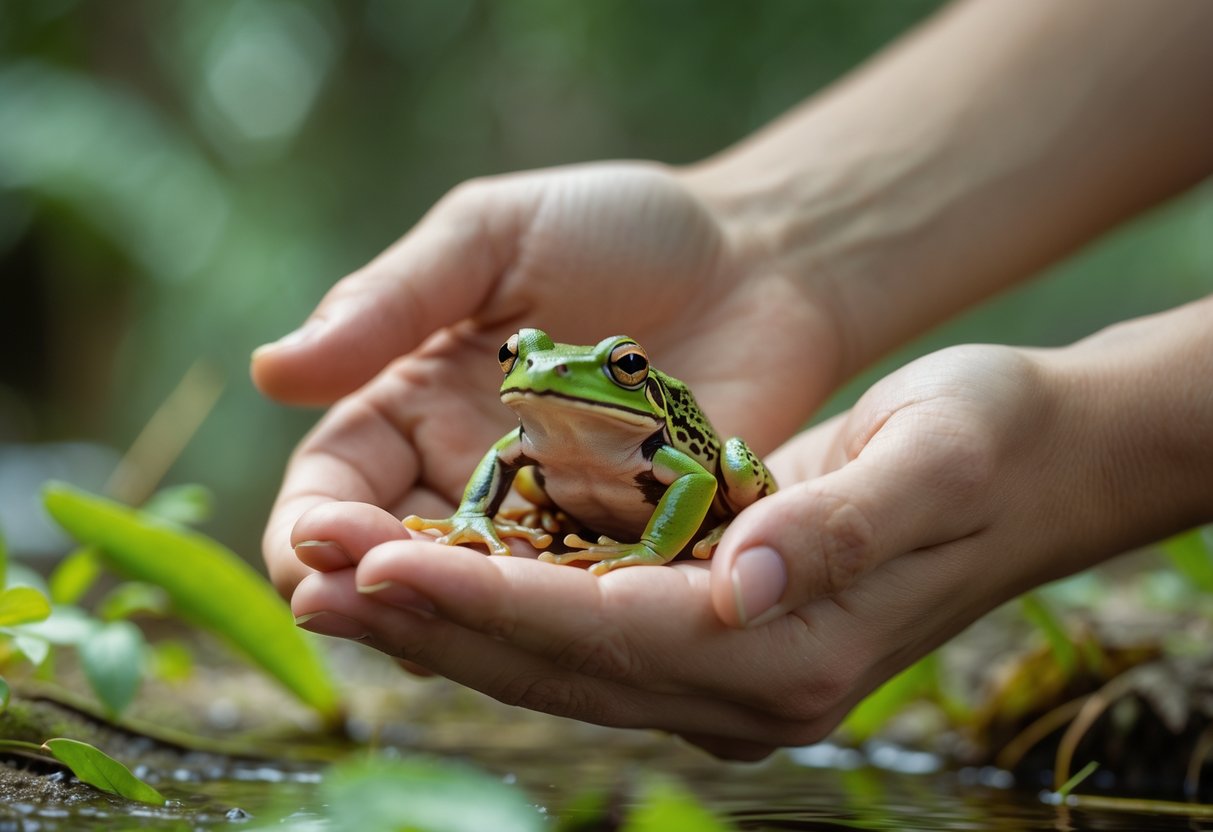
Frogs have this special mucus layer on their skin. It keeps them moist and shields them from germs. Touching them with dry hands or squeezing too hard can mess up that layer.
That’s why you’ve got to be careful. If you want to interact with frogs, knowing how to handle them safely is key.
If you’re curious about how to hold a frog, or why you should be careful, stick around. Let’s go through the best ways to pick them up—and honestly, sometimes it’s just better to watch than to touch.
Can You Pick Up a Frog With Your Hands?

You can pick up a frog, but there are real risks for both you and the frog. Frogs have delicate skin that reacts to oils or chemicals on your hands.
You could also catch bacteria like salmonella from frogs. Sometimes you have to handle them, but you should always follow the right steps and be careful.
Risks to Frogs from Handling
Frog skin absorbs water, oxygen, and anything else it touches. If you have oils, lotions, or soap on your hands, those chemicals can hurt the frog.
One big risk is spreading diseases like chytridiomycosis. This fungus has wiped out a lot of wild frogs. If you don’t clean your hands or gear, you might spread it without even knowing.
Frogs get stressed when people hold them. Stress weakens their immune system and can make them sick.
If you squeeze too hard, you might injure or even kill the frog. So, if you need to pick one up, keep your hands wet and gentle.
Don’t hold it for long, and never squeeze.
Risks to Humans When Handling Frogs
When you touch frogs, you could catch bacteria like salmonella. That can lead to stomach pain, diarrhea, or vomiting.
You’re especially at risk if you touch your eyes or mouth before washing your hands. Some frogs even make mild toxins on their skin.
Usually, these aren’t dangerous, but they can irritate your skin—especially if you have cuts or sensitive skin.
To stay safe, wash your hands well with soap after handling frogs. Powder-free vinyl gloves work well for extra protection.
If you have open wounds, it’s better not to handle frogs at all.
Situations Where Handling Is Necessary
Sometimes you have to handle a frog—maybe you’re cleaning its habitat, moving it somewhere safer, or doing research.
If you need to pick up a frog, wash your hands really well and keep them wet. Clean, non-powdered gloves are a good option too.
Pick up the frog gently. Place your thumb behind its head and scoop it with your fingers around the body.
Don’t squeeze. Try to keep the frog close to your body to prevent drops.
Using tools like nets or clean containers can make things safer for both you and the frog. Only handle frogs when you really need to, and let them go quickly.
If you want more details, check out this frog handling etiquette guide.
Safe Frog Handling Techniques
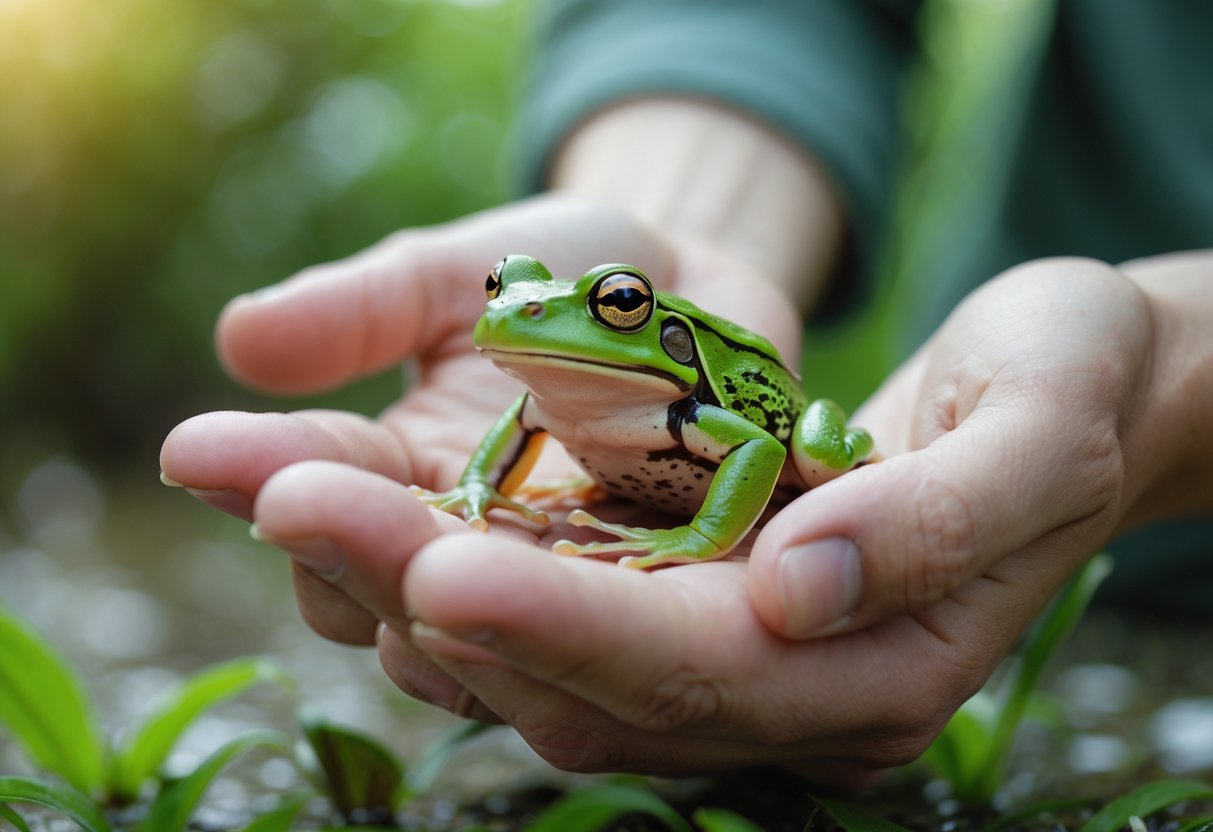
If you handle frogs carefully, you keep both yourself and the frog safe. Prepare your hands or use gloves to avoid passing on harmful chemicals or bacteria.
How you pick up frogs matters. Some species handle it better than others.
Preparing Your Hands or Using Gloves
Before you touch a frog, wash your hands really well with clean water. Skip the soap, lotion, or anything scented—frogs can soak up those chemicals right through their skin.
If you don’t wash properly, you might hurt the frog or even put yourself at risk. Powder-free vinyl or nitrile gloves work great.
Gloves help protect you from bacteria like Salmonella, which frogs can carry. They also keep oils and chemicals on your skin away from the frog’s delicate skin.
Always wet your gloves or hands with clean water before picking up a frog. This keeps their skin from drying out and helps them stay calm.
Best Practices for Picking Up Frogs
When you pick up a frog, go slow and be gentle. Place your thumb just behind its head and let your fingers support its body.
Never squeeze—a frog’s body is soft and easy to hurt. Try to keep your movements calm so the frog doesn’t panic and jump.
Hold the frog close to a surface in case it tries to leap away. If it jumps, it could fall and get hurt.
Release the frog quickly and gently once you’re done. The less time it spends being handled, the better for its health.
Species Tolerance to Handling
Some frogs just seem to handle being picked up better than others. Take the Litoria caerulea (Australian green tree frog), for example. It usually stays pretty calm and doesn’t mind gentle, brief contact with people.
But a lot of wild frogs, especially the smaller ones like tree frogs, get stressed out or even injured if you handle them too much. Poison dart frogs and a few other poisonous species? You really shouldn’t pick them up at all—their skin toxins can actually be dangerous.
If you’re not sure about a frog’s tolerance, it’s probably smarter to skip holding it. Try using a net or a container if you need to move one. That way, you and the frog both stay safe.
Curious about which pet frogs are better with handling? There’s some solid advice on species tolerance to handling if you want to dig deeper.


