
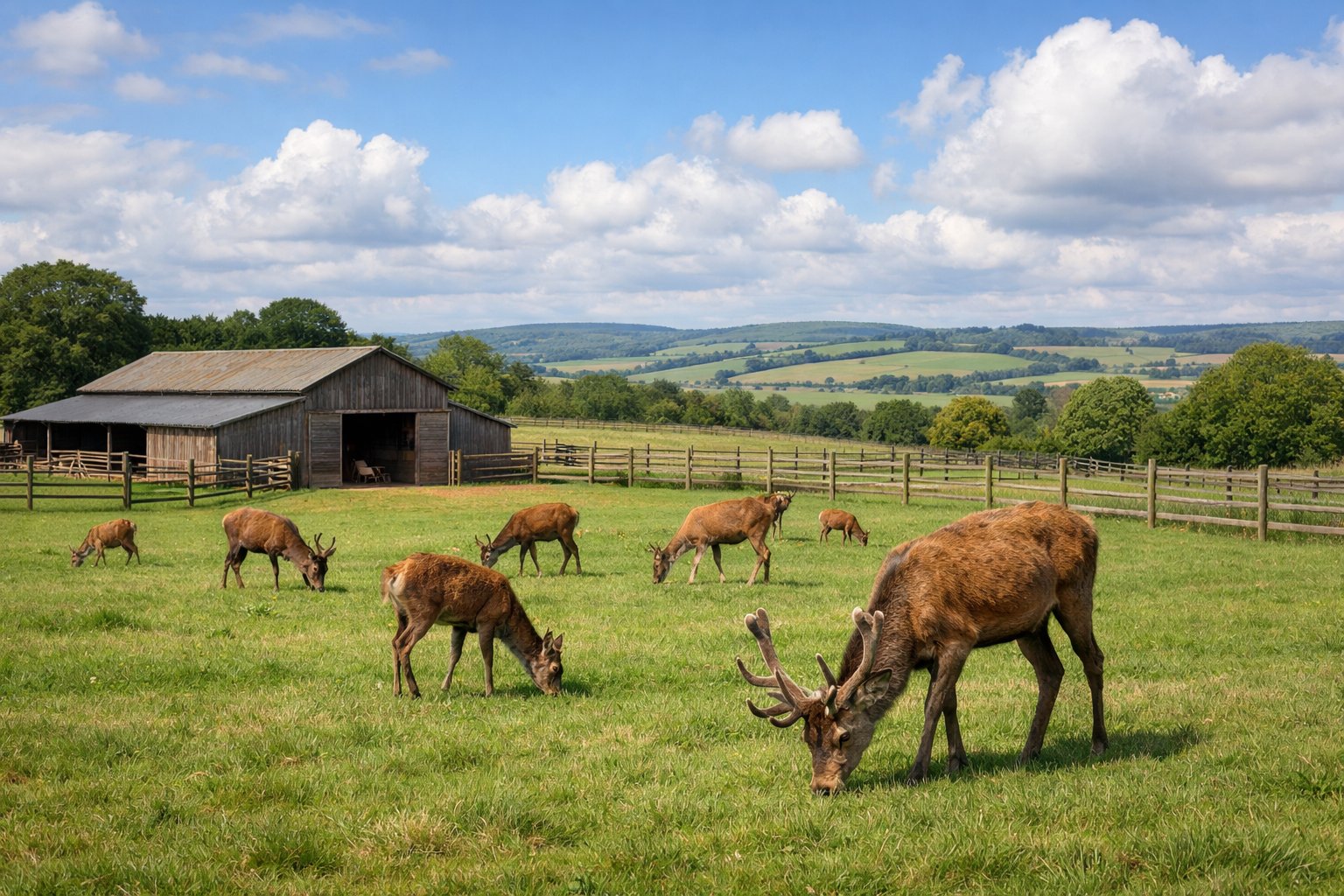
You’ll spot farmed deer here and there across Britain, but honestly, they make up a tiny slice of UK farming. Most folks keep them for venison, sometimes velvet (though that’s more of a thing elsewhere), or maybe just for the parkland vibe.
Yep — people do farm deer in the UK, but you’ll find way fewer deer farms than sheep, cattle, or pig farms. Red deer are the main ones, mostly for meat. Let’s get into how deer farming actually works, why the numbers change depending on where you are, and what rules shape the whole business.
We’ll look at everyday care on farms, how deer farming ties in with wild deer management, and the laws and welfare stuff you need to know.
If you’re wondering if deer farming could fit your land, or how it changes countryside management (or even what ends up on the supermarket shelf), the next bits will walk you through it.
Deer Farming in the UK

You’ll come across small or medium deer farms dotted around Britain. They usually focus on meat, breeding, or just having deer on the landscape.
Most farmers pick species that are easier to manage and good for meat, and pay a lot of attention to animal health, proper fencing, and the legal stuff around antlers.
Which Deer Species Are Farmed
Red deer are the main ones you’ll see on UK farms.
They’re easier to handle and give a steady carcass weight. Fallow deer turn up sometimes, but not as much.
You might find sika, and now and then roe or Chinese water deer on mixed farms, though they’re pretty rare.
Stags are there for breeding — usually, one adult stag to about 30–40 hinds.
Yearling hinds get paired with yearling stags at a higher ratio, maybe 1:10.
Some farms use artificial insemination or bring in genetics from elsewhere to boost their herds.
If you visit, you’ll probably notice clear records, tags, and regular health checks for all the deer.
Farming Practices and Management
You’ll see fenced paddocks, handling yards, and a deer crush set up so working with antlers is safer for everyone.
Farmers rotate grazing to keep the grass short and use crops like brassicas or chicory to fatten up the animals.
Weaning usually happens in late summer.
Calves get tagged, wormed, and sometimes housed for a bit after weaning.
UK law says you can’t remove growing antlers until the velvet’s gone.
Farmers plan antler work for late summer and use proper crushes to keep both people and deer safe.
Biosecurity, parasite control, and vaccinations are all part of the job.
Most folks keep track of parentage and weight gains to improve their herds.
Venison Production and Market
Venison from farmed deer gives shops a steady supply — wild venison just can’t keep up all year.
Farmers usually send animals for slaughter around 15 months old, though some finish them earlier using special feeding.
Retail demand for venison has gone up lately, and you’ll see some supermarkets selling British venison now.
The commercial venison supply has to follow strict processing rules, often going through Approved Game Handling Establishments.
Farmed venison gets valued for its consistent size and traceability, which wild venison can’t always offer.
Some farms make extra money selling breeding stock or by-products, while others just focus on meat quality and supply deals.
Differences Between Farmed and Wild Deer
Farmed deer live in controlled spaces, get planned feed, health checks, and are bred for certain traits.
Wild deer roam freely, so their size, age, and meat quality can vary a lot.
On farms, you’ll find consistent carcass weights, calving in May–June, and early weaning to fit the farming cycle.
Wild venison is more seasonal and unpredictable for retailers.
Farming changes things: farmed red deer usually have fewer issues like mastitis or milk fever — their biology is just different from cows or sheep.
You’ll spot better record-keeping, proper fencing, and active breeding programs on farms, compared to the conservation and culling strategies used for wild deer.
Regulations and Deer Management
You need clear rules if you’re farming or managing deer.
The law covers what you can do with wild and farmed deer, how to cull, and how to look after animal welfare and habitats.
Legal Framework and Protection
You have to follow the Deer Act 1991 and the Wildlife and Countryside Act 1981 for wild deer.
The Deer Act 1991 sets out close seasons and what equipment you can use for controlling deer.
The Wildlife and Countryside Act 1981 adds some protections for certain species and lists offences for illegal killing or taking.
If you keep deer as livestock, you also have to meet farming and animal welfare rules.
The government has published the Codes of recommendations for the welfare of farmed deer, which cover handling, housing, and transport.
Check your local bylaws and public liability rules before you start farming deer or running organised stalking.
Environmental and Welfare Considerations
You need to manage deer to stop them damaging crops, young trees, and native habitats.
Bad management can really harm woodland growth and local biodiversity.
Use population monitoring and targeted culling to keep numbers in check.
Deer welfare is a big deal during capture, transport, and culling.
Always use best practice for humane shooting, trained stalkers, and quick carcass handling.
Groups like the British Deer Society and the Deer Initiative offer advice on humane control and monitoring.
Looking after farmed deer means following welfare codes, giving proper vet care, and keeping fences secure to stop escapes and cut down on road accidents.
Role of Conservationists and Forestry
Conservationists and Forestry England team up with landowners to create deer management plans. Most of the time, you’ll spot these collaborative, landscape-scale efforts that bring together neighbours, farmers, and foresters to keep deer numbers in check across property lines.
This approach helps stop local re-invasion and supports habitat targets.
In forests, people control deer to protect young trees. They also give native plants a better shot at bouncing back.
You might see habitat management, fencing, or sometimes organised stalking carried out by trained teams. Groups like the Deer Initiative step in to offer training and help coordinate best practices.
That way, management can actually meet conservation goals, while still making room for sustainable venison use and stalking opportunities.


