
Ever wondered if honey bees can actually recognize you? It sounds a bit wild, but honey bees really can tell individual human faces apart and remember them for a while.
So, if you visit their hive a lot, your neighborhood bees might know you better than you think.

Even with their tiny brains, bees use clever tricks to spot and recall faces. Figuring out how bees remember you gives us a new perspective on their intelligence and quirky behavior.
Curious? Let’s see how these little insects can learn to identify you, almost like a nosy neighbor.
How Honey Bees Recognize Humans
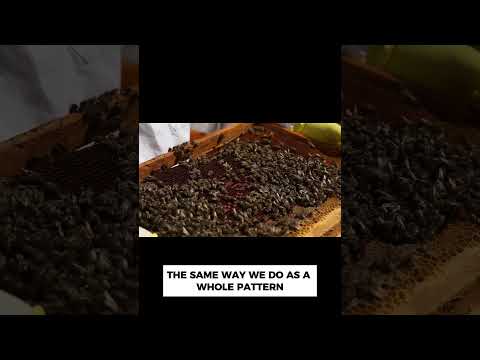
Honey bees rely on their strong visual skills to spot and remember faces. They don’t see quite like we do, but they pick up on patterns and shapes that help them tell people apart.
Their brains process visual information in their own way, using what they learn from experience.
Studies Showing Bees Can Identify Human Faces
Scientists have tested bees by showing them pictures of different human faces. They found that bees can learn to recognize individual faces.
Researchers trained bees to connect certain faces with a food reward. Later, the bees chose the correct face more often, which shows they remembered it.
Back in 2004, a Cambridge study showed bees could remember faces for days. Bees didn’t just see a face once and forget it; they stored that info for a while.
This helps them tell beekeepers from strangers. If you want to dig into these studies, check out honeybees’ ability to distinguish human faces.
Mechanisms of Visual Learning in Honey Bees
Bees don’t recognize faces by every tiny detail like we do. Instead, they focus on general patterns and how features are arranged.
Their small brains break your face down into parts—eyes, nose, mouth, and the spaces between them. That’s how they remember a face as a unique pattern.
This skill actually helps them survive, since they use similar learning to find flowers.
Bees also learn through rewards. If a face comes with a sweet treat, they’re more likely to remember it.
Over time, this helps them get better at spotting familiar faces.
Limits of Bee Recognition of People
Honey bees are impressive, but their face recognition isn’t perfect. They mostly see faces as simple patterns, not with all the detail or emotions humans notice.
Because bees have so few neurons, their memory isn’t the best. They get confused by faces that look a lot alike.
Their vision is also different in color and detail, so they might not catch subtle changes in your expression.
Bees depend on experience. If a bee never sees your face paired with something positive, it won’t learn to recognize you.
Usually, bees only tell apart people who handle them a lot, like beekeepers.
So, bee recognition mostly sticks to familiar humans, not random strangers. For more details, see the science of bee recognition.
The Science Behind Bee Intelligence and Visual Processing

Honey bees have some surprising mental skills. They learn and remember details from their surroundings.
Their brains process visual information in ways that help them recognize faces and patterns. Honestly, you could call bees tiny problem solvers—they use smart strategies to find their way and identify things around them.
Cognitive Abilities of Bees
Honey bees show strong learning and memory, even with brains much smaller than ours. They remember colors, shapes, and even pretty complex patterns.
For example, bees can tell apart different human faces by focusing on unique features.
They process visual info and link it to rewards, like finding flowers for pollination. Their brains mix up sensory input and experience to make quick decisions.
This helps them as pollinators, since they know which flowers to visit again.
Bee intelligence goes beyond instinct. They adapt to new challenges.
In experiments, they learn to identify images or even solve simple puzzles. It’s honestly kind of amazing—bee brains are way more complex than most people would guess.
Bee Brains vs. Artificial Intelligence
Bee brains are tiny, sure, but they work with surprising efficiency. They use tricks that AI researchers can only dream of replicating.
Bees break down faces into patterns and features when they process images. That’s actually pretty similar to how AI systems scan through photos, just with a lot less fuss.
But here’s the thing—bees don’t just rely on data. They learn from real experiences out in nature, mixing what they see with smells and memories.
They make quick decisions that help their hive survive. All of this happens with way less computing power than any AI system could hope for.
This natural intelligence lets bees handle pollination, which, let’s face it, is pretty crucial for our food supply. AI keeps evolving, but I wonder—could studying how bees process visuals inspire new ways for machines to learn from their surroundings?
Honestly, honey bees feel like living examples of brains that are both smart and simple. Nature just seems to handle complex tasks with a kind of effortless style.
Curious? Check out how honeybees recognize human faces in lab studies.


