
Greek myths about bees really highlight how much these tiny creatures mattered in ancient times.
People saw bees as holy beings, closely tied to gods and goddesses, and they stood for knowledge, health, and power. Honey wasn’t just something sweet to eat—it carried healing and spiritual meaning, too.
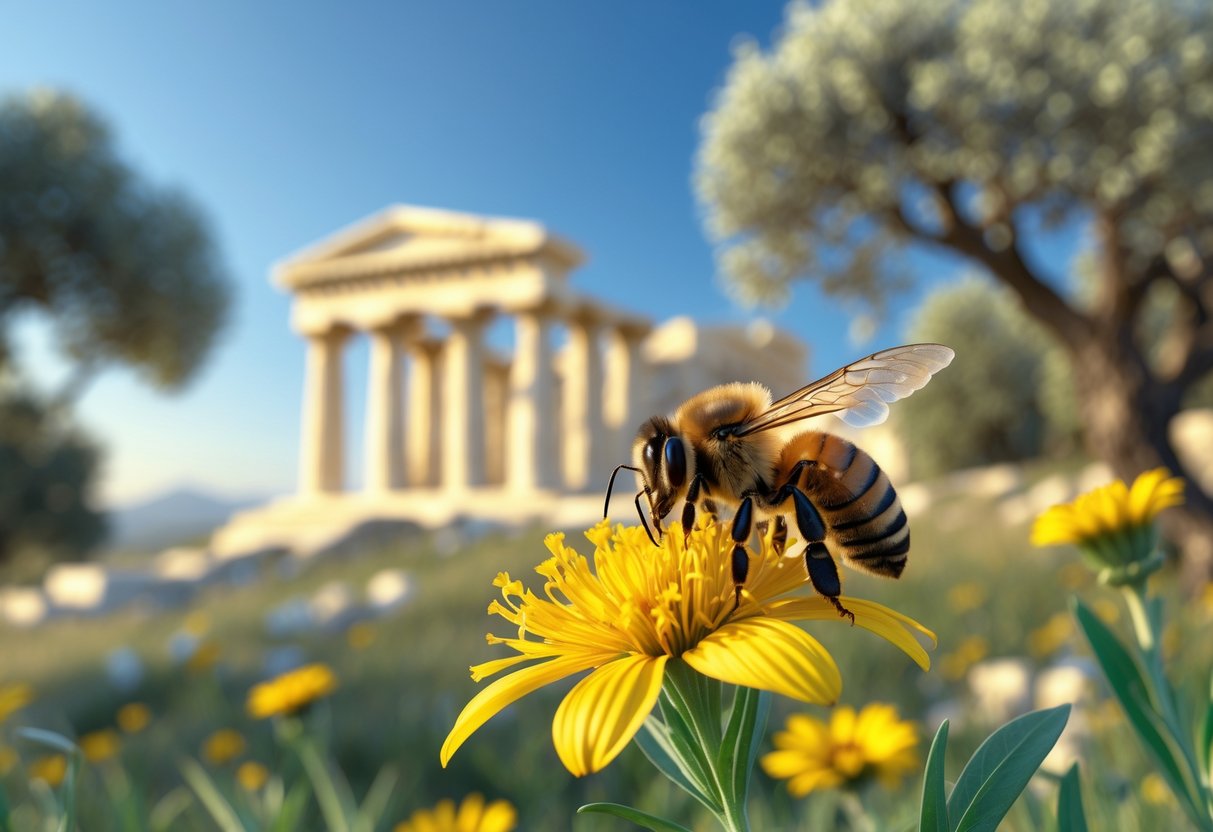
You’ll run into stories about goddesses like Melissa, the queen of bees, and gods such as Aristaeus, who basically had beekeeping in his job description.
These myths show how Greeks believed bees acted as a bridge between the natural world and the gods. Ever wonder why bees got so much attention in myths? This guide digs into those reasons and shares details you probably haven’t heard before.
Bees shaped Greek culture in surprising ways, from religion right down to daily routines.
Their story is packed with magic, mystery, and real respect for these busy little workers. Bees buzzed with meaning long before anyone kept a hive in their backyard. For more about bees’ roles in ancient Greece, you can check out this bee in ancient Greece article.
Foundational Greek Myths About Bees

Bees pop up in stories about gods, secret places, and strange magic.
These myths describe how bees fed powerful gods, taught the secrets of life and death, and held strange powers tied to prophecy and rebirth.
Melissa and the Nourishment of Zeus
Melissa stands out in Greek mythology as a bee nymph or priestess called Melissae.
The myths say that when baby Zeus was hidden on Mount Ida to keep him away from Cronus, Melissa fed him honey.
Honey wasn’t just a treat—it was sacred food, and this act connected bees and honey to divine care and protection.
Melissa and the Melissae took care of Zeus and spread knowledge about honey, which people saw as life-giving and healing.
The bond between bees and Zeus really shows how sacred bees were in Greek stories.
Honey, in these tales, meant more than food; it was a symbol of wisdom and divine power.
Aristaeus and the Mystery of Bee Rebirth
Aristaeus, a god known for beekeeping, agriculture, and healing, takes center stage in a myth about the death and rebirth of bees.
After Eurydice, wife of Orpheus, died from a snake bite, her nymph sisters punished Aristaeus by wiping out all his bees.
Aristaeus, heartbroken, asked Proteus, a shape-shifting sea god, for advice.
Proteus told him to make offerings to honor Eurydice.
When Aristaeus did this, new bees emerged from the carcasses of animals.
This story tries to explain how bees seem to spring from death, hinting at rebirth and nature’s cycles.
It also paints Aristaeus as a protector of bees and their mysteries.
Bee Nymphs and the Gift of Prophecy
Bee nymphs, or Melissae, had powers that went beyond caring for gods.
Some stories claim these bee maidens could see the future and had ties to figures like Hermes, Demeter, and Persephone.
They worked as priestesses for goddesses like Rhea and Potnia.
The Thriae, a trio of bee-like nymphs, revealed the future through divination.
Their connection to nature and the divine made them important messengers between people and gods.
In these myths, bees stand for wisdom, mystery, and a glimpse into fate.
The Origin of the Bee’s Stinger
One lesser-known story tries to explain how bees got their stingers.
It says that during a conflict involving gods and other creatures, bees received stingers as tools for defense and power.
This gift made them sacred beings, able to protect themselves and others.
The stinger shows the bee’s double nature: gentle pollinator and fierce defender.
Their strength was linked to divine forces and the cycle of life and death.
This myth reminds us that bees hold a special place in Greek beliefs, both gentle and strong.
Symbolism and Cultural Significance of Bees in Ancient Greece

In ancient Greece, people saw bees as much more than just insects.
Bees stood for power, knowledge, and a link to the gods.
They played many roles, from messengers between gods and humans to taking part in sacred rituals.
Honey and wax were valuable, used in religious offerings and in everyday life.
Bees as Divine Messengers and Agents of Rebirth
Bees in Greek mythology acted as messengers between mortals and the gods.
Priestesses called the Melissae—literally “the bees”—served at the oracle of Delphi.
People believed these women received prophecies inspired by sacred bees tied to Apollo’s oracle.
Bees also stood for rebirth and life after death.
Their work in pollination linked them to the cycles of growth, death, and renewal.
Since honey was seen as divine nectar, tied to immortality and health, people thought bees carried a sacred life force.
Beekeeping and Honey in Ancient Greek Rituals
Beekeeping thrived in ancient Greece, especially on Crete and near Parnassus.
Honey was a gift to the gods, offered in religious ceremonies and rituals.
People used honey to sweeten sacrificial wine or as part of the Eleusinian Mysteries, which focused on life and death cycles.
Beeswax mattered, too.
It lit up temples in lamps and was used for seals and charms.
Honey’s healing powers were well known and connected to gods like Artemis and other Olympians who watched over health and purity.
The Bee in Ancient Coinage and Art
Bees showed up on many ancient Greek coins, especially in places like Ephesus and Crete.
These coins used bees as symbols of fertility, hard work, and prosperity.
The bee also represented the Minoan mother goddess, Potnia, showing how deep their cultural roots went.
Greek artists painted bees on pottery, made them into jewelry, and carved them in sculptures.
Bees stood for community and hard work.
You’ll often spot bees alongside nectar, ambrosia, and flowers—reminding everyone of their link to divine food and the well-being of the people.
Bees, Priestesses, and the Mysteries
Some myths called priestesses “bees” because people saw their roles as sacred. The Melissae at Delphi and other temple women actually carried bee symbols.
These priestesses felt a special connection to the divine. They played important parts in rituals, using honey and beeswax to purify and protect.
The Eleusinian Mysteries—those ancient secret ceremonies—honored bees, too. People saw bees as symbols of death, rebirth, and the soul’s journey.
There’s this bigger spiritual story here, where bees tied nature and the divine together in Greek beliefs. It’s kind of fascinating, honestly.
If you’re curious, you can dive deeper into how bees shaped Greek myths and religion at bees as divine messengers in Greek mythology.


