
Ever spot a fuzzy, round bee buzzing around your flowers and wonder if it’s different from that smaller, striped one? You’re definitely not the only one. Bumble bees and honey bees look a lot alike at first glance, but they’ve got some pretty big differences in size, behavior, and where they make their homes.
Basically, bumble bees are bigger, rounder, and usually nest underground, while honey bees are smaller, slimmer, and build those complex hives you sometimes see above ground.
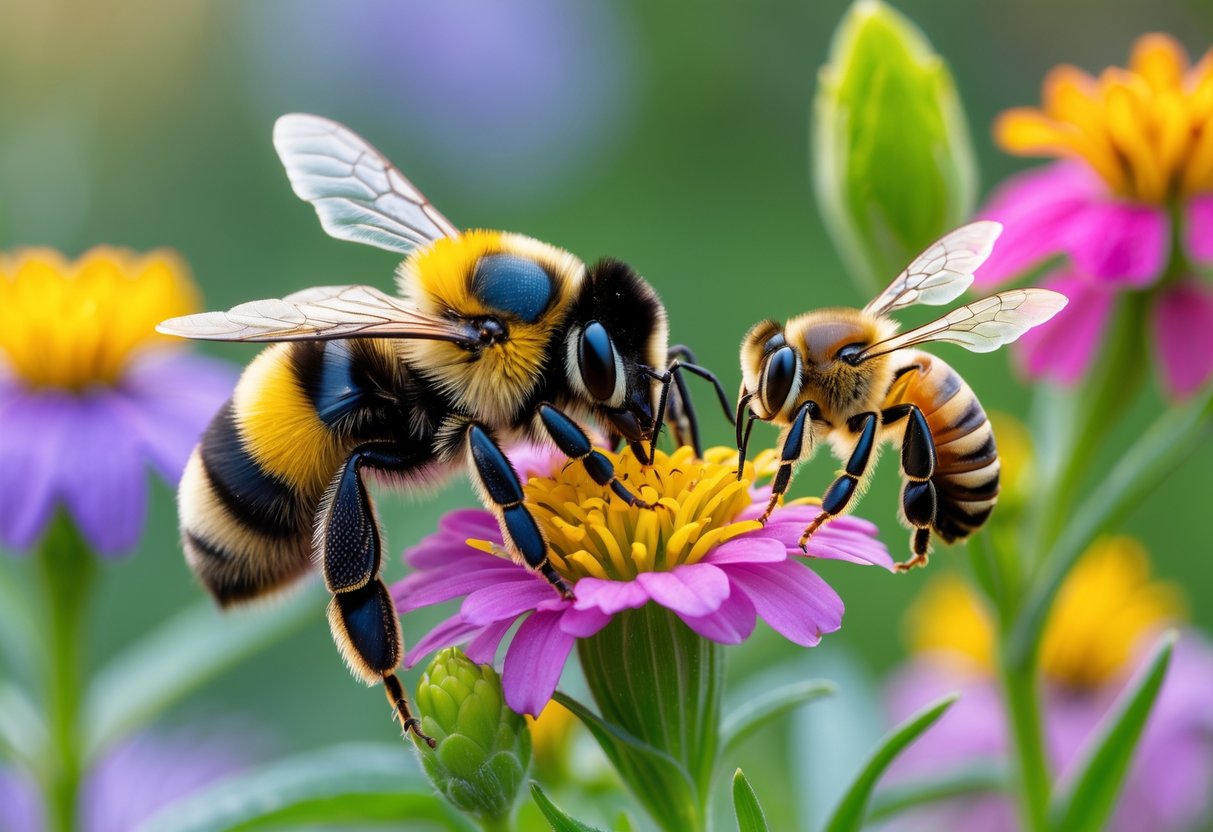
Bumble bees make a louder, deeper buzz, and you’ll often catch them working solo or in small groups. Honey bees, though, are the real social butterflies—well, bees—and they team up in huge groups, talk to each other about where to find food, and, of course, they’re famous for making honey.
Knowing these differences lets you appreciate how both types of bees help nature and your garden. It’s honestly kind of fascinating.
Learning about these bees makes it easier to spot them and figure out what they’re up to. Whether you’re hoping to help pollinators or you’re just curious about the buzzing in your backyard, being able to tell a bumble bee from a honey bee is a great place to start.
Let’s dig into what makes each bee unique and why they actually matter.
Key Differences Between Bumble Bees and Honey Bees

You can spot the difference between bumble bees and honey bees by looking at how big they are, how they act, and where they build their nests. Each type does things its own way in terms of teamwork and home-building.
These differences give them special roles in nature and, honestly, in your garden too.
Physical Appearance and Size
Bumble bees are bigger and rounder than honey bees. Thick, fuzzy hair covers their bodies, making them look soft and helping them stay warm.
Bumble bees usually show off black and bright yellow stripes. Honey bees, on the other hand, are smaller and more slender.
Their bodies have less hair and show golden-brown bands. Honey bees’ wings are longer for their size, while bumble bees have shorter, wider wings.
If you watch them fly, you’ll hear bumble bees making a much louder buzz because of their size.
Distinct Behaviors and Social Structure
Honey bees live in huge colonies with tens of thousands of workers. They actually communicate by dancing to share where to find flowers.
Honey bees stay active all year, working together with their queen. Bumble bees live in smaller colonies, usually just a few hundred workers.
They don’t really do the dance thing—bumble bees rely more on searching for food on their own. Bumble bees also act less aggressive and tend to fly a bit slower, often visiting flowers that honey bees might skip.
Nesting and Colony Organization
Honey bees build strong, organized hives in hollow trees or in boxes people set up for them. They use neat hexagonal honeycomb to store honey and raise their young.
Their hives stay warm and safe, especially during winter. Bumble bees usually pick underground spots, like old rodent holes or thick grass, for their nests.
Their nests look messier and stay much smaller. Bumble bee colonies only last one season and end in the fall.
Honey bee colonies, though, survive through winter. If you want to read more, check out Bee Professor or Beekeeper Corner.
Ecological Roles, Pollination, and Conservation

Bumble bees and honey bees help with pollination and keep the environment healthy, but they do it in their own ways. You’ll notice that each one has a unique style for collecting pollen and nectar.
They also face their own challenges, and there are actually ways you can help both.
Pollination Strategies and Buzz Pollination
Bumble bees pull off a trick called buzz pollination—they vibrate flowers to shake out pollen that honey bees just can’t reach. This makes them super important for certain plants, especially wildflowers and some crops.
Honey bees don’t do buzz pollination, but they’re great at visiting tons of flowers and collecting nectar and pollen with those pollen baskets on their legs. Bumble bees can work when it’s cooler or even darker outside, while honey bees like it warm and sunny.
Both types of bees move pollen from flower to flower, so plants can make fruit and seeds. Bumble bees’ ability to forage when conditions are tough makes them especially important for ecosystem health and for crops we all depend on.
Honey Production and Pollen Gathering
Honey bees are famous for making and storing lots of honey in their hives. A whole colony works together to gather nectar, turning it into honey to eat during winter.
Bumble bees don’t really store honey in large amounts. They gather nectar mostly just to feed their smaller nests, which usually stay hidden underground or in out-of-the-way places.
Their nests are much smaller and don’t survive through winter like honey bees do. Both bumble bees and honey bees gather pollen to feed their young.
Honey bees carry it in special baskets on their legs, while bumble bees collect it on their fuzzy bodies. This helps pollination and feeds their colonies at the same time.
Threats and Conservation Efforts
Bumble bees and honey bees both deal with some pretty serious threats. Habitat loss, pesticides—especially those nasty neonicotinoids—and pests like the varroa mite hit honey bee colonies hard.
These problems shrink their numbers and make it tough for them to do their job as pollinators.
If you want to help, try planting bee-friendly gardens with native flowers. Skip the harsh pesticides—honestly, the bees will thank you.
You could set up nesting spots for bumble bees or support your local beekeepers. Small steps like these can really make a difference for bee populations.
Plenty of organizations are out there fighting for these pollinators. They create safe habitats and spend time studying how bees live.
When we protect bees, we’re really just helping our own gardens and the environment stay healthy. Curious to learn more? Check out groups like the Xerces Society.


