
Ever wondered what bees meant to the ancient Celts? You’re about to find out, and honestly, it’s a pretty fascinating story.
The Celts didn’t just see bees as ordinary insects. They believed bees were special creatures, somehow bridging the natural world and the spiritual one.
In Celtic myth, bees carried wisdom and messages between this world and the next.
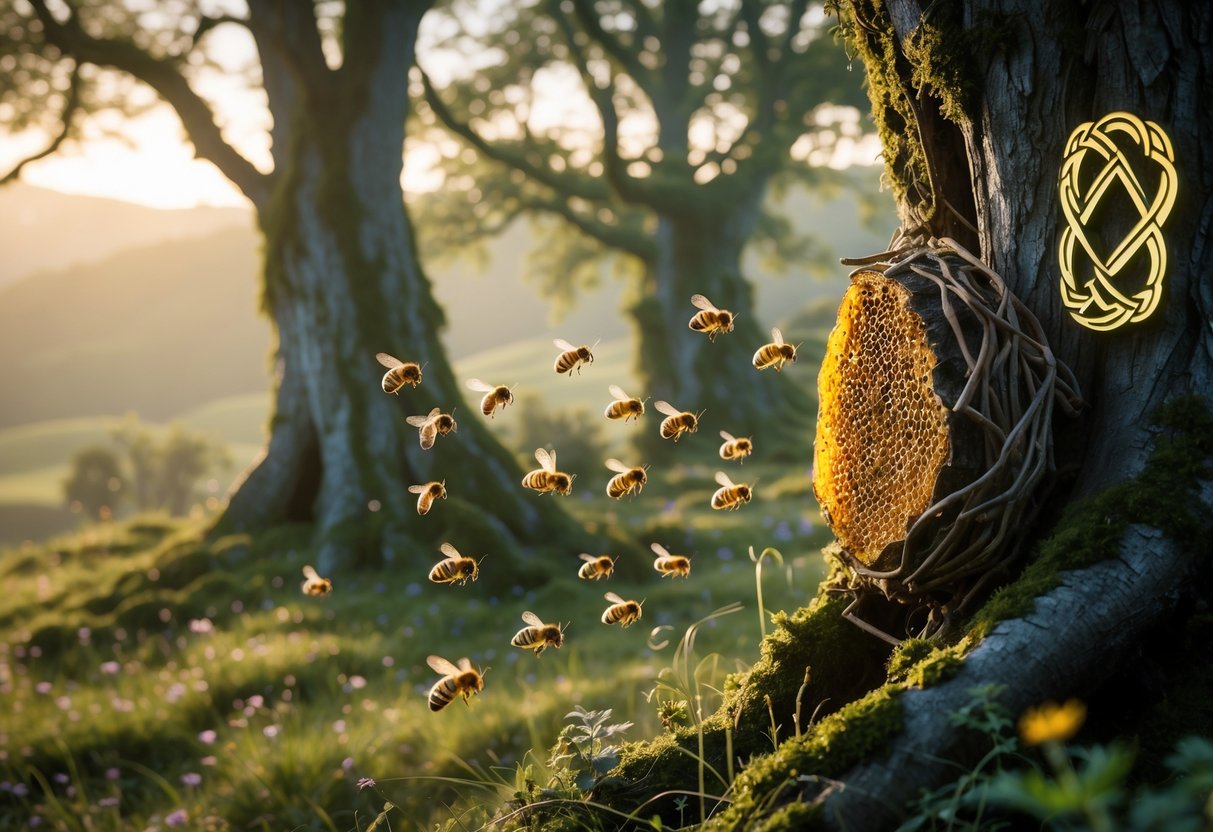
Bees offered more than just honey to the Celts. People saw them as powerful symbols—life, communication, even magic.
When you dig into their role, you’ll notice the respect the Celts had for these tiny creatures. That’s probably why bees pop up all over their stories and legends.
This connection really shows how tightly nature and spirituality were woven together in Celtic culture. If you love tales full of meaning and mystery, the Celtic myth about bees might just change how you see these buzzing insects.
You can check out more about this topic at Celtic myth about bees.
Celtic Myth and Folklore of Bees

Bees held a special place in Celtic culture. People saw them as sacred creatures, connecting the natural and spiritual worlds.
Their importance went way beyond just making honey. Bees showed up in myths, customs, and daily life all through ancient Celtic communities.
Sacred Status of Bees in Celtic Cultures
In Celtic beliefs, bees weren’t just insects. Folks believed they acted as messengers between our world and the spirit realm.
The Celts thought bees carried wisdom from the gods. They believed bees could travel between life and the afterlife.
This gave bees a special spiritual role in myths and poems. Often, bees symbolized connection and guidance.
Early texts like the Song of Amergin mention bees, showing their long-standing importance in Celtic lore. Their sacred image meant honey and beeswax gifts held deep meaning, not just practical use.
The Custom of Telling the Bees
One tradition that stands out is the “telling of the bees.” Whenever something big happened—a birth, a wedding, a death—people would go out and tell the bees.
They might tap the hive gently or speak to the bees directly. People believed this kept the bees calm and loyal.
If you forgot to “tell the bees” about major changes, the bees might leave or stop making honey. That’s how close people felt to their bees, almost like they were family.
Myths About Swarms and Omens
Swarms of bees appear in Celtic mythology as signs or omens. Seeing a swarm could mean the gods were sending a message, maybe a warning or a sign of change.
Bees moving together symbolized unity and power. Some myths say bees could protect homes or guide souls after death.
Because swarms moved in mysterious ways, people spun stories about magic and fate. If you spotted a swarm, you might start wondering what it meant for you.
Traditional Uses of Honey and Beeswax
Honey wasn’t just food for the Celts. People used honey in cakes, mead, and medicine.
They believed honey had healing powers. Beeswax was valuable, too.
You’d find beeswax in candles that lit sacred spaces, helping people connect with the spiritual world. Both honey and beeswax were gifts from the bees, carrying magic and tradition.
These things became a big part of Celtic customs and practical life.
If you want to dig deeper, check out the Celtic myth about bees.
Famous Celtic Legends and Connections to Deities

Bees show up in several Celtic stories. These tales link bees to protection, healing, and even divine power.
Stories about saints and priestesses highlight how important bees were in ancient Celtic life. You’ll also spot some interesting similarities between Celtic bee legends and myths from other cultures.
Saint Gobnait and the Bee Priestesses
Saint Gobnait stands out as one of the most famous figures connected to bees in Celtic lore. People say she healed and protected her community, using bees for both medicine and magic.
Gobnait’s sanctuary in Ireland became a place where bees were truly sacred. She’s often called the patron saint of bees and beekeepers.
Bee priestesses like Gobnait seemed to understand the secret life of bees. They kept the hive safe and used honey and beeswax in healing rituals.
You could think of them as early beekeepers who mixed nature and faith to protect their people and the environment.
Saint Modomnóc’s Loyal Honeybees
Saint Modomnóc is another Celtic figure with a close bond to bees. According to legend, his honeybees stayed gentle and loyal to him.
He taught others about beekeeping and shared how bees helped communities survive. Modomnóc’s story shows that honeybees were more than just insects; they stood for patience and teamwork.
His peaceful relationship with bees really suggests the ancient Celts respected nature deeply. His tale reminds us that beekeeping was a sacred trust in Celtic culture.
Parallels with Other Mythologies
Bees pop up with special meanings in a bunch of world mythologies, not just Celtic legends. Take Aphrodite, the Greek goddess of love—people sometimes connect her to bees, which hints at how bees can stand for beauty and life.
In Hindu mythology, Vishnu gets linked to bees too. Here, bees show up as symbols of protection and sustainability.
You can see that bees have acted as a bridge between nature and the divine for a long time. In Celtic myths, just like in others, honeybees stand for more than just sweet honey.
They carry messages of healing, protection, and spiritual power—things that ancient cultures really respected. If you’re into beekeeping or mythology, it’s honestly a fascinating connection.


