
Ever wonder if deer wander through your yard all night? Most deer do move after dark, but honestly, they’re not on the go the whole time — they’re busiest at dawn and dusk, slipping out for quick trips when it’s safer. If you care about your garden, drive on country roads, or just like spotting wildlife, this matters.
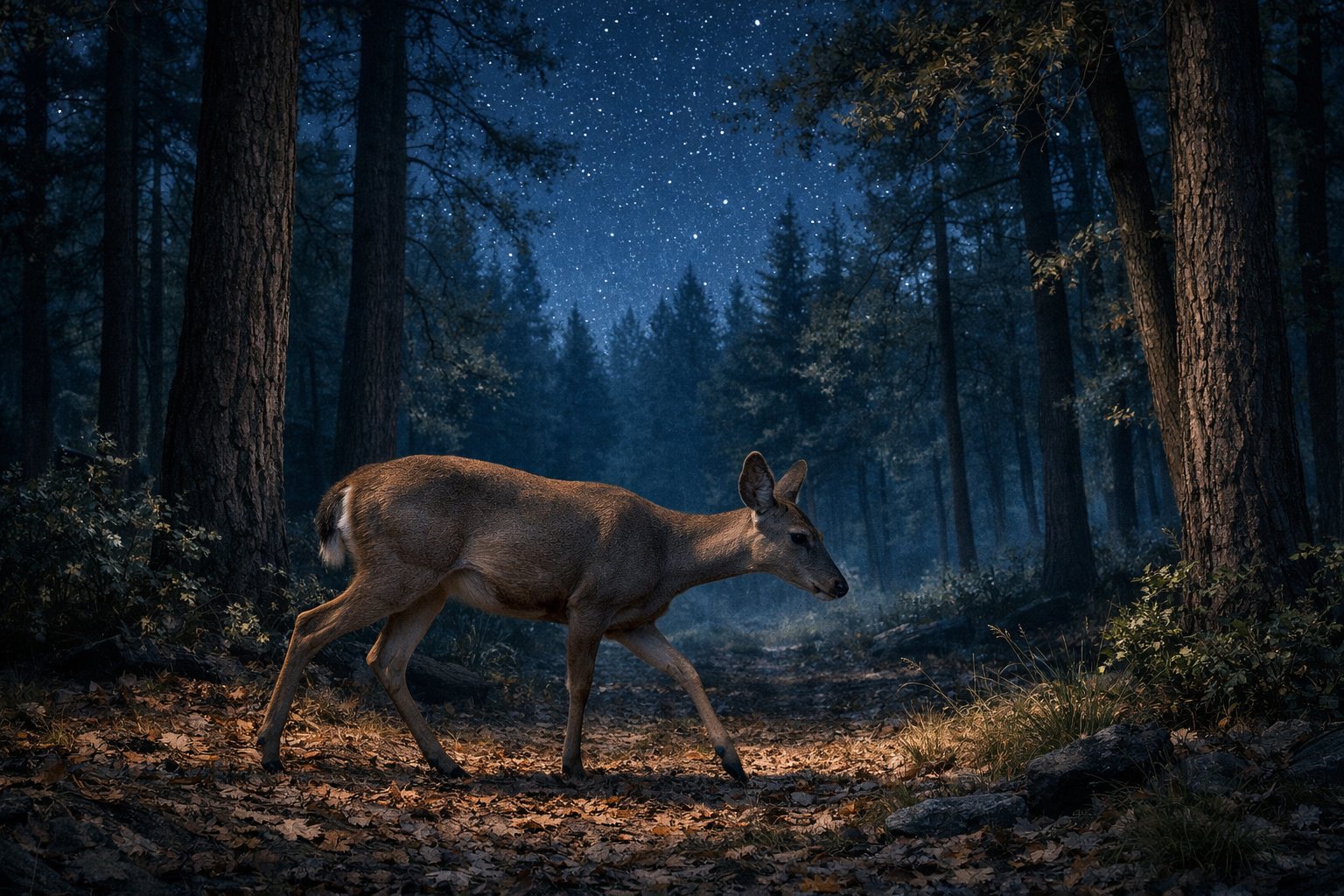
Let’s get into what really makes deer move at night, when they actually sleep, and how things like food, the seasons, and people change their patterns. Keep your eyes open — sometimes it’s just small clues like tracks, chewed leaves, or a sudden rustle that reveal nearby deer.
Do Deer Walk Around All Night?

Deer do move at night, but how much they roam really depends on safety, food, and how many people are around. Let’s look at their usual night habits, what makes them crepuscular instead of truly nocturnal, and how different deer species handle nighttime.
Deer Activity Patterns After Dark
Deer usually leave their beds after sunset to find food and water. You might spot them about an hour after sunset, and again just before sunrise.
Sometimes, they’ll wander around midnight, especially where it feels safe. They follow trails and edges, sticking to cover to avoid being seen.
When people are everywhere — traffic, farming, hunters — deer push more of their movement into nighttime to dodge us. In quiet, rural places, they stick to dawn and dusk. If it’s hot, deer prefer to move and eat when it’s cooler at night.
Differences Between Crepuscular and Nocturnal Behavior
Deer are crepuscular, so they’re most active at dawn and dusk, not all night. Expect to see them moving in the low light, but not wandering constantly in the dark.
Nocturnal animals like owls stay busy all night, but deer just aren’t built for that. Still, if things get risky in daylight, deer can flip their routine and become more nocturnal.
Researchers with GPS collars have found deer change their schedules when humans get too close. So, in busy areas, you might notice deer acting almost like true night creatures.
Species-Specific Nighttime Activity
Different deer act differently at night. White-tailed deer living near people usually go nocturnal to avoid cars and crowds.
Mule deer in open country stick to dawn and dusk but will move at night if predators or heat make daytime risky. During the rut, both types wander at odd hours, so you’ll see more nighttime activity.
Fawns and pregnant does tend to stay closer to their beds in the day, cutting back on night wandering to stay safe.
Factors Affecting Deer Nighttime Movement
Deer move at night for all sorts of reasons. Let’s break down how predators, people, food, seasons, weather, and even moonlight change when and where they travel.
Predator Avoidance and Adaptations
Deer try to dodge predators like coyotes, wolves, mountain lions, bobcats, and bears by moving at night. You’ll notice they use thick cover and travel along edges in low light, hoping to stay out of sight.
Their eyes have this cool tapetum lucidum, so they see better at night, but that doesn’t mean they’re safe from animals that hunt by smell or sound.
Deer bed down in dense brush or on steep hills when predators are close. Mature bucks take more risks during the rut, moving day and night, while does with fawns stay hidden in safer spots.
Trail cameras can show you these patterns and even catch which predators are hanging around.
Impact of Human Activity and Urbanization
People and broken-up habitats push deer to become more nocturnal. You’ll spot deer in crop fields or sneaking through yards at night, trying to avoid cars, pets, and people.
When hunting season starts, deer get even more secretive and limit their daytime movement. Urban lights and roads mess with their usual routes, so deer use greenways, river corridors, and underpasses at night.
Wildlife managers use things like regulated hunting and habitat corridors to help deer avoid dangerous roads. If you check local trail cameras, you’ll probably see deer moving later at night in busy spots.
Role of Food Availability and Seasonal Changes
Food really drives when and where deer move. You might see them in fields, orchards, or at backyard feeders at night, especially when crops or fruit are out and things are quiet.
In late winter and early spring, when food’s scarce, deer travel farther and longer — sometimes all night — searching for something to eat. The rut and fawning season shake up their routines too.
Bucks wander more at night during the rut, while does with fawns tend to stick close to bedding areas. Wildlife managers pay attention to these shifts to plan their work.
Depending on what’s growing or being harvested near you, deer activity at night can look totally different.
Influence of Weather and Moon Phases
Weather and moonlight shift deer activity fast. On cool summer nights, deer usually move around more since they’re trying to dodge the heat.
When winter nights feel mild and the snow isn’t too crusty, you’ll catch deer moving more because it’s less work for them. If it’s pouring rain or the wind picks up, deer slow down since it’s harder to hear and travel gets tricky.
Moon phases also play a part. A bright full moon can make deer more active in some spots—they see better, so why not? But in places where hunters are out under the moonlight, deer might actually lay low.
Trail cameras catch these patterns. Some nights, especially when the weather’s calm or the moon’s just right, you’ll see movement spike. If you pay attention, you can use these clues to guess when deer are likely to show up.


