
Ever worry when your dog corners a deer or sniffs a fawn? I get it. Deer almost never bite, but they’ll absolutely defend themselves and their babies—with kicks, antlers, and, on rare occasions, teeth. The real danger for your dog comes from those powerful kicks and antler strikes, not bites.
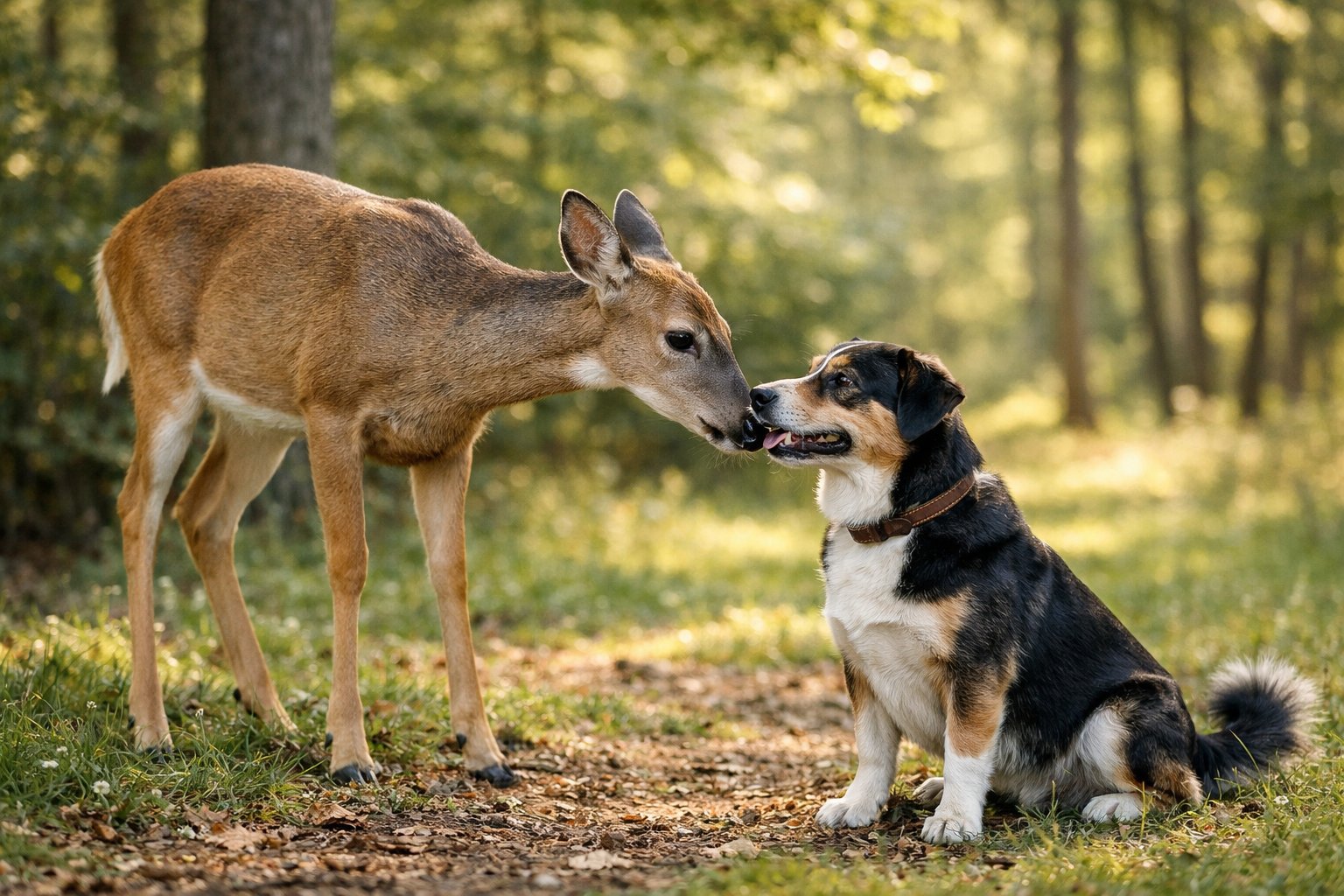
You should stay alert on walks and notice if a deer looks threatened so you can react quickly. Let’s dig into why deer act aggressively, what situations are riskier, and some simple steps to help keep your dog safe.
Do Deer Bite Dogs? Understanding Deer Aggression and Defense
Deer almost never try to bite dogs. They usually pick other defenses first.
Most dangerous run-ins happen when a dog chases or corners a deer, or when a protective doe or a rutting buck gets involved.
Are Deer Likely to Bite Dogs?
Deer biting dogs? It’s just not common. Their mouths work best for grazing, not fighting, so biting isn’t their go-to move.
Most wildlife experts say kicks or stomps happen way more often than bites.
If you’ve got a small dog that spends time in the yard, it might wander closer to deer and face a bit more risk. A nervous or cornered deer can lash out, and a mother deer will get aggressive fast if she thinks her fawn’s in danger.
When a dog chases deer, the risk jumps. Dogs that bolt after deer can trigger all sorts of defensive reactions—including, in rare cases, a bite if the dog ends up really close to the deer’s head or throat.
How Deer Typically Defend Themselves Against Dogs
Deer usually try to run away from dogs first. If they can’t escape, they’ll kick with those sharp hooves.
A single kick can break bones or cause serious injury to a dog. Does with fawns will stand between the dog and their baby, and might stomp, snort, or charge.
Bucks use their antlers to fight, and they’ll gore or push if they feel threatened—especially during rutting season or if they spot a predator.
You should keep your dog leashed and avoid trapping deer. Good recall, close supervision, and not leaving food outside will help cut down on risky encounters.
When Are Deer Most Aggressive Toward Dogs?
Deer ramp up the aggression in three main situations: near fawns, during the rut, and when they’re trapped or cornered. Does are super protective of their fawns for several weeks after birth.
Bucks get more territorial and bold during rutting season. You’ll see more chasing and less fear of dogs, especially in the fall.
If your dog chases a deer into thick brush or a fenced yard with no way out, things can go south fast.
Time of day matters, too. Deer are most active at dawn and dusk, so it’s smart to be extra careful when walking your dog during those hours.
Documented Cases of Deer Biting or Attacking Dogs
Most deer attacks on dogs involve kicks, antler goring, or trampling—not bites. Vets and wildlife articles mention injuries from hooves and antlers way more than anything involving deer teeth.
When deer do bite, it usually happens if a dog lunges at their head or mouth, or if a small dog gets too close to a fawn and the mother lashes out. These cases are rare, but they do happen and can cause real harm.
If a deer injures your dog, get to a vet right away and let local wildlife authorities know, especially if the deer acted strangely. For more info on deer behavior and how to avoid conflicts, check out ScienceInsights.
Preventing Dangerous Deer-Dog Encounters
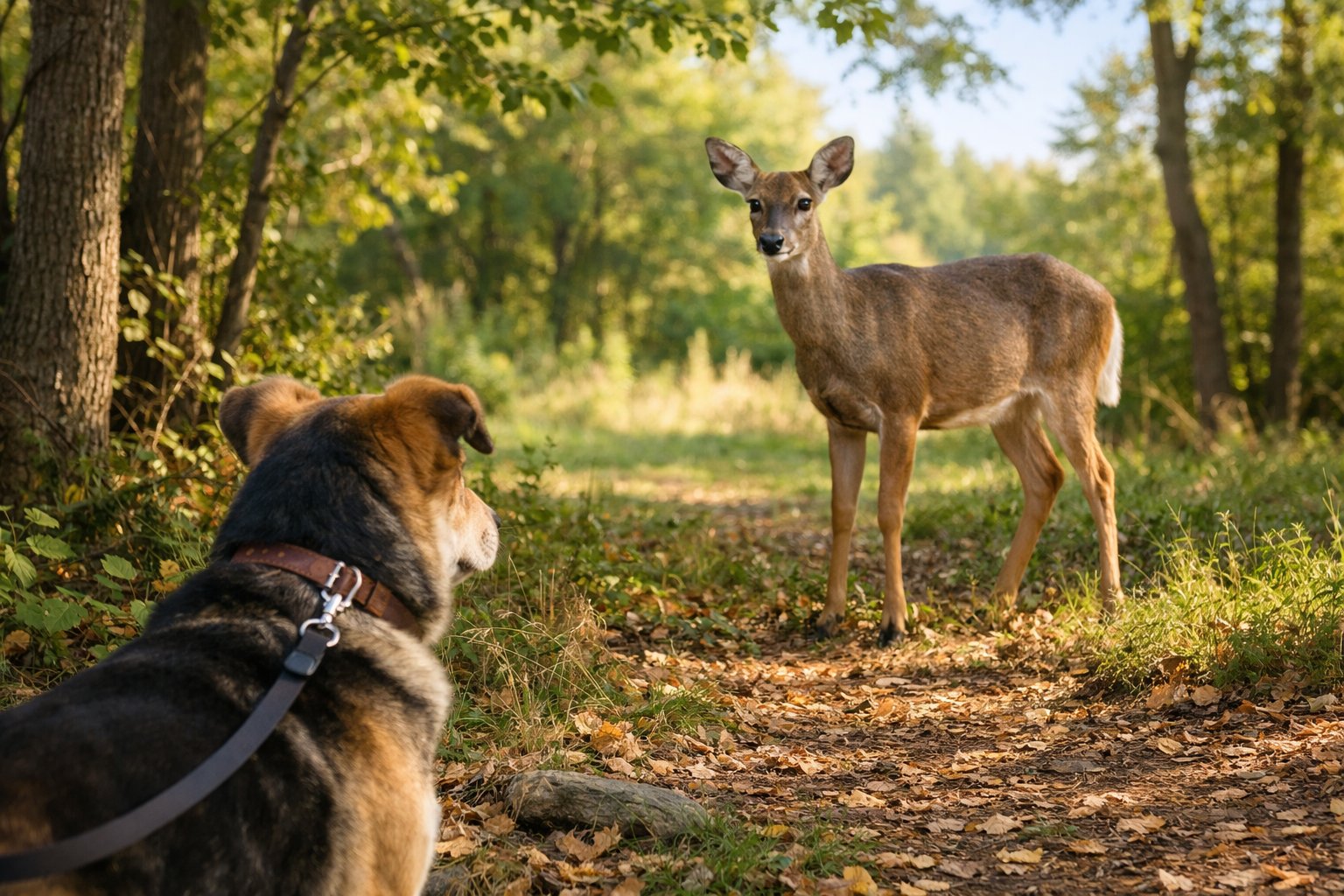
Keep your dog on a short leash, skip dawn and dusk walks in wooded areas, and use a few tricks to avoid chases or surprise close calls.
How to Keep Your Dog Safe in Deer Habitats
Use a sturdy leash, no longer than 6 feet, when you walk near woods, parks, or fields with deer. Keep your dog close so you can pull them away if a deer pops up.
If your dog has a strong prey drive, try a harness with a handle for extra control. Watch for signs of deer, like tracks or trails through brush.
Don’t let your dog run free near deer habitat, especially during spring fawn season and the fall rut. In your yard, supervise your dog and bring them inside if any deer show up.
Train a solid recall and practice in quiet spots first. Teach “leave it” and “heel” so you can stop a chase before it starts.
Reward your dog for calm behavior near wildlife with treats or praise.
Effective Deer Deterrents and Barriers
Put up a deer fence at least 8 feet high to keep most deer out of your yard. If you’ve got a smaller yard, a 6-foot fence with staggered wires can help.
Use strong posts and keep the wire tight—deer will push through weak spots. Add motion-activated sprinklers near garden beds or yard edges to startle deer without hurting them.
Plant deer-resistant flowers like daffodils, marigolds, and lavender near your fence to cut down on visits. Spread commercial deer repellents on your plants in spring and fall; make sure they’re pet-safe and follow the directions.
If deer keep coming back, talk to local wildlife folks or a neighborhood patrol about stronger options. Don’t leave pet food outside, and secure compost and bird seed to avoid attracting deer in the first place.
Responsibly Managing Dog Behavior Near Deer
Don’t let your dog chase or corner a deer. If your dog catches sight of a deer, just call it back calmly—don’t panic.
Try moving away at an angle so neither your dog nor the deer feels stuck. Running toward the deer or shouting might only make things worse. Sudden moves? Those can set off a defensive reaction you really don’t want.
When you’re walking near places where deer hang out, pause if you spot one. Reward your dog for staying chill when there’s a deer in the distance.
Use clear verbal cues and keep your dog on a long line while you’re still training. Only go off-leash when you’re sure your dog will listen.
If your dog ever injures wildlife, get in touch with local animal control right away and stick to local rules.
It’s smart to keep your vet’s contact info handy, just in case. Deer can kick hard, and hooves or puncture wounds may need a quick check to catch hidden injuries or infections.


