
If your cat goes outside, you probably worry about coyotes and whether they might hurt your pet. Honestly, yeah, coyotes sometimes eat cats.
They’re wild animals and hunt small creatures for food. Cats can look like an easy meal, especially in cities or suburbs where coyotes might not find as many rabbits or rodents.
Coyotes hunt opportunistically, so if they spot a cat and have the chance, they’ll probably go for it.
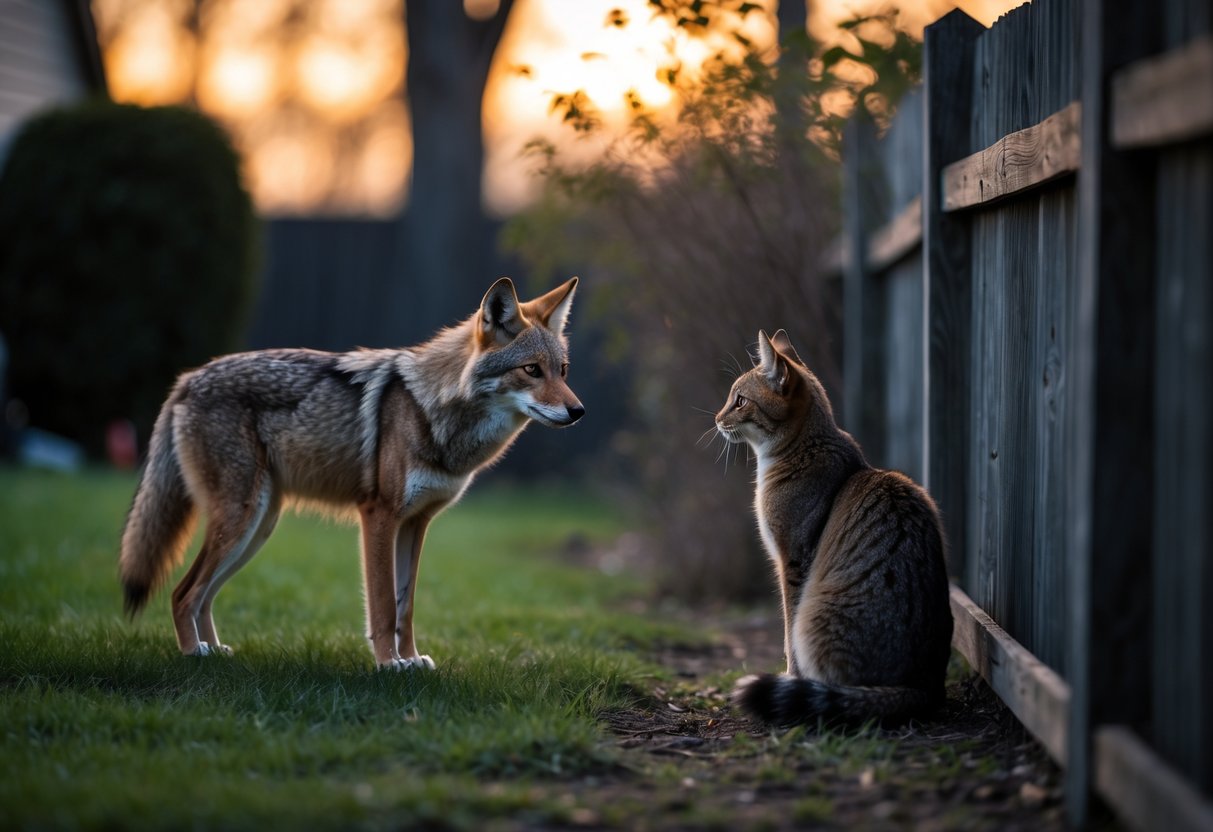
Not every coyote eats cats, but the risk is real enough that you should pay attention. Coyotes mostly eat rodents, rabbits, and other small animals.
If a cat crosses their path, though, things can go bad fast. Knowing how coyotes act and taking steps to protect your cat can help you feel a bit more at ease if your pet goes outside.
You might be surprised at how adaptable coyotes are and how close they live to people. When you understand the risks, you can make better choices to keep your cat out of trouble.
How Often Do Coyotes Eat Cats?

Coyotes sometimes eat cats, but it’s not super common. Most research says cats make up just a small slice of a coyote’s diet.
How often this happens depends a lot on where you live and what else coyotes can find to eat.
What Research Says About Coyotes Eating Cats
Researchers have found that cats usually make up between 1% and 8% of a coyote’s diet. In most areas, coyotes stick with natural prey like rabbits and rodents.
One study found cat remains in about 2% of coyote scat. Some studies report higher numbers in places where cats are easier to catch.
In some urban or highly developed spots, researchers have found more cat remains in coyote diets. Still, most coyotes prefer wild animals and only eat cats when it’s convenient.
Factors That Influence Coyote Predation on Cats
When natural food is hard to find, coyotes might hunt more domestic or feral cats. The odds of coyotes eating cats go up if there aren’t enough rabbits or rodents around.
Cats that spend lots of time outside or hang out near coyote territory face higher risks. Sometimes, coyotes also kill cats to protect their territory, not just for food.
Your cat’s habits and environment really matter when it comes to safety around coyotes.
Differences Between Urban, Suburban, and Rural Coyotes
Urban coyotes eat more human-related food, but they still rely mostly on rodents and other wild prey. Suburban coyotes have a mixed diet, and sometimes that includes cats.
In rural areas, coyotes hunt wild animals almost exclusively and rarely eat cats. In cities with more outdoor pet cats, the chances of coyotes eating cats do go up.
Knowing your area helps you figure out how likely coyote encounters are. If you want to dig deeper, check out this research about coyote diet in urban areas.
Why and How Coyotes Hunt Cats

Coyotes are clever and change their hunting style depending on what’s around. They usually go after small animals, but if food is scarce or a cat is nearby, they’ll take their shot.
Knowing how coyotes behave can help you keep your pets safer.
Coyote Behavior When Targeting Cats
Coyotes mostly hunt at night or during dawn and dusk to avoid people. When they go after a cat, they watch quietly and wait for the right moment.
They stay hidden and use patience before making a move. Coyotes run fast and can jump up to 6 feet, so climbing trees or running doesn’t always work for cats.
They usually pick easy targets—older, slower, or weaker cats. During breeding season (January to March), coyotes get more active and sometimes more aggressive.
Typical Prey and Coyote Diet Preferences
Coyotes eat a lot of different things. Rodents like mice and rabbits make up most of their meals.
They also snack on fruit, bugs, and sometimes plants. Cats aren’t their top pick, but they’ll eat them if food is tough to find or if a cat is close.
In some city studies, cats made up about 20-40% of what a few coyotes ate, but that’s not the norm everywhere. Coyotes will also eat garbage or pet food left outside.
Feeding your cat outdoors can attract coyotes, so it’s safer to keep food inside.
How Cats Defend Themselves From Coyotes
Cats really can’t do much to defend themselves against coyotes. Some might hiss or swipe, but that doesn’t stop a determined coyote.
Outdoor cats face more danger because they don’t know how to deal with wild predators. Older cats and feral cats with slow reflexes are easy targets.
If your cat tries to climb a tree, remember coyotes can leap surprisingly high. The best thing you can do is keep your cat indoors, especially during early morning and late evening when coyotes are most active.
Coyote Encounters With Feral and Domestic Cats
Feral cats usually spend their lives outside, sometimes sharing territory with coyotes. These cats might try to hide in bushes or scramble up trees to get away, but honestly, that doesn’t always save them.
Coyotes look for any signs of cats and they can wait around for quite a while. They don’t give up easily.
Domestic cats that roam outside without anyone watching over them face an even bigger risk. They just might not realize how dangerous coyotes really are.
If a coyote spots your cat, your cat might try to hide or bolt. Sometimes, though, that’s just not enough. I’d really suggest keeping your cat indoors, or at least using a leash in the yard. That way, you’re cutting down the chances of any nasty surprises.
If you live in a place where coyotes hang around, you’ll want to be especially careful during breeding season. That’s when coyotes tend to get more aggressive.


