
Ever wondered if bees send signals to each other? With so many buzzing around in a hive, it’s a fair question. Bees definitely send signals—using sounds, vibrations, scents, and all sorts of quirky movements—to pass important messages around. These signals help them find food, warn about danger, and keep the hive humming along.
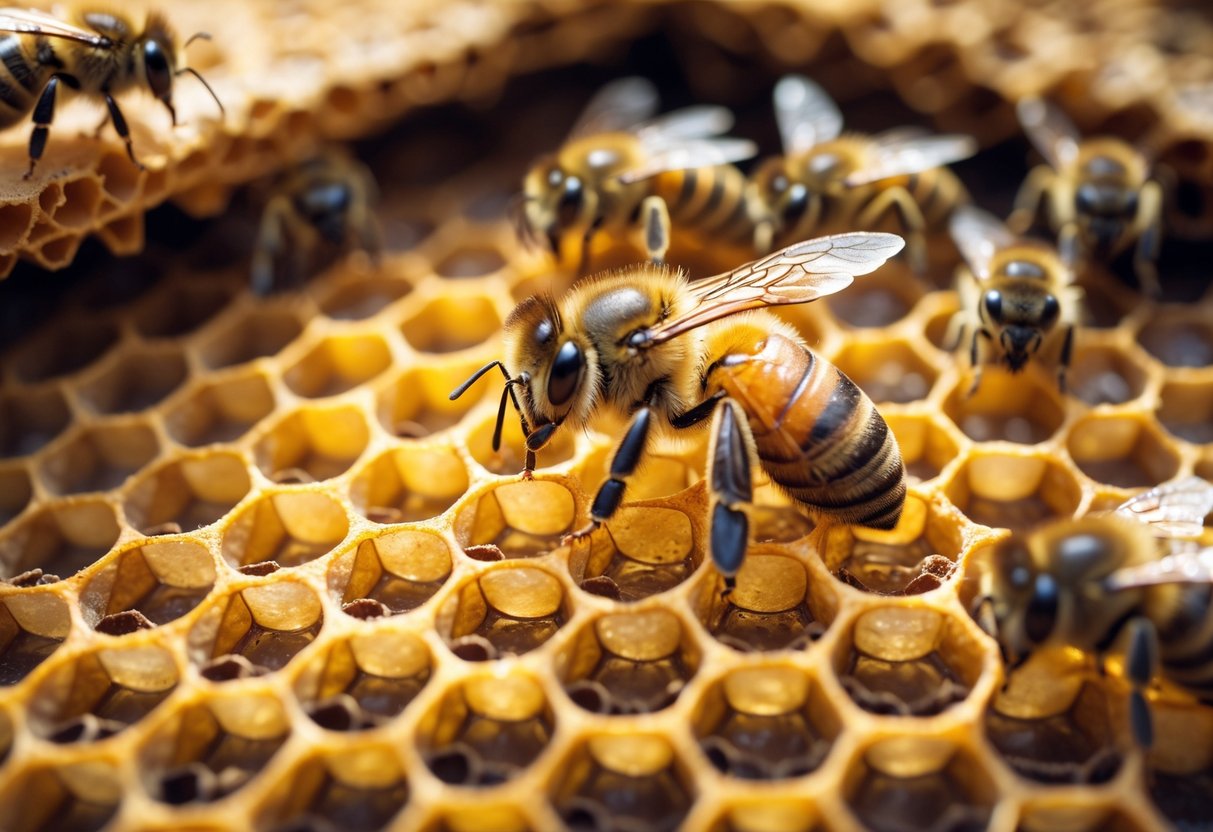
When you spot a bee doing its waggle dance or just hear that familiar buzz, you’re actually witnessing a complex web of communication in action. Bees also send messages with pheromones—scents you’ll never notice, but they’re a huge deal in bee society.
If you get curious about how bees “talk” without words, you’re about to see how organized and clever they really are. Their communication tricks are honestly more fascinating than you might expect.
How Bees Send Signals to Communicate

Inside and outside the hive, bees use a few different ways to send messages. They lean on both chemical signals and physical moves. This helps them organize work, warn each other, and share tips about where to find food.
Chemical Signals and the Role of Pheromones
Bees make special chemicals called pheromones to chat. These chemical signals float through the air, and other bees pick them up by smell. Think of pheromones as invisible notes passed around.
The queen bee gives off a key pheromone—queen mandibular pheromone. It lets the workers know she’s healthy and keeps everyone in line. If her scent fades, bees realize it’s time to look for a new queen.
Other pheromones do different jobs:
- Brood pheromones: Tell workers to care for the young.
- Alarm pheromones: Warn the hive when something’s up.
- Forager pheromones: Lead bees back to tasty food.
Pheromones shape how bees act, plain and simple. They’re vital for keeping the hive strong and organized.
Dance Language: Waggle Dance and Round Dance
Honey bees have a dance language to show where food is hiding. Forager bees put on these performances after they get back to the hive.
The waggle dance is probably the most famous. When a bee does this dance, she moves in a figure-eight and shakes her body. The angle points to the food, and the length of the waggle tells how far you’ll need to fly. Karl von Frisch figured out what this all means, and honestly, it’s pretty genius.
The round dance is much simpler. If food is close—less than 50 meters—the bee just circles around. It’s her way of saying, “Hey, check nearby!”
Both dances let bees send clear signals about where to find a snack.
Vibrational and Sound-Based Signaling
Bees don’t just dance and smell—they also use vibrations and sounds to talk. These signals can be easy to miss but matter a lot.
Sometimes a bee shakes her body fast to send a vibration signal. This tells others to get moving or prep for work. The stop signal is a quick vibration that says, “Hold up, don’t do that”—usually to keep another bee out of trouble.
Queens even make piping sounds. These high-pitched noises call workers or signal changes inside the hive.
Vibrations travel right through the wax, so bees get the message even in the dark or when they’re busy.
Each method—chemicals, dances, or vibrations—helps bees live and work together in their own way.
Bee Signals for Defense and Survival

Bees have some clever ways to protect themselves and their hive. They use scents, movements, and sounds to warn each other or call for backup. These signals get everyone ready to defend the hive or help out when trouble pops up.
Alarm Pheromones and Warning Behaviors
When danger shows up—maybe a wasp or some other pest—guard bees let out alarm pheromones. These chemicals spread quickly and tell everyone to get ready for a fight. The scent makes bees more aggressive and willing to sting. One sting releases even more alarm pheromone, which can trigger a whole swarm to attack the threat.
Bees also use body moves or vibrations as warnings. A quick waggle or short buzz lets others know there’s trouble nearby. These warnings help the hive react fast.
Distress, Swarming, and Colony-Wide Alerts
If a bee gets stuck or hurt, she can send out a distress signal for help. Other bees rush over to defend or rescue her. This is different from alarm pheromones, which warn everyone about general danger.
Swarming happens when part of the hive leaves to start fresh somewhere new. During this, bees use sound and movement to keep the group together so no one gets lost.
All these signals work together to keep the colony safe and united.
Differences Between Bees and Other Insects
Bees and wasps both use alarm pheromones. Still, their behaviors really aren’t the same. For example, Africanized honey bees tend to act more aggressively and release alarm signals faster, which honestly makes them a bit more dangerous.
Most honey bees can only sting once, and then they die. Wasps, on the other hand, usually get to sting multiple times.
That’s why bees rely so much on their alarm signals—each sting matters and warns the whole hive. Their defense feels unique, doesn’t it?
If you’re curious, you can dive deeper into bee alarm pheromones and defenses at this beekeeper resource.


