
When a bee stings you, your first instinct is probably to get that venom out, fast. Honestly, you can’t just flush out bee venom right away, but you can make the sting hurt less by removing the stinger quickly and treating the area to calm the pain and swelling.
If you jump on it right away, your body handles the venom better, and you’ll feel some relief sooner.
Maybe you’re wondering what home remedies actually work for bee stings. Some people swear by a baking soda paste, a cool tea bag, or even antihistamines to soothe the area and take the edge off the itching.
Acting quickly and knowing what to do can really change how you recover.
Immediate Steps to Minimize Bee Venom Effects
Move fast after a bee sting. The right steps can lower pain and swelling, and block more venom from spreading.
Get the stinger out, clean the spot, cool it down, and keep the area lifted if you can.
Remove the Bee Stinger Quickly
A bee’s stinger keeps pumping venom into your skin as long as it stays there. You want it gone, ASAP.
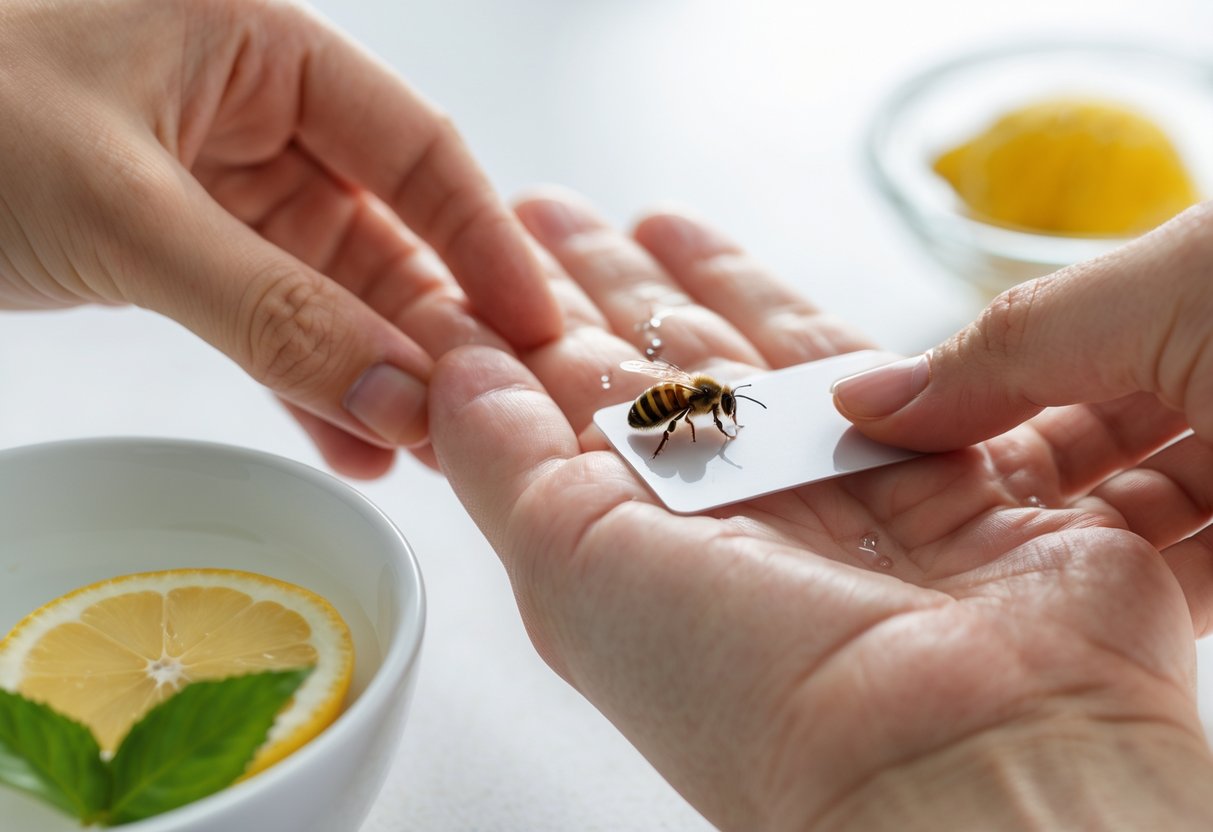
Grab a flat object, like a credit card, and gently scrape it off. Don’t use tweezers—those can squeeze more venom in.
Go slow and steady so you don’t break the stinger. The sooner you get it out, the less venom you’ll have to deal with.
Clean and Disinfect the Sting Site
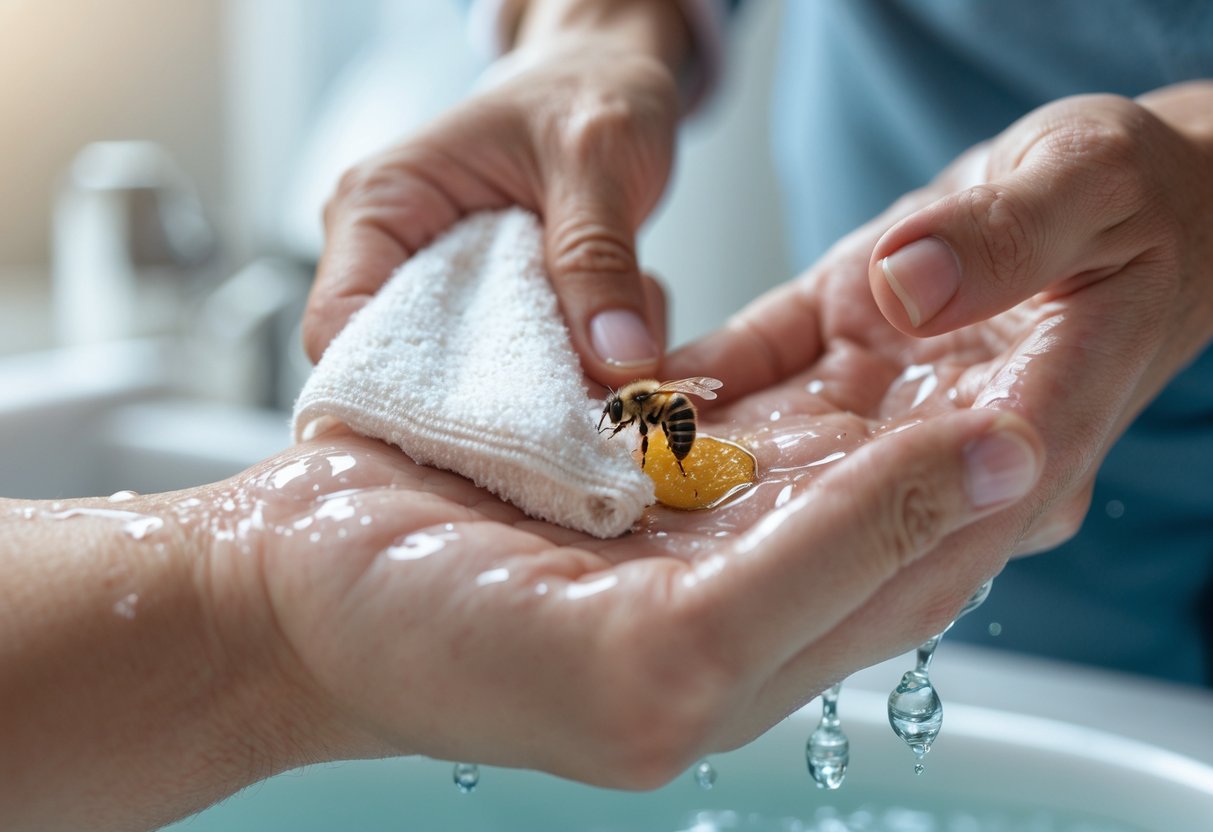
Once the stinger’s out, wash the area with soap and water. This step helps prevent infection and clears away any leftover venom.
Use mild soap, rinse with cool water, and pat it dry with a clean towel. Try not to rub—it just makes things worse.
Cleaning right away lowers the risk of germs and helps your skin bounce back.
Apply a Cold Compress or Ice Pack
To help with pain and swelling, put a cold pack or a cloth-wrapped ice cube on the sting. Ten to fifteen minutes at a time works well.
Cold slows blood flow, which means less swelling and less pain. It numbs things a bit too.
Always wrap the ice in a cloth. Ice straight on skin? Not a good idea—frostbite is no joke.
Elevate the Affected Body Part
If you can, prop up the area that got stung above your heart. This keeps blood and venom from pooling there.
Raising your arm or leg helps with swelling and can make the pain easier to handle.
Pillows or cushions work great for this, especially if you got stung on your hand or foot.
Supporting the Body’s Response and Managing Symptoms

Bee venom sets off a chain reaction in your body, and your immune system jumps in to handle it. If you manage those reactions, you can feel better and avoid bigger problems.
Understand Bee Venom Components
Bee venom’s got a few key troublemakers: melittin, phospholipase A2, and hyaluronidase. Melittin causes the most pain and swelling by messing with your cell membranes.
Phospholipase A2 breaks down fats in your cells and adds to the pain. Hyaluronidase helps the venom spread through tissues.
Your immune system reacts by releasing histamine, which brings on redness and itching. That’s normal unless you’re allergic—then things can get serious.
Knowing what’s in the venom helps explain the symptoms and why quick action matters.
Reduce Inflammation and Itching
Cold packs can help with swelling and itching—use them for about 10 to 15 minutes every few hours. That slows blood flow and numbs the sting.
If you need more relief, try ibuprofen for pain and swelling. Antihistamines like diphenhydramine (Benadryl) or loratadine (Claritin) can cut down on itching by blocking histamine.
Don’t scratch the sting, even if it’s tempting. Scratching can lead to infections.
Keep the area clean, and maybe use a gentle lotion after the swelling goes down.
Recognize and Treat Severe Allergic Reactions
Some folks react badly to bee venom—it’s not just a mild itch or a bit of swelling. You might notice someone struggling to breathe, or their face and throat starting to puff up. Sometimes, their pulse races, they feel dizzy, or they might even pass out. That’s an emergency called anaphylaxis.
If you know you’re allergic, you should always keep an epinephrine auto-injector (like an EpiPen) close by. At the first sign of these symptoms, don’t hesitate—use it right away. Epinephrine acts fast to stop swelling and helps open up your airways.
Right after you use the auto-injector, grab your phone and call 911, or head straight to the emergency room. Even if you don’t have a known allergy but you start having these severe symptoms, don’t wait—get emergency help immediately.


