
Bees really are incredible little creatures, aren’t they? They do so much more than just make honey. Every time they zip from flower to flower, they help plants grow by spreading pollen around.
Here’s a wild fact: bees are the only insects that make food people eat—honey! That’s pretty amazing when you think about it. It makes you realize just how important they are, both for nature and for your own daily life.
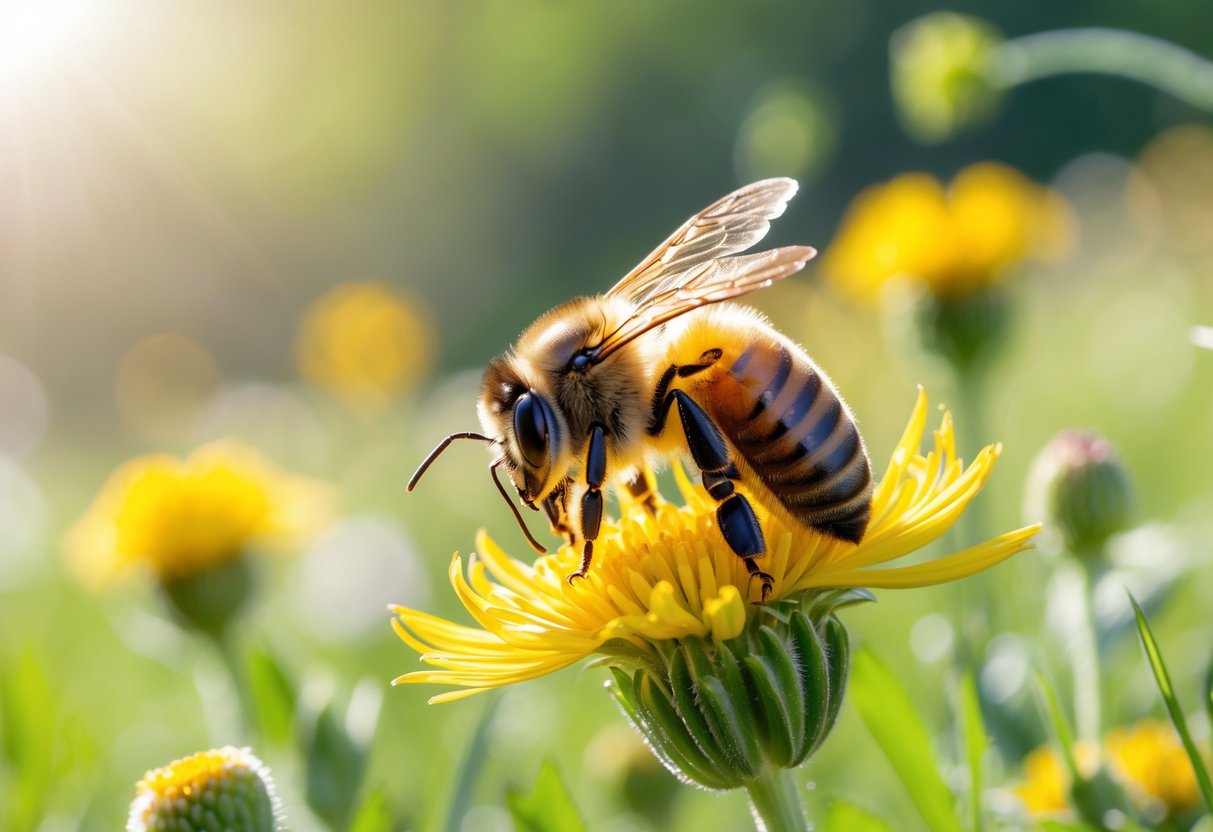
Most people don’t know just how smart and determined bees can be. For example, a queen bee can lay up to 3,000 eggs in a single day.
Worker bees visit hundreds of flowers during their lives. They even communicate with each other using dances, which is honestly kind of adorable and shows just how organized their colonies are.
Did you know bees can choose the gender of their babies? That’s wild. When it gets cold, they huddle together to keep each other warm.
There’s just so much to learn about bees, and the more you know, the more fascinating they seem. If you’re curious, you can dive into more astonishing bee facts.
Astonishing Bee Abilities & Behaviors

Bees have some surprising tricks when it comes to how they communicate, see, and find their way around. They use unique methods to share info, and their eyes can spot colors you’d never notice.
They remember places and numbers better than you’d probably guess.
Unique Communication: The Waggle Dance
When honeybees find food, they don’t just keep it to themselves. They come back and perform this quirky move called the waggle dance.
This dance actually tells other bees where to find good flowers for nectar and pollen. The direction and length of the waggle show distance and direction compared to the sun.
If a bee waggles straight up in the hive, the food’s in the direction of the sun. The speed of the wiggle tells you how close or far the food is.
This dance helps bees save energy by pointing workers straight to the best spots. It’s honestly one of the coolest examples of insect communication I know.
Incredible Vision: Five Eyes & UV Perception
Bees have two big compound eyes made of thousands of little lenses. These help them spot shapes and movement.
On top of their heads, they’ve got three smaller simple eyes that help them sense light and darkness. Unlike you, bees can see ultraviolet (UV) light.
Flowers look totally different to bees because some have UV patterns you can’t see. These patterns guide bees right to the good stuff—nectar and pollen.
This kind of vision means bees collect pollen more efficiently and can spot trouble, like predators or traps.
Amazing Navigation Skills
Honeybees are surprisingly good at finding their way. They use the sun, landmarks, and even the Earth’s magnetic field.
If the sky’s cloudy, they rely more on memory and landmarks. Bees build a mental map of their world so they can get back home after visiting lots of flowers.
They use their wings and those little pollen baskets on their legs to carry their haul back to the hive. Their ability to fly far and still find home is honestly impressive, especially considering how tiny their brains are.
Bee Intelligence: Memory and Counting
It might surprise you, but bees have great memories. They remember which flowers give the best nectar and pollen.
Some studies even show bees can count up to four, which helps them pick which flowers to visit next. They use this memory to avoid flowers that are empty or dangerous.
Bees also remember the waggle dance directions and use that info to make smart choices about where to forage. These skills make them smarter than a lot of other insects.
If you want to read more about their fascinating skills, check out unique bee behaviors.
Bee Diversity, Anatomy & Role in Nature

Bees come in all shapes and sizes, with each type having its own special features and jobs. Some live alone, while others are part of huge groups.
Their role in nature is massive, especially for helping plants grow and keeping ecosystems healthy.
Diverse Bee Species Around the World
There are over 20,000 bee species on the planet. You’ll find bees as tiny as Perdita minima or as big as Apis dorsata, the giant honeybee.
Some bees are fuzzy, like bumblebees, while others are smooth, like many solitary bees. Mason bees and leafcutter bees build nests by themselves.
Honeybees, on the other hand, live in large groups. Each species has its own way of collecting pollen and nectar.
This variety means bees can help pollinate all kinds of flowers and crops, keeping nature balanced.
Social vs Solitary Bees
Not all bees live in hives, despite what most people think. Social bees, like honeybees and bumblebees, live in colonies with thousands of members.
They split up tasks like foraging, caring for young, and defending the hive. Solitary bees, such as many mason or leafcutter bees, build nests on their own.
They don’t have queens or workers. Each female solitary bee takes care of her own eggs and nest.
Solitary bees are fantastic pollinators too—sometimes even better than social bees for certain flowers.
Bee Colony Structure: Workers, Drones, and Queen
Life in a big bee hive runs on teamwork. The queen bee focuses on laying eggs and can lay thousands, keeping the colony going strong.
Worker bees—all female—do most of the tough jobs: gathering pollen, building honeycomb, and caring for larvae. Male bees, or drones, have just one job—to mate with the queen.
They don’t help gather food or work in the hive. The whole hive only thrives when each bee plays its part, with workers supporting the queen and keeping everyone healthy.
Vital Pollinators for Biodiversity
Bees play a huge role in pollination. They move pollen from one flower to another, which helps plants make seeds and fruit.
If bees disappeared, a lot of plants just wouldn’t be able to reproduce. That would hit animals and people hard, since we all depend on those plants for food.
Each bee species has its own preferences. Bumblebees, for instance, can handle flowers that honeybees just can’t manage.
Solitary bees usually go for wild plants. When bees pollinate all sorts of plants, they help keep ecosystems lively and balanced.
Curious about how different bees shape our world? You can check out more details at Blythewood Bee Company.


