
Arctic wolves and arctic foxes share the same icy habitat, which raises an interesting question: do arctic wolves eat arctic foxes? Arctic wolves do eat arctic foxes, but it is not their main food source. These wolves are apex predators, mainly hunting larger animals like caribou and muskoxen. While they can catch foxes, they usually only do this when other food is scarce.
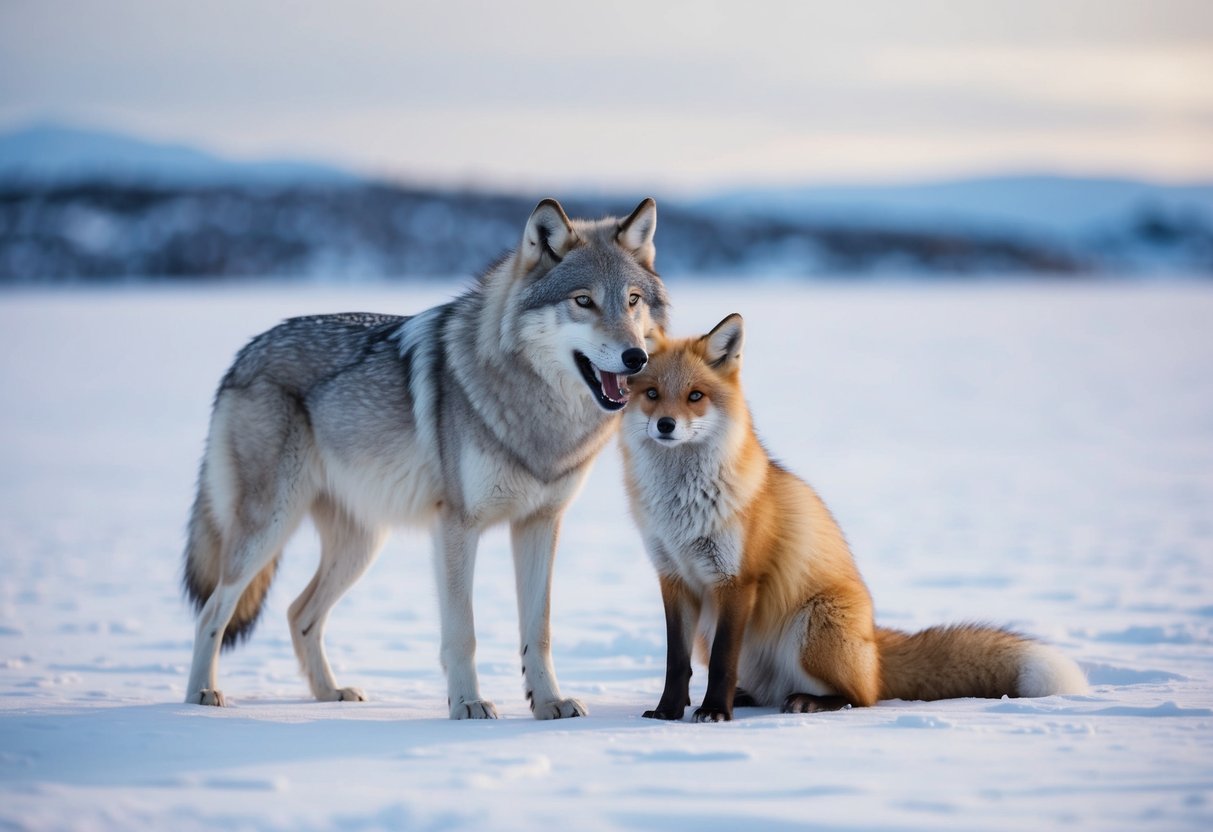
Understanding the relationship between these two species can be fascinating. Arctic foxes are small and agile, adapted to thrive in extreme conditions. They often stay away from the more powerful wolves. The interactions between these animals highlight the balance of predator and prey in their harsh environment.
By exploring their diets and behaviors, you can gain a deeper appreciation for these remarkable creatures. You may find that their coexistence is more complex than it seems at first glance. Keep reading to uncover more about their diets and the dynamics of life in the Arctic.
The Arctic Wolf: Profile and Habitat
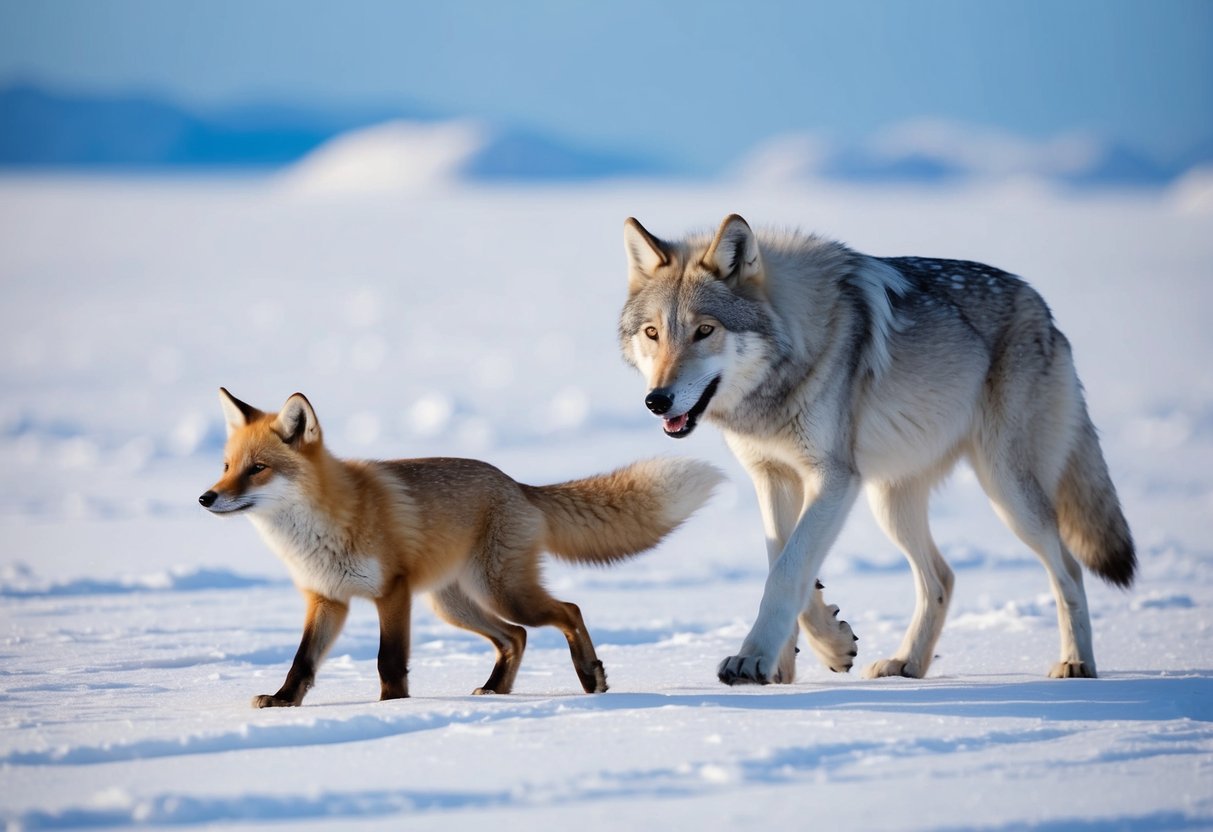
The Arctic wolf, also known as the white wolf or Canis lupus arctos, has unique physical traits and adaptations that help it survive in extreme conditions. This section covers its amazing features and the specific habitats it occupies in harsh Arctic environments.
Physical Traits and Adaptations
The Arctic wolf has several physical traits that make it well-suited for cold climates. These wolves have smaller ears and shorter muzzles, which help reduce heat loss. Their thick white fur provides both insulation and effective camouflage against the snowy backdrop of their environment.
These adaptations allow the Arctic wolf to hunt effectively and stay warm during long winters. This subspecies is smaller than the grey wolf, weighing between 45 to 70 kg and measuring about 1 to 1.8 meters in length, including the tail. Their body structure is designed for agility and endurance, essential for traveling long distances in the Arctic tundra.
Habitat Ranges Across the Arctic
Arctic wolves primarily inhabit the high Arctic tundra of regions like northern Canada, Greenland, and Alaska. They thrive in environments that are characterized by frozen ground and intense cold, often facing temperatures that plunge below freezing.
These wolves spend their lives north of the northern treeline, which means they adapt to a landscape with little vegetation. The tundra offers large, open spaces and very few hiding spots, which influences their hunting strategies. The Arctic wolf’s habitat is crucial for its survival, supporting its diet that mainly includes muskox, Arctic hares, and caribou.
Dietary Patterns of Arctic Wolves
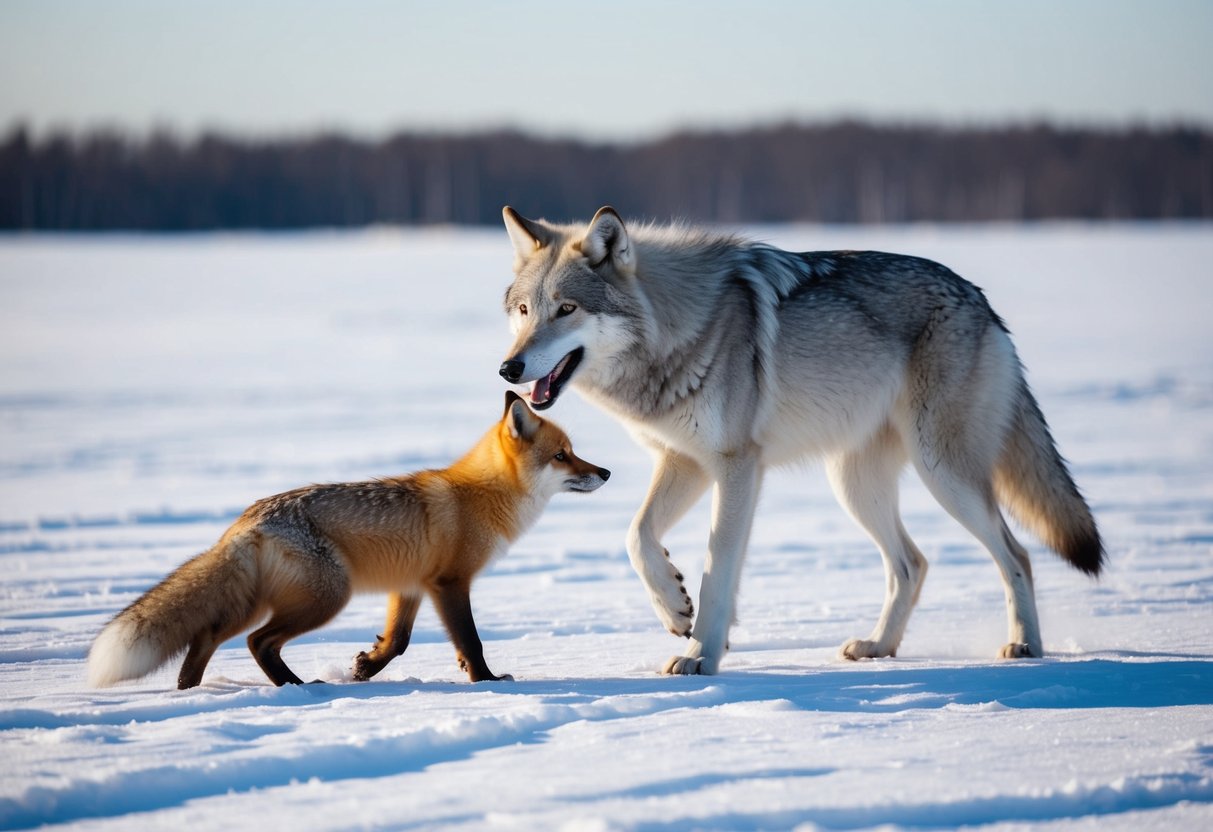
Arctic wolves have a diverse diet that reflects their adaptability and hunting skills. They primarily hunt large ungulates but also eat smaller animals when necessary. Understanding their dietary habits can reveal much about their survival in harsh environments.
What Do Arctic Wolves Eat
You’ll find that Arctic wolves eat a variety of prey. Their main diet includes muskoxen, caribou (especially the Peary caribou), and larger mammals. They also consume smaller animals like lemmings, voles, and arctic hares.
When food is scarce, they may hunt arctic foxes, though this is not their primary choice. Their diet can include seals if they can access them. This range of prey helps them survive in the Arctic’s extreme conditions by giving them various nutritional sources.
Hunting Strategies and Prey Selection
When it comes to hunting, Arctic wolves are skilled and organized. They often hunt in packs, which increases their chances of success. Their teamwork allows them to target larger prey effectively.
The wolves will often follow herds of muskoxen or caribou, looking for the weakest animals. They use their knowledge of the terrain and weather to their advantage. For smaller prey like lemmings, they rely on stealth and speed to catch them.
This adaptability in hunting strategies highlights their role as apex predators in the Arctic ecosystem.
Role of Scavenging
In addition to hunting, Arctic wolves are opportunistic feeders. They scavenge on carcasses left behind by other predators or those that have succumbed to the elements. This scavenging behavior provides them with crucial nutrition, especially during harsh winters.
Scavenging allows them to conserve energy as they do not always need to hunt actively. They may also feed on remains of animals such as seals or larger ungulates that have died from natural causes. This behavior ensures that they make the most of every environmental opportunity to secure food.
Interactions with Other Species
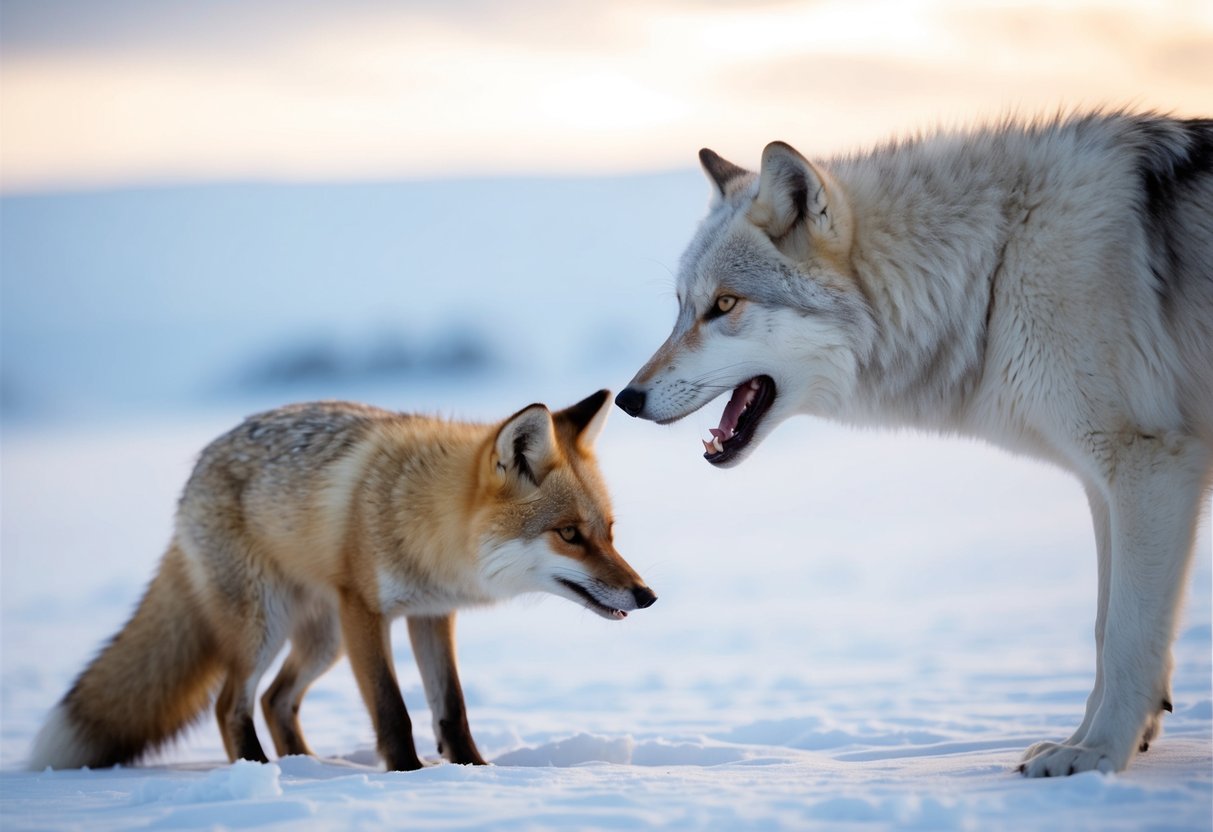
Understanding how Arctic wolves interact with other species, such as Arctic foxes and various birds, helps you appreciate the balance within the Arctic ecosystem. These relationships reveal the complexities of survival and competition in harsh environments.
Do Arctic Wolves Eat Arctic Foxes
Arctic wolves do not typically eat Arctic foxes as a main part of their diet. While wolves are known to be apex predators, their primary prey includes larger animals like caribou and muskoxen.
In extreme cases, such as food shortages, wolves might hunt smaller mammals, including Arctic foxes. However, this behavior is rare and often driven by necessity rather than preference. This limited predation helps keep the Arctic ecosystem balanced, allowing species like the Arctic fox, or Vulpes lagopus, to thrive alongside wolves.
Competition and Coexistence
Arctic wolves and Arctic foxes exist in a complex relationship marked by competition and coexistence. You’ll find both species in the Arctic tundra, where they often compete for food resources.
During colder months, food can become scarce. When this happens, wolves may leave behind carcasses that foxes scavenge. This scavenging behavior provides a crucial food source for foxes. Additionally, their interactions can influence prey populations, helping maintain ecological balance.
Birds, particularly nesting species, may also play a role in this dynamic. Wolves can affect populations of smaller mammals that compete with birds for resources. Thus, understanding these interactions helps highlight the ecological role that both wolves and foxes play in the Arctic ecosystem.
Conservation Challenges and Efforts
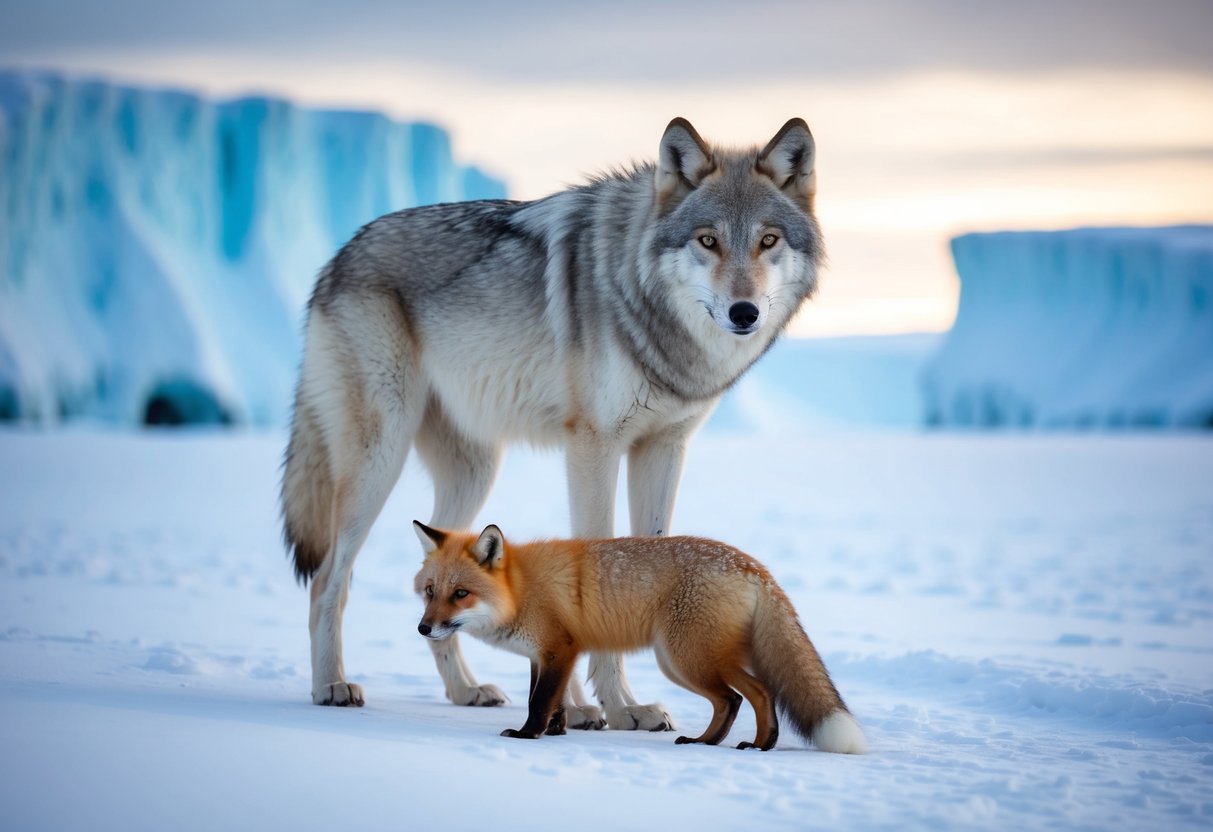
The survival of Arctic wolves and foxes faces significant challenges due to changing environments and human activities. Understanding the effects of climate change and industrial development is crucial for the conservation of these unique animals.
Impact of Climate Change
Climate change affects Arctic ecosystems in profound ways. The frigid environment that Arctic wolves and foxes rely on is warming. This shift leads to habitat loss and alters food supply dynamics. As ice melts and temperatures rise, prey like caribou are displaced.
These changes also put pressure on the already vulnerable Arctic fox. Their survival strategies, such as finding shelter and food, are becoming more difficult. Reduced sea ice impacts their ability to scavenge. Without proper conservation efforts, these species may struggle to adapt and could face declines.
Human Encroachment and Industrial Development
Human activities pose another threat to Arctic wildlife. Industrial development, such as oil drilling and mining, encroaches on their habitats. This leads to pollution and disturbances that can disrupt their natural behavior and food chains.
Habitat preservation is key to maintaining ecological stability. Efforts to limit industrial activities in sensitive areas are essential.
Creating wildlife reserves can help ensure that Arctic wolves and foxes have spaces to thrive.
Engaging local communities in conservation can boost these efforts. By increasing awareness, you can help protect these species from further decline and support their future.
Protecting Arctic ecosystems requires a collective effort from everyone.


