
The Arctic fox and the red fox may seem similar at first glance, but they have distinct differences that set them apart. The Arctic fox, scientifically known as Vulpes lagopus, is specially adapted to survive in the harsh conditions of the Arctic Tundra. Meanwhile, the red fox is more adaptable to various environments. This means that the Arctic fox has unique features like a thicker coat and smaller ears to conserve heat, making it well-suited for frigid climates.
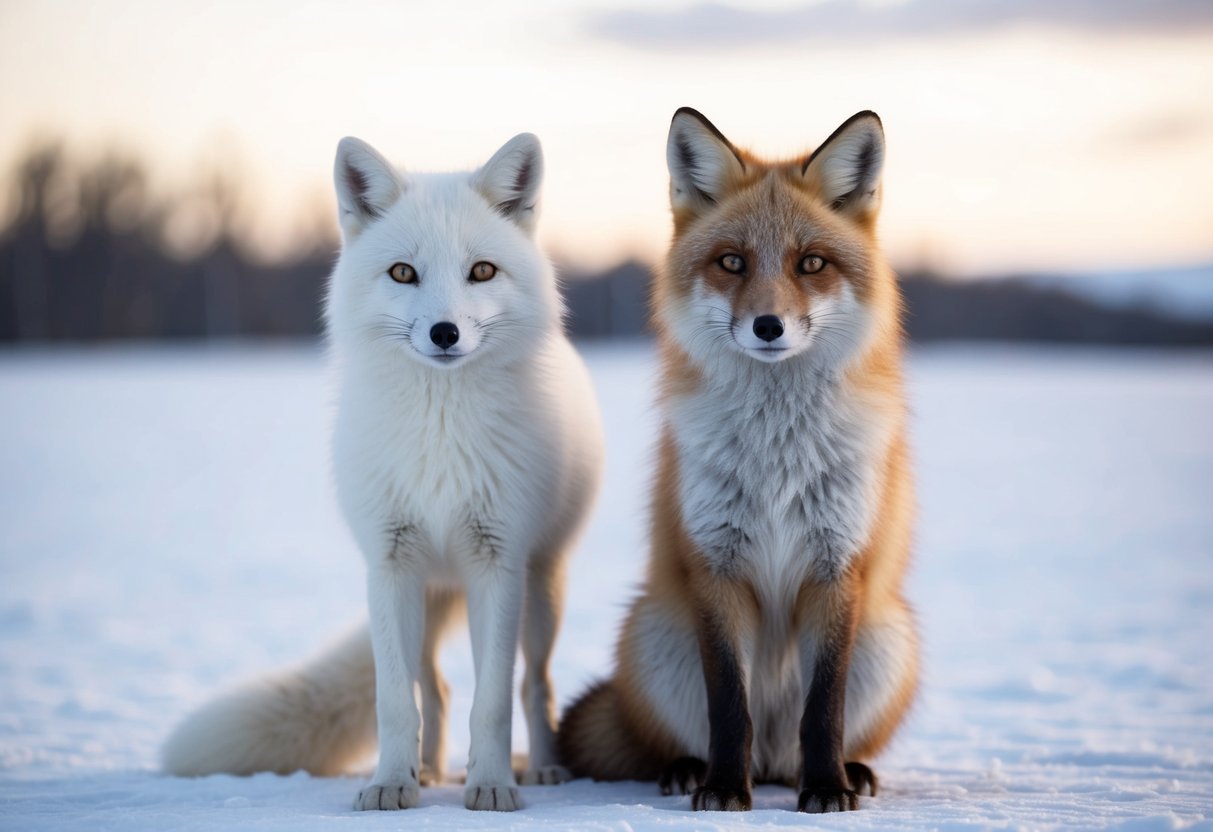
In contrast, the so-called “normal fox,” usually referring to the red fox, thrives in forested areas, grasslands, and even urban settings. Its ability to adapt to different habitats allows it to find food and shelter more easily compared to its Arctic counterpart. Understanding these differences not only highlights the incredible diversity of the fox family, but also emphasizes the importance of conservation efforts to protect their habitats.
As you learn more about these fascinating creatures, you’ll discover how their adaptations impact their behavior, diet, and overall survival. This knowledge can deepen your appreciation for wildlife and the ecosystems they inhabit, encouraging you to be more mindful of your environment.
Physical Characteristics and Adaptations

When comparing an Arctic fox to a red fox, you’ll notice several key differences in their physical traits and how they adapt to their environments. Understanding these features helps you see how each species thrives under different conditions.
Fur and Coloration
The Arctic fox has a unique fur coat that plays a crucial role in its survival. In winter, its thick fur turns white to blend in with the snow, providing excellent camouflage against predators. This seasonal change helps it hunt and hide effectively in its environment.
In contrast, red foxes have a reddish-brown coat that aids in blending in with woodland and grassland areas. Their fur is also thick, but not as dense as that of the Arctic fox.
Both species have a short muzzle, allowing them to conserve heat in cold climates. Their fur thickness, along with the color change, are essential adaptations for their respective habitats.
Physical Adaptations to Cold
Arctic foxes are built for extreme cold. Their body is compact, which helps minimize heat loss. This shape is a critical adaptation for survival in icy conditions.
Their thick fur not only provides insulation but also covers their paws. This fur protects them from the freezing ground, allowing them to move comfortably over snow and ice.
Another important feature is their small ears. Unlike red foxes with larger ears, Arctic foxes have smaller, rounded ears that reduce heat loss. All these adaptations make Arctic foxes highly suited to thrive in harsh, cold environments.
Habitat and Distribution
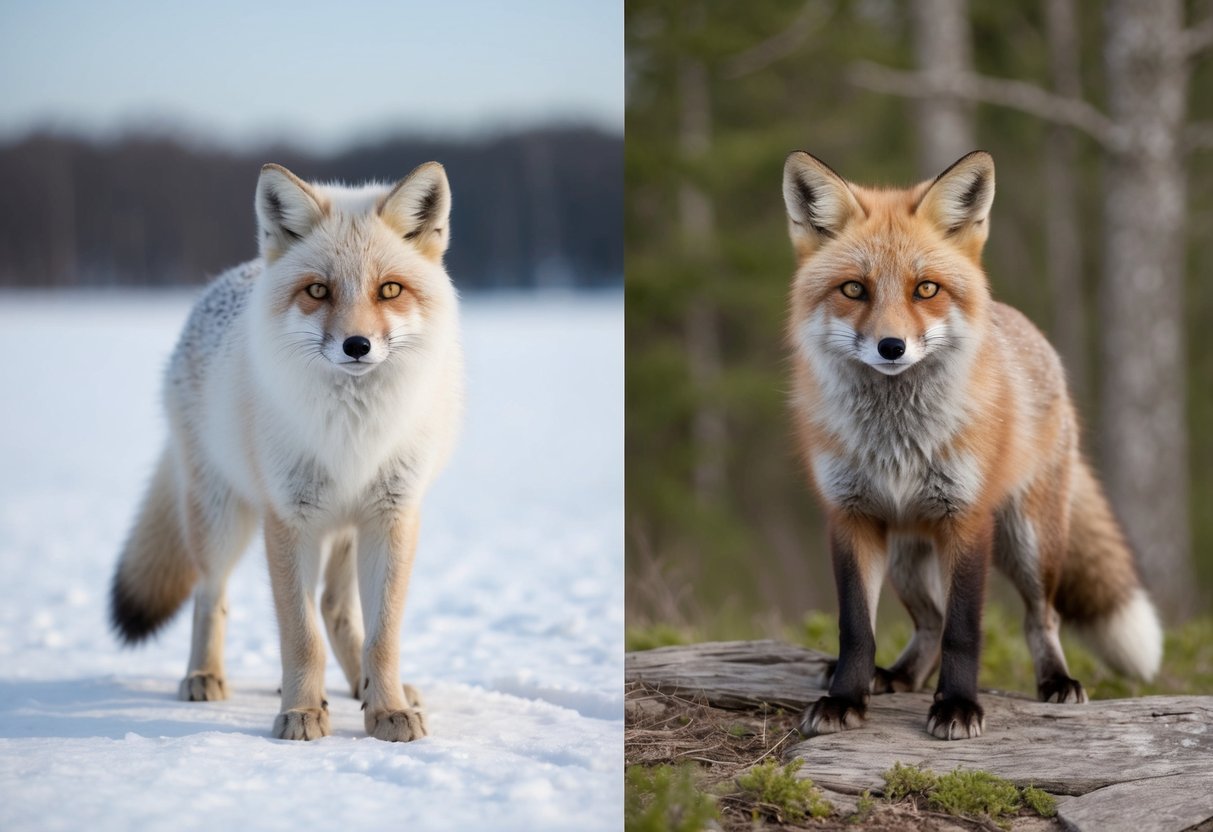
The Arctic fox and the red fox live in very different areas, and their habitats have a big impact on their lifestyles. Here’s how each species makes its home in the world.
Arctic Fox Territory
The Arctic fox thrives in some of the most extreme environments. It primarily resides in the tundra areas of the Arctic. You can find it across regions like Eurasia, North America, Iceland, and many islands off the northern coasts of Canada and Siberia.
This fox has adapted to cold temperatures that can drop below -50º F. During winter, its thick white fur provides great camouflage in the snow. As the seasons change, the Arctic fox’s fur shifts to a grey or brown shade in summer, helping it blend into the rocky and earthy landscapes.
Red Fox Range
The red fox has a much broader habitat. It is known for being highly adaptable, which helps it thrive in various environments. You can find red foxes in forests, grasslands, mountains, and even urban settings.
Their distribution spans across much of North America and Eurasia. Unlike the Arctic fox, red foxes do not prefer extreme cold, so they often inhabit areas where temperatures are milder. Their fur is typically reddish-brown, which aids in camouflage among leaves and grasses. This adaptability allows them to survive in diverse climates and terrains, making the red fox a familiar sight in many regions.
Dietary Habits and Predation

Arctic foxes have unique feeding habits that help them survive in harsh conditions. Their diet changes based on what’s available throughout the seasons. You will also see how diets of other fox species differ from those of Arctic foxes.
Arctic Fox Feeding Behaviors
The Arctic fox is known for its adaptability. It primarily feeds on lemmings, which are small rodents that make up a large part of its diet during peak seasons. In addition to lemmings, Arctic foxes also hunt other rodents and birds when available.
In warmer months, their diet expands. They consume carrion, which is the dead remains of animals, and can even catch fish when the opportunity arises. Their excellent sense of smell allows them to find food buried under snow or ice.
The ability to change their diet based on food availability plays a key role in their survival. They are classified as omnivores, which means they can eat both plants and animals.
Comparative Diets of Fox Species
Not all foxes share the same diet. While Arctic foxes focus on small mammals and carrion, other species like the red fox are more varied. Red foxes eat fruits, vegetables, and insects along with small rodents.
For example, the red fox may snack on blueberries or catch a rabbit, giving it a broader diet. Some foxes might even hunt in packs, unlike the mostly solitary Arctic fox.
The seasonal availability of food shapes their behaviors. While Arctic foxes adapt to winter conditions, other fox species may not face the same challenges. Understanding these differences helps you appreciate the unique ways each fox thrives in its environment.
Behavior and Reproduction
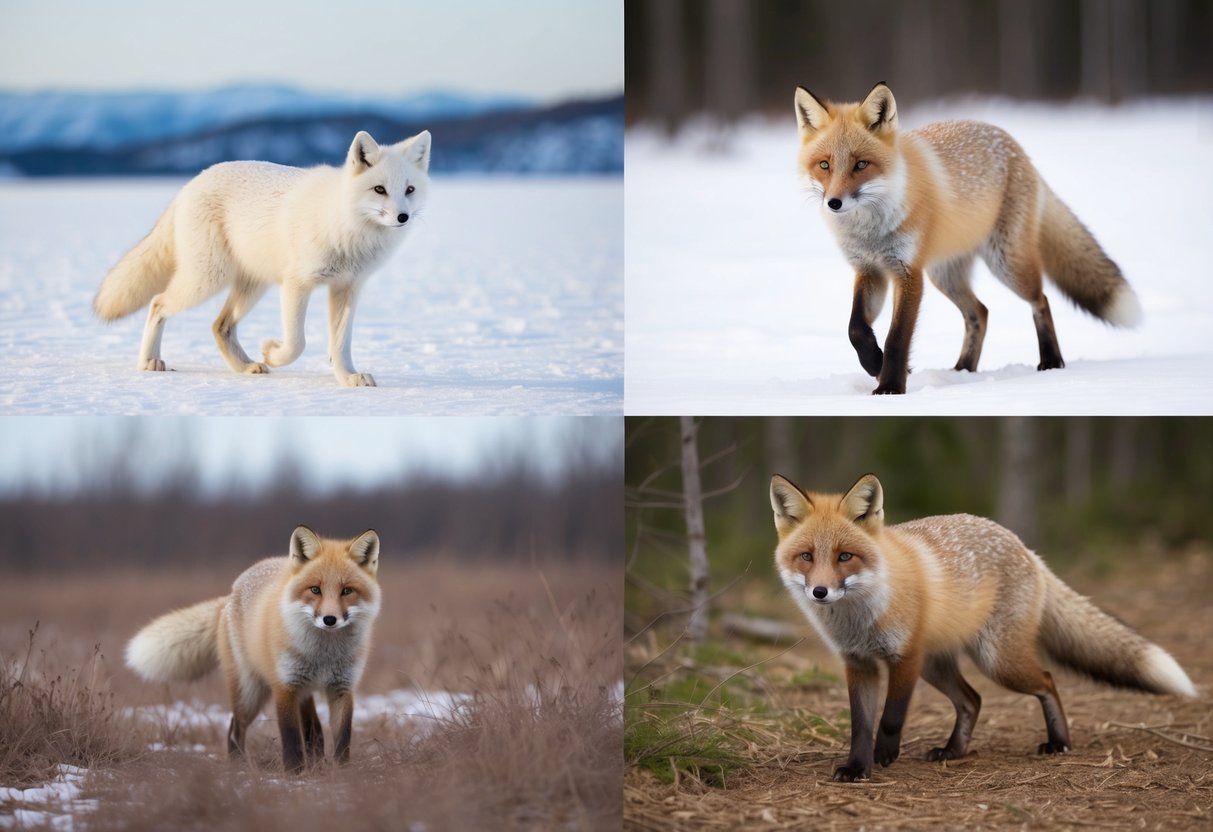
When it comes to behavior and reproduction, Arctic foxes and red foxes show some distinct differences. You’ll find variations in their social systems, breeding habits, and the life cycles of their young.
Social Systems and Breeding
Arctic foxes are usually monogamous, forming strong pair bonds that can last a lifetime. This means that a male and female will mate exclusively with each other each breeding season. In contrast, red foxes often exhibit more flexible social behaviors, sometimes mating with multiple partners.
The breeding season for both species occurs in late winter to early spring. Males will often mark their territory to attract females. Dens play a critical role, as these are the safe places where they raise their pups. Arctic foxes typically choose dens dug into the ground, while red foxes may use old burrows or create new ones.
Life Cycle and Cubs
The gestation period for Arctic foxes is about 52 days. This results in litters that can range from 5 to 20 pups, depending on food availability. Meanwhile, red foxes have a shorter gestation period of around 60-63 days. They produce 2 to 12 kits per litter.
Pups are born blind and depend heavily on their parents for survival. In both species, the parents work together to hunt and bring food back to the young. As the pups grow, they explore outside the den. This helps them learn essential skills for independence.


