
Ever wondered if rats can climb up your cupboards? Well, they definitely can. Rats are surprisingly skilled climbers and can get onto kitchen cabinets with ease, especially if there are hinges, handles, or even cables to grab onto.
That means your food and storage spots might not be as safe as you’d hope.
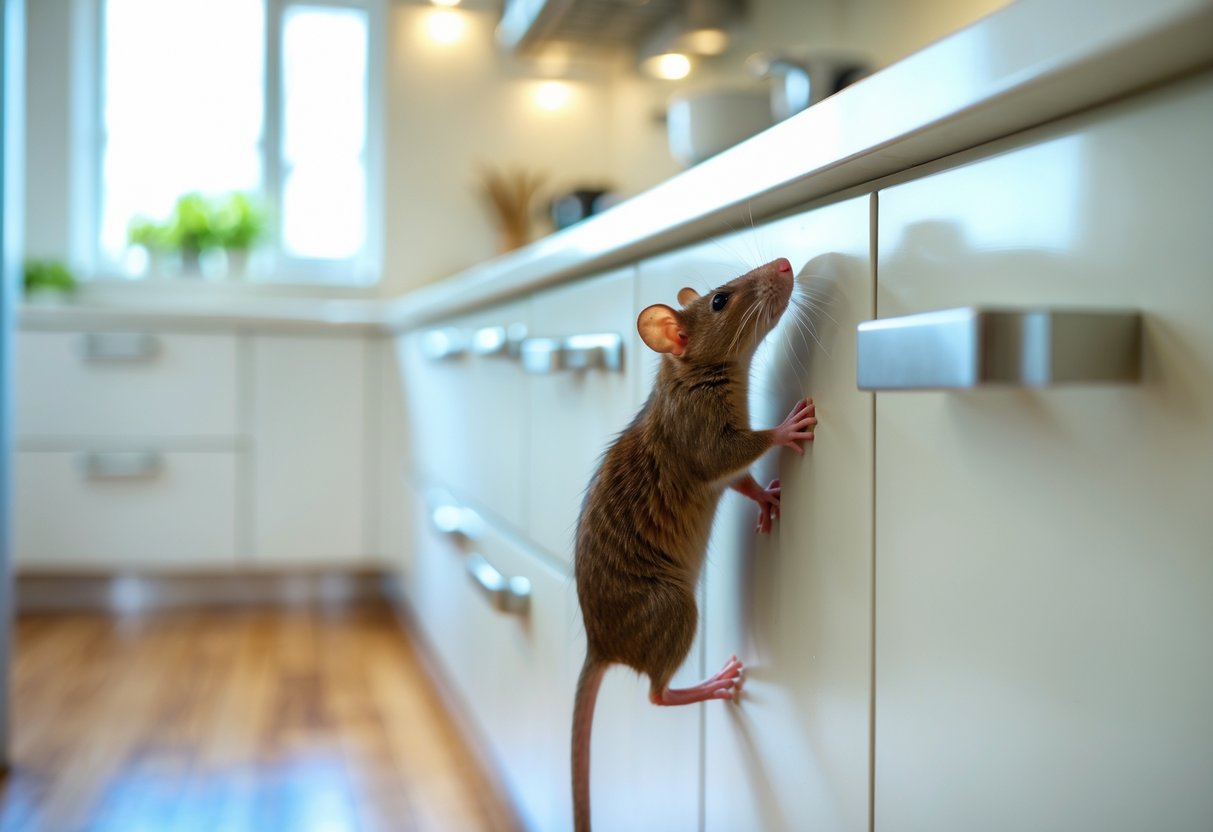
Rats use their sharp claws and flexible bodies to climb rough or textured surfaces, like wood. Even if your cabinets look smooth, little gaps or hardware can give them just enough to grip.
It’s good to know this stuff, so you can actually do something about it and keep rats out of your house.
Can Rats Climb Up Cupboards?

Rats can reach your cupboards if they get the chance. Their climbing skills depend on the surface texture, how close the hinges or gaps are, and even which type of rat you’re dealing with.
It’s worth paying attention to these details if you want to keep them away.
How Rats Climb Vertical Surfaces
Rats grab tiny cracks and rough spots on walls or furniture with their sharp claws and padded feet. Any small edge, groove, or decoration becomes a foothold.
If your cupboard has uneven surfaces, wires, or hinges close together, rats can use those to climb. Their tails help them balance, so they don’t tip over as they go up.
They struggle more with smooth surfaces like glass or polished metal, since there’s nothing to grab. Cupboards with a really smooth finish can slow them down or even stop them.
Differences Between Rat Species in Climbing Ability
Not every rat climbs the same way. Roof rats (also called black rats) are fantastic climbers.
They usually live in trees or up high, so they’re much more likely to climb up cupboards or shelves in your house. Norway rats, on the other hand, mostly stick to the ground.
They still climb if they have to, but they prefer jumping or squeezing through gaps rather than scaling smooth vertical surfaces. If you know which rat you’re dealing with, you’ll know where to focus your efforts.
Roof rats are a bigger problem if your cupboards are high up, or if you have trees or wires close to your house.
Types of Cupboard Materials and Rat Climbing
Rats find it easier to climb cupboards made from rough or wooden materials, since those have little cracks and textures to grip.
If your cupboards have metal parts but smooth, polished surfaces, rats might have a tougher time climbing directly on them. But they’ll still use nearby pipes, wires, or hinges to get to the cupboards.
Cupboards with cables or wires underneath the doors are a big help to climbing rats, so watch out for any exposed wiring near your kitchen storage.
Tips to protect your cupboards:
- Seal gaps around hinges and doors
- Keep wiring covered or away from cupboard surfaces
- Use smooth finishes or barriers where climbing could happen
These things make it a lot harder for rats to climb up and get into your cupboards.
If you want more info about rat climbing and kitchen safety, check What Rats Can Climb.
Preventing Rats From Climbing Cupboards

To stop rats from climbing cupboards, focus on where they get in, what your cabinets are made of, and how quickly you tackle any rodent signs. Sealing gaps, picking certain materials, and acting fast when you spot trouble can make a big difference.
Identifying and Sealing Entry Points
Look for tiny gaps or holes near your cabinets, walls, or under the cupboards. Rats can squeeze through spaces as small as a quarter inch.
Seal these with steel wool, caulk, or expanding foam to keep them out. Check door hinges and gaps where wires or cables run, since rats might use these to climb.
Cover these spots with smooth metal or plastic sleeves that rats can’t grip. Don’t forget to inspect around pipes, vents, and wall cracks near your cupboards.
Blocking these areas reduces the chances of rats getting in and reaching food or shelter inside your kitchen.
Cabinet Materials That Deter Climbing
Rats have a hard time climbing on smooth and slippery surfaces. Cabinets made with polished metal, smooth glass, or ceramic tiles make climbing much more difficult for them.
You can also paint cabinets with oil-based or wax coatings to create slick, unappealing surfaces for rats. Avoid wood or textured surfaces near the base, since those give rats something to grab.
Adding smooth plastic or metal flashing around cabinet edges keeps rats from getting a foothold. Using these materials helps keep your cupboards less inviting and discourages rats from climbing or nesting.
Dealing With Rodent Activity and Infestations
If you spot droppings, gnaw marks, or start hearing odd noises near your cupboards, don’t wait around—jump on it fast to stop a rat infestation from taking hold.
Clean up crumbs and food spills right away. You’ll want to stash food in sealed containers too.
Set traps or try safe repellents like peppermint oil near your cupboards. Some people swear by this stuff for keeping rats and mice away.
Take a look under sinks and inside cabinets pretty often. It’s surprising how quickly rodents can sneak in if you’re not watching.
If things still don’t improve, you might need to call in a pest control pro. Sometimes, it’s just not a DIY job.
For more ideas about sealing up and what actually keeps rats out of cupboards, you can check out these tips on rat-proofing materials.


